A seemingly simple piece of high-performance technical fabric—whether it’s pre-oxidized fiber fabric, para-aramid fabric, carbon fiber fabric, PBO fabric, or polyimide fabric—is the outcome of an exceptionally intricate and refined manufacturing process. Today, we’ll take you on a journey through the complete fiber preparation, spinning, and weaving workflow, unveiling the advanced materials science, precision engineering, and craftsmanship that bring these specialized fabrics to life.
Spinning Process
Cotton Opening and Cleaning
- Opening: Compressed raw cotton is loosened into small tufts or bundles to facilitate subsequent mixing and impurity removal.
- Cleaning: Removes most of the impurities, defects, and unspinnable short fibers from the cotton.
- Blending: Different types of cotton are thoroughly mixed to ensure uniform fiber quality.
- Lap Formation: Produces cotton laps that are consistent in weight, length, and thickness, with a neat appearance.
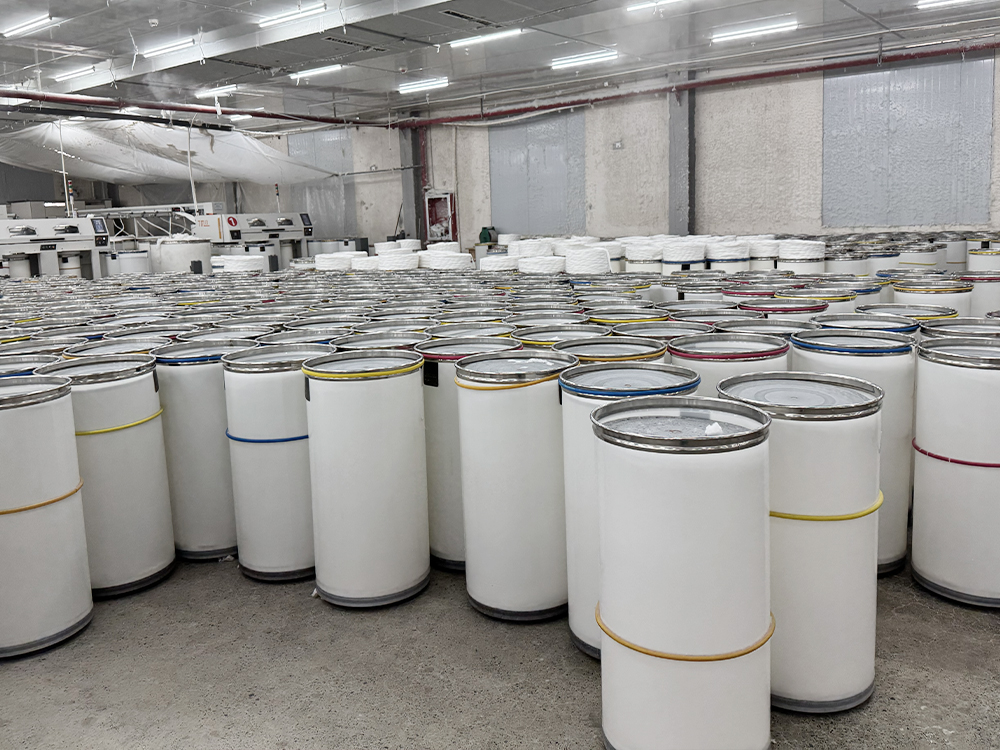
Carding Process
- Carding: Breaks cotton tufts into individual fibers while improving fiber alignment and straightness.
- Impurity Removal: Eliminates fine impurities and short fibers from the laps.
- Blending: Further mixes the fibers to enhance uniformity.
- Sliver Formation: Produces slivers with consistent quality.
Drawing Process
- Doubling and Drafting: Typically combines 21 slivers and draws them to improve fiber alignment and uniformity.
- Lap Formation: Produces small laps of specified length and weight, with smooth edges and clear layers for unwinding.
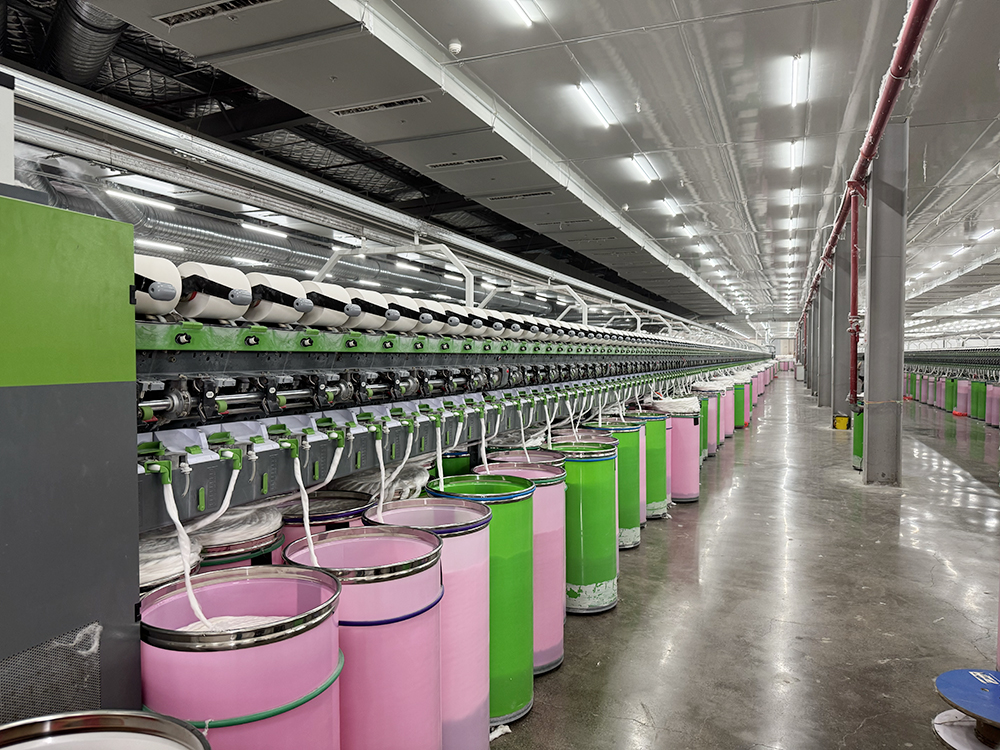
Combing Process
- Impurity Removal: Removes neps, impurities, and fiber defects.
- Combing: Further separates fibers and eliminates short fibers to improve uniformity and straightness.
- Drafting: Reduces sliver thickness while enhancing fiber alignment.
- Sliver Formation: Creates combed slivers with superior quality.
Roving Process
- Doubling: Combines 6–8 slivers to reduce unevenness in long sliver sections.
- Drafting: Draws the sliver into finer form with uniform weight and improved fiber alignment.
- Blending: Further improves fiber uniformity.
- Coiling: Produces high-quality roving that is neatly coiled into sliver cans.
Roving Frame
- Drafting: Draws the sliver evenly into a thinner roving while straightening fibers.
- Twisting: Adds a slight twist to the roving to impart strength.
Ring Spinning
- Drafting: Further reduces the thickness of the roving to the desired yarn count while aligning fibers.
- Twisting: Adds final twist to form yarn with adequate strength and cohesion.
- Winding: Winds the finished yarn onto bobbins.
- Shaping: Produces yarn packages of standardized size and shape.
Post-Spinning Processing
Winding
- Winding and Forming: Winds yarn from bobbins into larger, well-shaped cones.
- Clearing: Removes yarn defects and impurities during winding.
Twisting
- Twisting: Combines two or more single yarns into a stronger plied yarn.
- Winding: Winds plied yarns into cones.
Skein Winding
Winds cone yarns into hanks of specified length for easier packaging and shipping.
Packaging
Hanks or cones are packed into small, medium, or large bales as per specifications.
Weaving Process
Warping
Warping prepares the yarn for weaving by winding a specific number and length of warp threads from cones onto a warp beam.
- Proper tension and elasticity are required.
- Uniform tension across the warp sheet is essential.
- Even alignment and packing on the beam.
- Thread count, length, and pattern must follow design specs.
- Efficiency should be high with minimal yarn breakage.
Sizing
Sizing enhances yarn smoothness and strength to withstand weaving stress.
- Warp threads pass through sizing solution from multiple beams.
- Squeezed, dried, and wound onto the weaver’s beam.
Sizing Benefits:
- Adheres fiber fuzz to yarn surface, increasing smoothness.
- Forms a protective film for abrasion resistance.
- Improves yarn strength through solution penetration.
Drawing-in
The final warp preparation step. Threads are passed through drop wires, heddles, and reeds based on fabric design, enabling proper shed formation during weaving.
Weaving
This is the core stage of fabric production, where warp and weft yarns are interlaced on a loom to create fabric. Quality, yield, and efficiency at this stage directly impact production costs and profitability.
Conclusion
From cotton bales to finished fabric rolls, every stage in the textile journey reflects the ingenuity and craftsmanship of the spinning and weaving process. By understanding this intricate workflow, we gain a greater appreciation for the value behind each piece of fabric.


