Pre-oxidized fiber energy storage felt is a high-performance energy storage material with
pre-oxidized fiber as the main material, which has excellent electrical insulation, thermal management and mechanical properties. It has been widely used in batteries and energy storage systems, especially in high temperature and high-demand environments. The following is a detailed introduction to pre-oxidized fiber energy storage felt:
Material composition and structure Pre-oxidized fiber energy storage felt is mainly made of pre-oxidized fiber. Pre-oxidized fiber (Pre-Oxidized Fiber, referred to as Pre-Ox fiber) is obtained by high-temperature oxidation of polyacrylonitrile (PAN) fiber, which has high temperature stability and excellent mechanical properties. Pre-oxidized fiber is made into a felt structure through a non-woven process, which provides good porosity and surface area, which helps to enhance its adsorption and thermal conductivity.
Pre-oxidized fiber energy storage felt manufacturing process
1. Fiber pretreatment
Raw material selection: Select high-quality polyacrylonitrile (PAN) fiber that has been pre-oxidized. Heat the PAN fiber to 200-300 degrees Celsius in air to change its molecular structure and form a stable pre-oxidized fiber.
Carbonization treatment: The pre-oxidized fiber is gradually heated to 800-1200 degrees Celsius under the protection of an inert gas (such as nitrogen or argon). In this process, the organic components in the fiber are decomposed, and hydrogen, nitrogen, oxygen, etc. are volatilized, leaving a pure carbon skeleton. Further heating to 1200-1600 degrees Celsius further condenses and rearranges the carbon skeleton, improving the structural density and mechanical properties of the carbonized fiber. Graphitization treatment: The carbon atoms in the carbonized fiber are arranged into a graphite crystal structure to improve its electrical conductivity and thermal conductivity. By high temperature treatment: The carbonized fiber is further heated to 2000-3000 degrees Celsius under the protection of an inert gas. This step causes the carbon atoms to rearrange into a layered graphite structure, forming a graphitized fiber with high crystallinity and good electrical conductivity. Activation treatment: The specific surface area and pore structure of the graphitized fiber are increased by chemical or physical methods, thereby improving its energy storage performance, especially in the application of electrochemical energy storage devices.
Chemical activation: Activator selection: Commonly used chemical activators include potassium hydroxide (KOH), phosphoric acid (H3PO4), sodium hydroxide (NaOH), etc. Impregnation: Impregnate the graphitized fiber in the activator solution to ensure that the activator penetrates evenly into the fiber. Heating activation: Activation treatment is carried out at a high temperature of 400-900 degrees Celsius. The chemical activator reacts with the carbon fiber at high temperature to generate a large number of micropores and mesopores, significantly increasing the specific surface area of the fiber. Cleaning: Remove the residual activator and by-products, usually using acid washing and water washing methods.
Physical activation: Gas activation: The graphitized fiber is contacted with an activating gas (such as carbon dioxide or water vapor) at high temperature. The gas reacts with carbon to form a pore structure and increase the specific surface area. Temperature control: Strictly control the temperature and gas flow to ensure the uniformity and controllability of the pore structure.
2. Nonwoven processNeedle punching process: The pre-oxidized fiber is made into a felt-like structure through a needle punching process to form a uniform fiber mesh.
Chemical bonding: Use appropriate adhesives to bond the fibers to enhance the strength and stability of the felt.
Hot rolling: The density and strength of the felt are further increased through the hot rolling process.
3. Surface treatmentCoating: According to application requirements, the pre-oxidized fiber energy storage felt is coated to enhance its conductivity or chemical resistance.
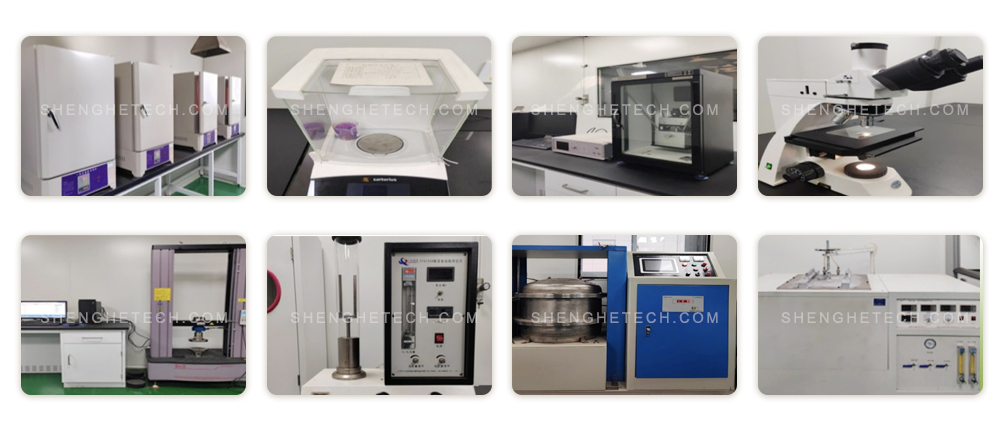
Performance of pre-oxidized fiber energy storage felt
- High temperature resistance: Pre-oxidized fiber has excellent high temperature resistance, can maintain stability in high temperature environment, is not easy to deform or decompose, and is suitable for high temperature batteries and energy storage systems.
- Fire retardant performance: Pre-oxidized fiber energy storage felt has good flame retardant properties, will not burn when encountering fire, can effectively prevent the spread of fire, and improve the safety of energy storage systems.
- Electrical insulation: Pre-oxidized fiber energy storage felt has excellent electrical insulation properties, can prevent internal short circuits in batteries, and ensure the safety and stability of energy storage systems.
- Thermal management performance: Pre-oxidized fiber energy storage felt has good thermal conductivity, can effectively conduct and disperse heat, prevent battery packs from overheating during operation, and improve the service life and performance of batteries.
- Mechanical properties: Pre-oxidized wire energy storage felt has high strength and toughness, can withstand mechanical stress and vibration, and protect the battery pack from physical damage.
- Chemical corrosion resistance: Pre-oxidized wire energy storage felt has good tolerance to a variety of chemicals (including electrolytes), and can be used for a long time in harsh chemical environments without degradation.
- Lightweight: Pre-oxidized wire energy storage felt is lightweight, which helps to reduce the overall weight of the energy storage system and improve energy density and system efficiency.
Application of pre-oxidized wire energy storage felt
1. Lithium-ion battery Diaphragm material: Pre-oxidized wire energy storage felt can be used as a diaphragm material for lithium-ion batteries, providing electrical insulation and thermal management functions to prevent internal short circuits in the battery. Thermal management layer: used for thermal management layers in battery packs to effectively conduct and disperse heat and prevent battery overheating.
2. Supercapacitor Electrode material support: Pre-oxidized wire energy storage felt can be used as a support layer for supercapacitor electrode materials, providing mechanical strength and conductivity, and optimizing capacitor performance.
3. Fuel Cells Gas Diffusion Layer: Preoxidized Wire Energy Storage Felt can be used as a gas diffusion layer for fuel cells, providing good conductivity and gas permeability, and optimizing battery efficiency.
4. Electric Vehicles Battery Pack Thermal Management: Used for thermal management of electric vehicle battery packs to ensure temperature control of batteries when working under high load, and improve the safety and endurance of vehicles.
5. Energy Storage System Large-Scale Energy Storage Equipment: In large-scale energy storage systems, preoxidized wire energy storage felt is used as a thermal management and electrical insulation material to ensure the stability and safety of the system in long-term operation.
6.
Electronic Industry Antistatic Clothing: Preoxidized Wire Energy Storage Felt can be used to make antistatic clothing to protect electronic components from static interference. Fire and Heat Resistant Materials: Used for thermal management of electronic equipment, providing fire and heat insulation functions.