Polypropylene (PAN), also known as polycyanate ethylene ester or Kronospan 61, is a synthetic semi-crystalline organic polymer with the molecular formula (C3H13N)n. Although it is a thermoplastic, it does not melt under normal conditions but undergoes a process of decomposition before melting. If the heating rate reaches 50 degrees Celsius or higher per minute, it will melt at temperatures above 300 degrees Celsius. Almost all PAN resins are copolymers made from a mixture of monomers with acrylonitrile as the main monomer. It is a versatile polymer used to produce a variety of products, including ultrafiltration membranes, hollow fibers for reverse osmosis, textile fibers, and oxidized PAN fibers. PAN fibers are a chemical precursor to high-quality carbon fibers. First, thermal oxidation in air at 230 degrees Celsius forms oxidized polyacrylonitrile (PAN) fibers, which are then carbonized in an inert atmosphere at temperatures above 1000 degrees Celsius to produce carbon fibers. Carbon fiber is widely used in various high-tech and everyday applications, such as primary and secondary structures of civilian and military aircraft, missiles, solid propellant rocket engines, pressure vessels, fishing rods, tennis rackets, and bicycle frames. PAN is also a repeating unit in many important copolymers, such as styrene-acrylonitrile (SAN) and acrylonitrile-butadiene-styrene (ABS) plastics.
Based on the raw materials, carbon fiber can be classified into polyacrylonitrile-based carbon fiber, pitch-based carbon fiber, rayon-based carbon fiber, and vapor-grown carbon fiber. Polyacrylonitrile-based carbon fiber: Polyacrylonitrile-based carbon fiber is produced through multiple processes including spinning, pre-oxidation, and carbonization of polyacrylonitrile. It features high strength, high stiffness, light weight, high temperature resistance, corrosion resistance, excellent electrical properties, and strong compressive and flexural strength, and has long held a dominant position in the field of reinforced composite materials.
Pitch-based carbon fiber: Pitch-based carbon fiber is made from petroleum pitch or coal tar pitch through processes such as pitch refining, spinning, pre-oxidation, carbonization, or graphitization. Its raw material production cost is lower than that of polyacrylonitrile-based carbon fiber. Rayon-based carbon fiber; Rayon-based carbon fiber is obtained by dehydration, pyrolysis and carbonization of cellulose-based viscose fiber.
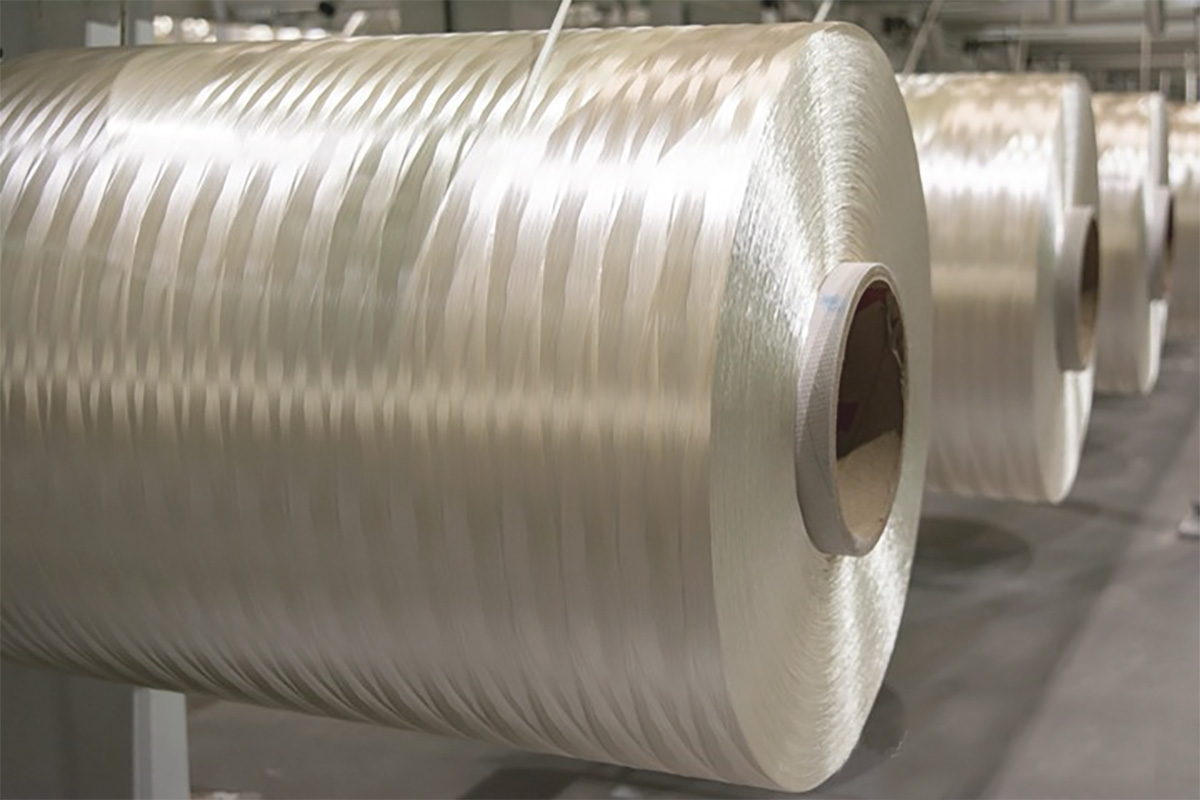
Chemical structure and preparation process
Molecular structure
The PAN molecular chain is based on acrylonitrile units (-CH₂-CH(CN)-) and forms a linear structure through free radical polymerization. The introduction of comonomers (such as methyl acrylate and methyl methacrylate) can improve spinning performance and dyeability. After carbonization, the molecular chain is dehydrogenated and reorganized into a graphite-like structure with a carbon content of more than 93%.
Polymerization: Acrylonitrile and comonomers are polymerized in a solvent (such as DMF, sodium thiocyanate) to generate PAN stock solution.
Spinning: Wet spinning or dry-wet spinning is used to form primary fibers. The number of spinneret holes can reach 200-300 holes, and the fiber linear density range is wide (1.7-5.0 dtex).
Pre-oxidation: Heat treatment in an air atmosphere at 200-300℃ to form a cyclized ladder structure and improve thermal stability.
Carbonization: High temperature treatment (1000-2000℃) in an inert atmosphere (such as argon) to remove non-carbon elements and form graphite microcrystals.
Graphitization: Treatment above 2500℃ can further increase the modulus and be used for aerospace-grade materials.
Polyacrylonitrile (PAN) performance characteristics
-
Polyacrylonitrile (PAN) Polymer:
-
A synthetic, semi-crystalline, thermoplastic polymer that degrades before melting under normal conditions.
-
Requires very rapid heating (above 50°C/min) to melt (above 300°C) without prior degradation.
-
Historically challenging to process due to infusibility and lack of solubility in common industrial solvents; requires specialized solvents (e.g., DMF, ionic liquids) for solution processing.
-
-
Primary Performance Characteristics: High strength, high stiffness, light weight, high-temperature resistance, corrosion resistance, excellent electrical conductivity, and strong compressive and bending resistance.
-
Production Process: PAN precursor fibers undergo thermal stabilization (oxidation) in air (~230°C) followed by carbonization in an inert atmosphere (>1000°C).
Polyacrylonitrile (PAN) application fields
-
-
Used to produce textile fibers (e.g., acrylic fibers like Orlon).
-
Used in ultrafiltration membranes and hollow fibers for reverse osmosis.
-
Serves as the chemical precursor for high-quality carbon fibers.
-
A key component in important copolymers like Styrene-Acrylonitrile (SAN) and Acrylonitrile Butadiene Styrene (ABS) plastics.
-
-
Primary Applications: High-performance reinforced composite materials, maintaining a dominant position in this field.
-
-
Aerospace & Defense: Primary and secondary structures in civil and military aircraft, missiles, solid propellant rocket motors, pressure vessels.
-
Sporting Goods: Fishing rods, tennis rackets, bicycle frames.
Polyacrylonitrile (PAN) technical parameters
| Items |
Linear Density |
Tensile Strength |
Elongation |
Oil Content |
| Unit |
g/m |
CN/dtex |
% |
% |
| 1K |
0.118-0.122 |
≥6.20 |
11±2 |
1.5±0.3 |
| 3K |
0.353-0.367 |
≥6.20 |
11±2 |
1.5±0.3 |
| 6K |
0.705-0.735 |
≥6.0 |
13±2 |
1.2±0.2 |
| 12K |
1.470-1.530 |
≥6.0 |
15±2 |
1.2±0.2 |
| 25K |
2.890-3.010 |
≥6.20 |
15±2 |
1.2±0.2 |
| 35K |
3.945-4.105 |
≥6.20 |
15±2 |
1.2±0.2 |
| 50K |
5.635-5.865 |
≥6.0 |
15±2 |
1.2±0.2 |
Polyacrylonitrile (PAN) application fields
Environmental protection and cost: PAN production relies on acrylonitrile (accounting for 45% of the cost), and bio-based acrylonitrile needs to be developed to reduce carbon emissions. Wastewater treatment (such as DMF recovery) is the focus of process optimization.
Performance breakthrough: Nano modification: doping carbon nanotubes or graphene to improve interface bonding strength.
3D weaving: develop multi-dimensional preforms to meet the needs of complex components.
Green Manufacturing: Low-temperature carbonization technology (<1000℃) reduces energy consumption. Recycled carbon fiber recycling technology (chemical depolymerization method) is gradually commercialized.


