Discover 11 high-performance fibers, including carbon fiber, aramid, and UHMWPE. Learn their properties, applications, and advantages in aerospace, defense, and industrial sectors.
High-Performance Fibers: A Strategic Material for Advanced Industries
High-performance fibers are a specialized class of synthetic fibers with exceptional resistance to physical and chemical effects. They have become a major focus in the chemical fiber industry and can be classified into organic and inorganic high-performance fibers based on their chemical composition. These fibers are not only critical strategic materials for the development of aerospace and defense industries but also play an irreplaceable role in advancing emerging strategic industries, low-carbon economies, and energy conservation. Their production and application are key indicators of a nation's technological innovation and comprehensive strength.
1. Carbon Fiber
Carbon fiber is a fiber material composed of more than 90% carbon. It is lightweight, high-strength, corrosion-resistant, has a high modulus, low density, and excellent electrical and thermal conductivity. It can withstand ultra-high temperatures in non-oxidizing environments and has outstanding fatigue resistance. As a fundamental material for aerospace, new energy, and high-end equipment manufacturing, carbon fiber is essential in producing rockets, missiles, fighter jets, naval vessels, and various cutting-edge military technologies, making it indispensable in national defense and military applications.
2. Para-Aramid (Aramid 1414)
Para-aramid, scientifically known as poly(p-phenylene terephthalamide) (PPTA), is an organic polymer fiber synthesized from terephthaloyl chloride and p-phenylenediamine. With amide bonds at the 1,4 positions of the benzene rings, it is also referred to as Aramid 1414. This fiber boasts high specific strength, high modulus, heat resistance, and flame retardancy, ranking among the world’s top three high-performance fibers alongside carbon fiber and high-strength, high-modulus polyethylene. Para-aramid has a tensile strength six times that of steel and a tensile modulus two to three times higher than that of steel or glass fiber, yet it has only one-fifth the density of steel. It is widely used in safety protection (e.g., bulletproof gear), reinforced rubber products, high-strength cables, and as an asbestos replacement in friction materials.
3. Meta-Aramid (Aramid 1313)
Meta-aramid, scientifically known as poly(m-phenylene isophthalamide) (MPIA), is synthesized from isophthaloyl chloride and m-phenylenediamine. With amide bonds at the 1,3 positions of benzene rings, it is also referred to as Aramid 1313. This fiber was developed early and has a broad application scope, making it one of the most widely produced and fastest-growing high-performance fibers. It offers excellent heat resistance, dimensional stability, spinnability, flame resistance, and corrosion resistance. These properties make it an ideal choice for safety protection, environmental applications, and modern industrial uses.
4. Aramid III (Heterocyclic Aramid)
Aramid III, also known as heterocyclic aromatic polyamide fiber, is a superfiber composed of aramid and heterocyclic structures. Recognized in engineering as a "superfiber," it is a high-performance polymer fiber with exceptional strength, high modulus, toughness, thermal stability, electrical insulation, radiation resistance, corrosion resistance, fatigue resistance, and flame retardancy. It is widely used in aerospace components, radomes for airborne and shipborne radar, satellite structures, bulletproof materials, instrument enclosures, electrical insulation, telecommunications, transmission materials, and sporting goods.
5. Ultra-High Molecular Weight Polyethylene (UHMWPE) Fiber
UHMWPE fiber, also known as high-strength, high-modulus polyethylene fiber, consists of linear polyethylene molecules with molecular weights exceeding 1.5 million. It is considered one of the "world’s three major high-tech fibers," alongside carbon fiber and para-aramid. UHMWPE fiber is incredibly strong and durable—lighter than paper yet stronger than steel. Its strength is 15 times that of steel and twice that of both carbon fiber and Aramid 1414. It is the primary material used in modern bulletproof vests. Additionally, it features excellent mechanical properties, impact resistance, wear resistance, chemical resistance, UV resistance, hydrophobicity, and electrical insulation. Due to its ability to float on water and outstanding low-temperature resistance, it is also an ideal material for cold-weather applications.
6. Polyimide Fiber (PI)
Polyimide fiber, also known as aryl polyimide fiber, is a synthetic fiber containing aromatic polyimide structures. It has excellent spinnability and can be used to manufacture textiles for specialized applications. Its outstanding thermal stability, flame retardancy, non-melting properties, and exceptional insulation make it a top choice for protective clothing in extreme conditions.
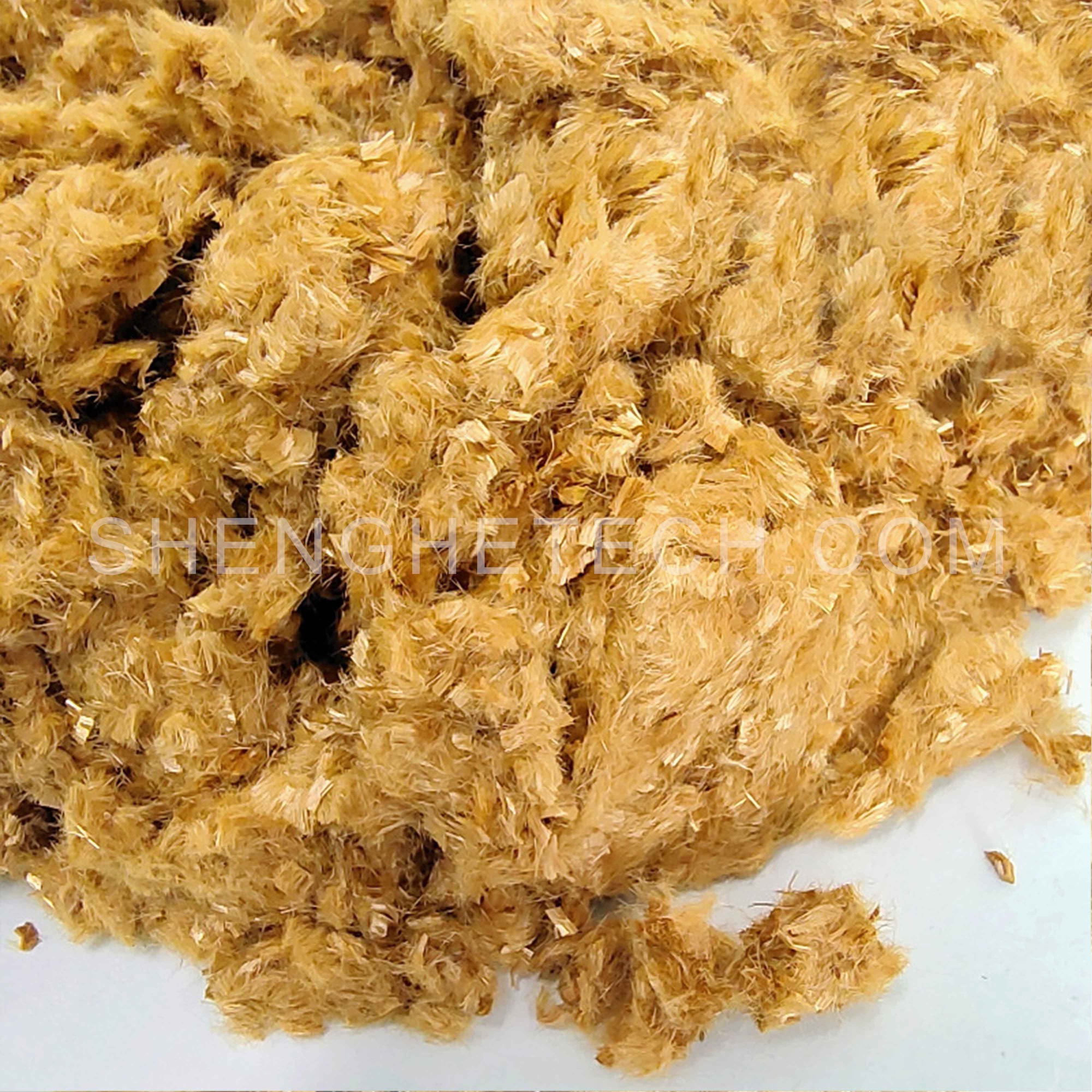
7. Polyphenylene Sulfide (PPS) Fiber
PPS fiber is a high-performance polymer fiber with a backbone structure of alternating benzene rings and sulfur atoms. It offers excellent mechanical strength, heat resistance, chemical resistance, hydrolysis resistance, and flame retardancy. PPS fiber is one of the few commercially available high-performance fibers that can be melt-spun, making it a crucial material for high-temperature filtration systems in power plants and waste incineration facilities. It provides superior filtration precision (PM10.0, PM2.5) and long service life (up to four years). PPS fiber is also used in mist separation, paper machine drying fabrics, sewing threads, protective fabrics, electrical insulation materials, and high-temperature-resistant garments. Additionally, it is a key reinforcement fiber in composite materials used in military and aerospace applications.
8. Polyarylate (PAR) Fiber
Polyarylate fiber is a specialty fiber produced through melt polymerization and spinning without solvent emissions or hazardous gas discharge, making it an environmentally friendly, energy-efficient material. With highly oriented polymer chains, polyarylate fiber exhibits outstanding heat resistance, high strength, high modulus, low moisture absorption, creep resistance, and low dielectric constant. It is widely used in aerospace, defense, high-temperature filtration, electronic insulation, and sports equipment, offering significant value in both military and industrial applications.
9. Poly(p-phenylene benzobisoxazole) (PBO) Fiber
PBO fiber is the strongest known organic fiber with the best overall performance. It is considered the "superfiber of the 21st century" and surpasses steel and carbon fiber in strength. With a modulus twice that of para-aramid, PBO fiber boasts an impressive thermal decomposition temperature of approximately 650°C and does not burn or harden upon flame exposure. It also has exceptional impact resistance, abrasion resistance, dimensional stability, and electromagnetic shielding properties. These characteristics make it an ideal material for radomes, aircraft skins, next-generation armor protection, aerospace structures, optical cables, vehicle protection, architectural reinforcement, and sports equipment.
10. Silicon Carbide (SiC) Fiber
SiC fiber is a polycrystalline fiber manufactured via chemical vapor deposition (CVD) or precursor-derived processes. It possesses high strength, high modulus, excellent thermal stability, oxidation resistance, creep resistance, and corrosion resistance, making it a top-tier reinforcement fiber. SiC fiber is widely used in aerospace, defense, naval, and nuclear industries. SiC fiber-reinforced metal (e.g., titanium) and ceramic composites are essential for high-temperature structural applications such as space shuttle components and high-performance engines.
11. Basalt Fiber
Basalt fiber is a continuous fiber drawn from natural basalt rock. It is produced by melting basalt at 1,450–1,500°C and extruding it through a platinum-rhodium alloy bushing. This inorganic, eco-friendly fiber consists of silicon dioxide, alumina, calcium oxide, magnesium oxide, iron oxides, and titanium dioxide. Basalt fiber offers excellent strength, electrical insulation, corrosion resistance, and high-temperature stability. Its production process generates minimal waste, and the material itself is biodegradable, making it a true green material. Recognized as one of China’s four key high-performance fibers (alongside carbon fiber, aramid, and UHMWPE), basalt fiber has been industrialized and is widely used in composite materials, friction materials, shipbuilding, thermal insulation, automotive applications, high-temperature filtration fabrics, and protective gear.


