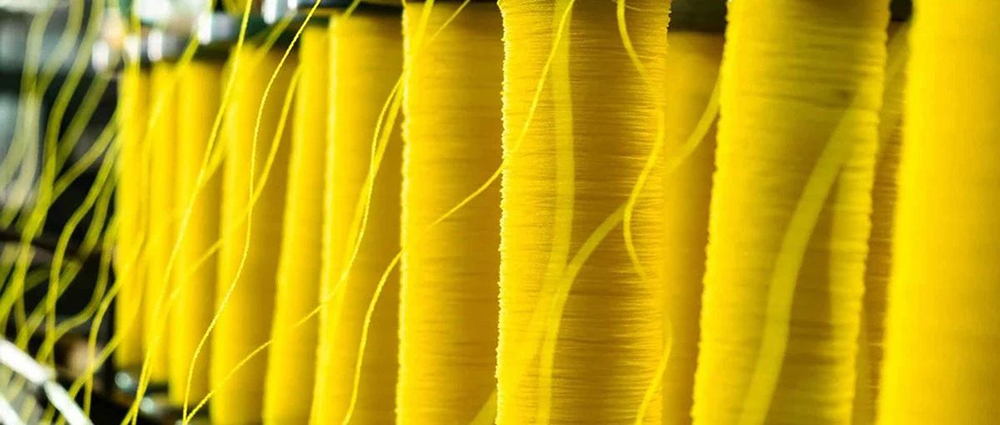
Para aramid fiber is five times harder than steel, lightweight and impact-resistant, and is often used in car tires or bulletproof shells.
Para aramid fibers are five times harder than steel, lightweight, and impact-resistant, and are often used as tires or bulletproof shells for cars. Aramid fibers have impressed tensile tests and have changed many fields, including the automotive industry. Since its introduction, para aramid has become a popular armor material due to its lightness, ease of use, and being five times stronger than steel. Para aramid itself can withstand forces that would damage aluminum or steel plates, making it more resistant to tears and scratches. In addition, aramid can also withstand high and low temperatures of 450 degrees Celsius and -196 degrees Celsius.
In 1971, the automotive industry marked the use of aramid fibers as a reinforcement material for car tires, especially in Formula 1 racing to help reduce the rate of tire blowouts. In addition, Formula 1 cars can catch fire during high-speed collisions, mainly due to punctures in the fuel tank. Therefore, aramid continues to be used to reinforce fuel tanks, avoid punctures, and remain flexible in tight spaces.
The success of aramid in F1 racing tires has led many well-known tire manufacturers, such as Continental, Bridgestone, Michelin and Pirelli, to use aramid instead of steel in their products, using a method of forming multiple layers of alternating layers in the tread paint, which can reduce weight, increase durability, withstand heat when rubbing against the road and prevent punctures caused by sharp objects. In addition, on sports cars and racing cars, aramid fibers are used to make hoses to connect the radiator system to the engine. Aramid hoses are much stronger than traditional hoses. In addition to long service life and chemical resistance, they are also able to cope well with temperature fluctuations during use.
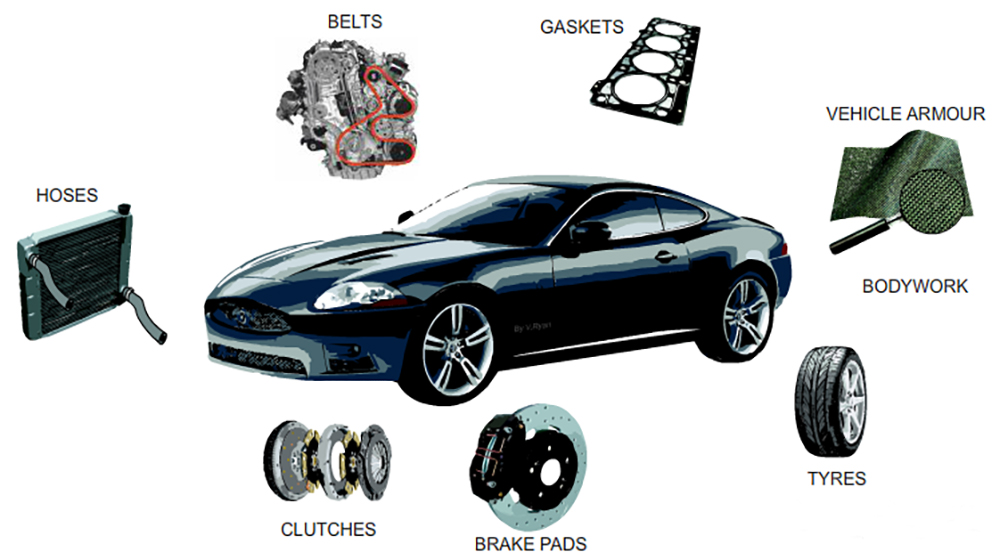
At the same time, in some current models, aramid fibers are also used in brake pads and clutches, because this part is subject to great friction and temperature when in use. For example, under normal circumstances, the temperature during braking does not exceed 200 degrees Celsius, but it may reach 1000 degrees Celsius on the track; usually brake pads are made of ceramic and metal, and clutches are made of rubber. After a period of use, friction will greatly reduce the service life of the parts. Therefore, aramid fiber can be used as a "life-saving" material when it helps brakes and clutches last longer, withstand high temperatures, provide safety, smoothness and stability after a period of use.
Para aramid is also used to make bulletproof boxes for lightweight military vehicles and luxury cars, as aramid can withstand attacks from weapons such as rifles, thus helping to protect drivers and passengers from different forms of attack.
Aramid fiber is outstanding, but there are some disadvantages that limit its effectiveness. First, aramid cannot withstand high compression, so it must be combined with carbon fiber or other metals to increase stiffness. Aramid is also difficult to cut and must be cut with specialized scissors (such as Germany's Robuso aramid scissors). The material is hygroscopic, absorbing up to 8% water by weight, and is sensitive to ultraviolet rays, which causes discoloration and performance degradation.