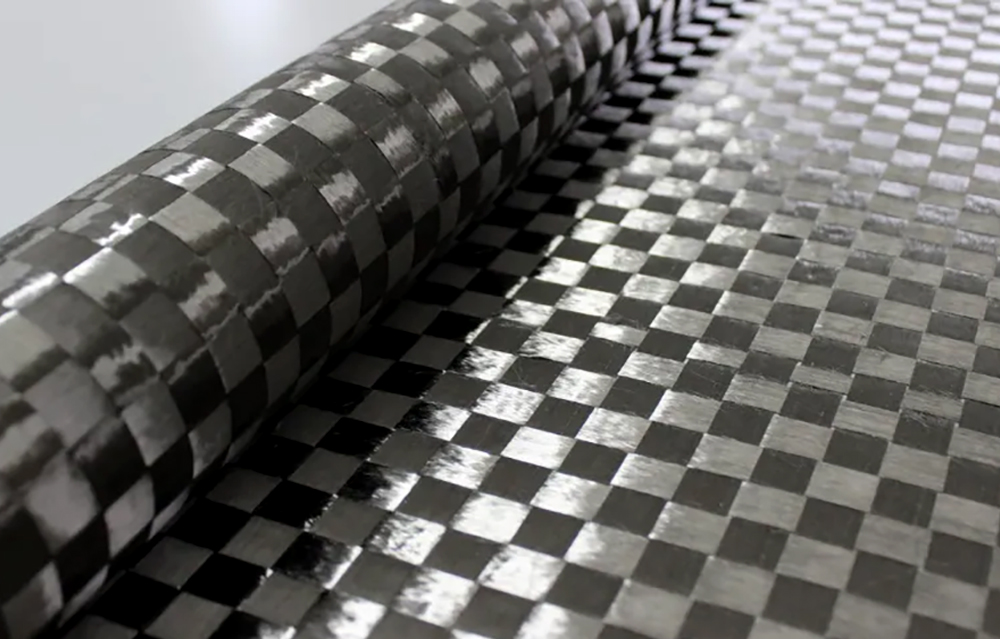
Carbon fiber is widely used in aerospace, automotive industry, wind power generation, sporting goods, construction engineering, medical equipment, electronic products and protective equipment due to its high strength, light weight and durability.
As we all know,
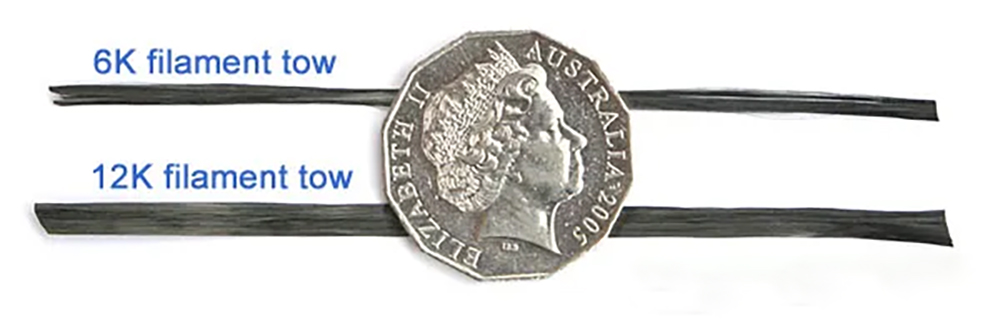
carbon fiber is a bundle material. According to the size of the bundle in the fiber, carbon fiber can be divided into small-tow carbon fiber (number of bundles ≤ 24K) and large-tow carbon fiber (number of bundles > 24K). K represents one thousand filaments in the bundle. For example, 3K specification carbon fiber means that there are 3,000 filaments in each bundle of carbon fiber, and 12K carbon fiber means that there are 12,000 filaments in each bundle of carbon fiber.
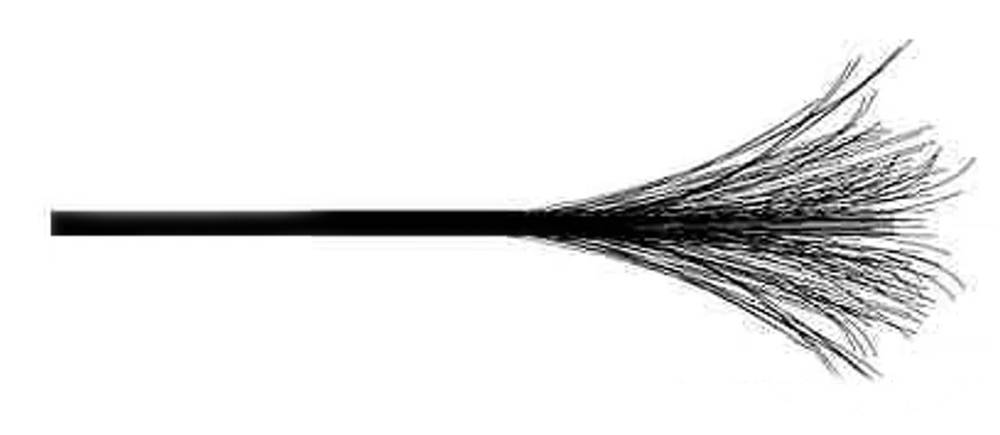
Depending on the source of the precursor, the diameter of each filament in the carbon fiber bundle is also different. For example, the diameter of the filament of asphalt-based carbon fiber is above 10μm, while the diameter of the filament of PAN-based carbon fiber is 5-8μm, and the carbon content is about 95%; for high modulus PAN-based carbon fiber, its filament diameter can be as low as 4.5μm, and the carbon content is as high as 99%.
This article briefly introduces the main characteristics and typical applications of carbon fibers of different specifications such as 1K, 2K, 3K, 6K, etc.
1K Carbon Fiber
1K Carbon Fiber: A very rare fiber, it is lighter than other fibers and very expensive. It is mostly used for finishing. Most companies cannot even calculate the stress within the weave. Its approximate linear density is 66g/1000m.
2K Carbon Fiber
2K Carbon Fiber: The rarest carbon fiber on the market, currently manufactured by no more than 2 carbon fiber manufacturers in the world. It can give carbon fiber boards perfect stiffness, low weight and good vertical compliance (comfort), but it is also very expensive.
3K Carbon Fiber
3K Carbon Fiber: The most popular and common type of carbon fiber. It can give carbon fiber boards a classic carbon fiber look. 3K is the workhorse of carbon fiber. It is light, relatively strong and easy to manufacture. 3K has a higher elongation at break and ultimate strength than 6K, 9K or 12K.
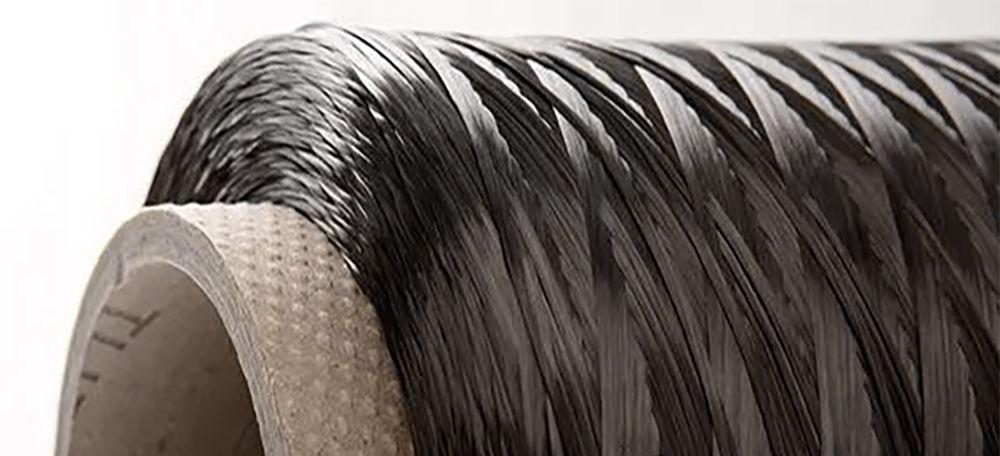
Due to the smaller tow of 3K fiber, it can be woven into thinner fabrics than 12k, or it can be wound into thin tubes with filaments. It is mainly used in aviation, industry, construction, sports, leisure products, etc., with a typical linear density of 198 g/1000m.
6K carbon fiber
6K carbon fiber: It is easier to wet with 6K than 12K, and the drape effect is better. It is used in aerospace, building reinforcement, automobile modification and other fields, with a linear density of 396 g/1000m.
12K carbon fiber
12K carbon fiber: Most carbon fiber manufacturers may use 12K to reduce costs because 12K fabric is cheaper than other K number fabrics. 12K is easier to make, less work, and cheaper. It has higher tensile strength, but is not suitable for some structures of bicycles. It is mainly used in military, industrial robots and scientific equipment, with a linear density of 800g/1000m.
24K and 48K carbon fiber
24K and 48K carbon fiber: mainly industrial grade carbon fiber, so it is mainly used in the manufacture of filters, thermal insulation, work clothes sewing, soft furniture and mattress manufacturing, etc.