Carbon fiber molding processes include drawing molding, filament winding molding, RTM (resin transfer molding) molding, stamping molding.
Carbon fiber is generally used in the form of a composite material after being combined with a base material (resin, etc.). Various molding methods (processing methods) are used depending on the form and characteristics of the final product. In addition, molding methods are becoming more and more sophisticated with the goal of improving physical properties and appearance, shortening molding time, etc. The following introduces representative carbon fiber molding methods.
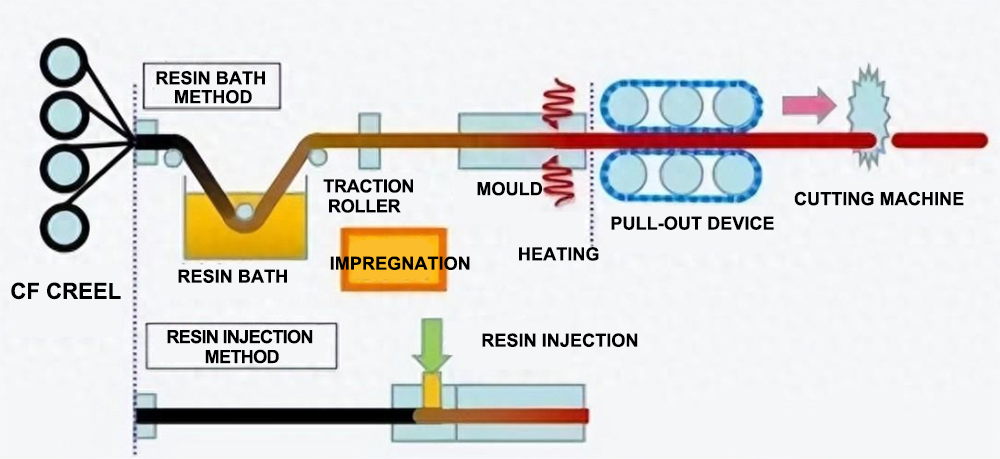
1. Pultrusion molding
Also known as pultrusion molding. This is a continuous molding method in which carbon fiber impregnated with liquid resin is introduced and passed through a die and heated and cured. It is suitable for molded products with a certain cross-sectional shape such as rods and tubes.
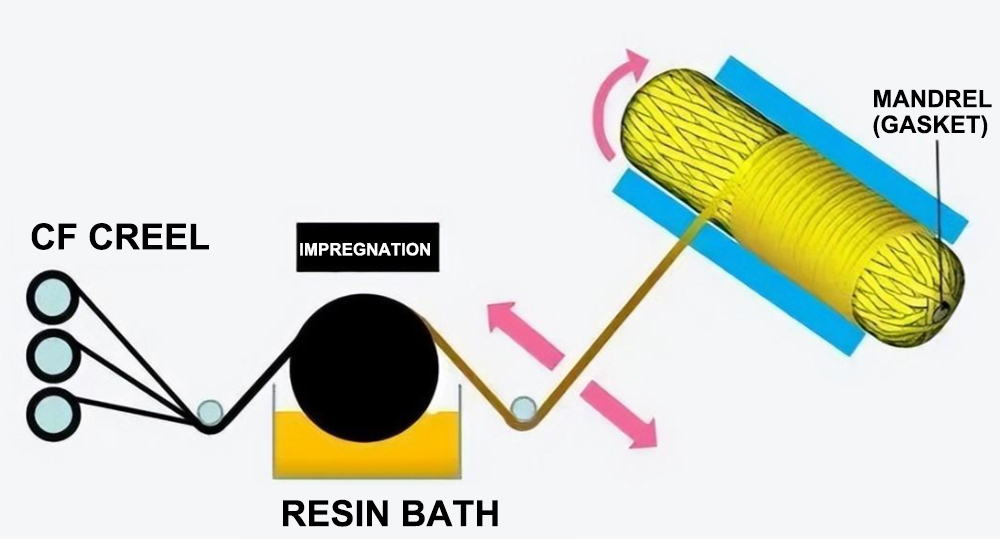
2. Filament winding molding
This is a molding method in which a carbon fiber tow impregnated with liquid resin is wound around a mandrel and then heated and cured. There are two methods, one is a method of winding while the carbon fiber is immersed in a resin tank (bath), and the other is a method of winding the tow material pre-impregnated with resin. It is suitable for tubular and can-shaped molded products.
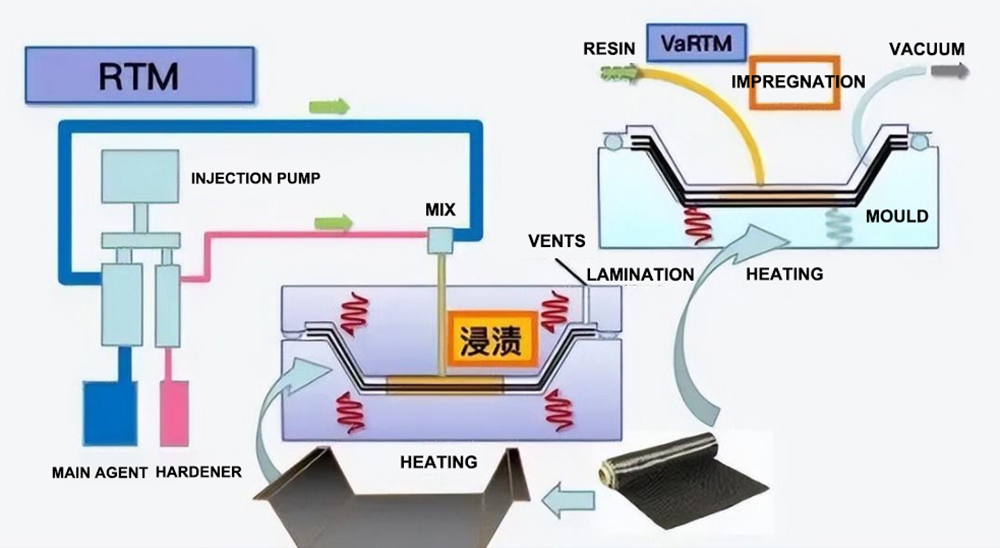
3.RTM (Resin Transfer Molding)
This is a method where a carbon fiber preform (a product or fabric that is preformed into a product shape) is placed in a pair of male/female sealed molds, and liquid resin is pressed, impregnated, and heated to cure. The method of curing under vacuum pressure using only the female mold is called VaRTM (Vacuum Assisted RTM). RTM is suitable for small and medium-sized molded products, while VaRTM is suitable for large and medium-sized molded products.
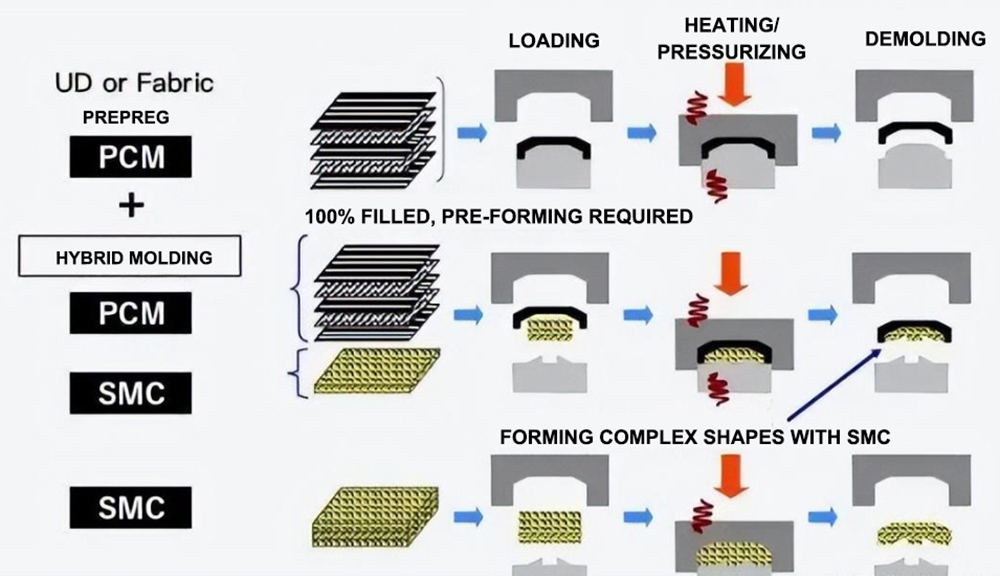
4. Press Molding
This is a method where thin sheets of resin impregnated with prepreg or SMC are stacked on a mold and heated and cured while applying pressure. Mitsubishi Chemical has established the PCM (Prepreg Compression Molding) molding method based on high cycle and preforming technology, and can also be mixed with SMC materials. This is a molding method suitable for mass production.