Viscose fiberglass aluminum-coated fabric is a composite material that combines the characteristics of viscose fiber, glass fiber and aluminum coating. It is widely used in industry, construction, transportation and other fields, especially in environments that require fire protection, heat insulation and corrosion resistance.
Material composition and structure of viscose fiberglass aluminum-coated fabric
Viscose fiber:
Viscose fiber is a regenerated cellulose fiber extracted from natural cellulose (such as wood pulp and cotton pulp) by chemical methods. Viscose fiber has good hygroscopicity, softness and comfort. Viscose fiber is soft and skin-friendly, and has certain flame retardancy and high temperature resistance, which enables it to provide good comfort and certain protective properties in composite materials.
Glass fiber:
Glass fiber is an inorganic fiber, usually made of silica as the main component, through a melt drawing process. Glass fiber has the advantages of high strength, high temperature resistance and corrosion resistance. The high mechanical strength and heat resistance of glass fiber provide a strong skeleton for the fabric, so that the fabric can still maintain its structural integrity in high temperature environments.
Aluminum Coating:
Aluminum coating is a process of coating the surface of fabric with a thin layer of aluminum film by physical vapor deposition (PVD) or spraying. Aluminum has high reflectivity and anti-oxidation ability, which can effectively reflect thermal radiation and resist chemical corrosion. Aluminum coating not only gives the fabric excellent thermal reflectivity, but also increases its waterproof, oil-proof and anti-fouling properties, thereby expanding the application range of the fabric.
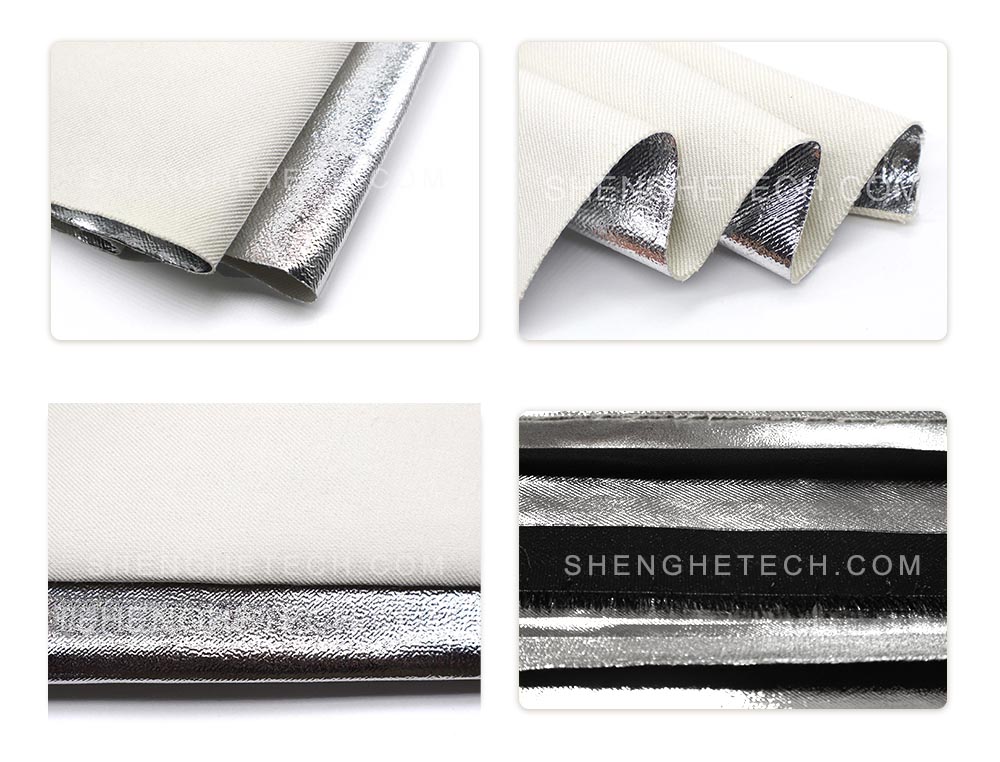
Production process of viscose glass fiber aluminum coated fabric
- Preparation of yarn: Viscose fiber yarn: Viscose fiber is made into yarn through a spinning process. In order to increase strength, viscose yarn is usually blended with glass fiber yarn. Glass fiber yarn: Glass fiber is drawn into filaments through a melt drawing process and twisted to give it sufficient mechanical strength and flexibility.
- Weaving process: Viscose fiber yarn and glass fiber yarn are woven into a base fabric according to a specific structure (such as plain or twill). This process requires strict tension control and yarn arrangement to ensure the uniformity and consistency of the fabric.
- Aluminum coating process: After the base fabric is woven, a layer of aluminum film is coated on the surface of the fabric through physical vapor deposition (PVD) or spraying process. The thickness and uniformity of the coating are crucial, usually achieved by precisely controlling the evaporation rate and deposition time.
- Post-processing process: Curing and shaping, The coated fabric needs to be heat treated to cure the aluminum film and shape the fabric to maintain dimensional stability and shape consistency at high temperatures. Finishing and quality inspection: After surface finishing, strict quality inspection is carried out to ensure that the fabric has good flame retardancy, high temperature resistance, heat reflectivity and corrosion resistance.
Performance of viscose glass fiber aluminum-coated fabric
- Flame retardancy: Viscose fiber has certain flame retardancy, and the high heat resistance of glass fiber further enhances the protective performance of the fabric in high temperature environment. Aluminum coating can also isolate oxygen and reduce the risk of material combustion.
- High temperature resistance: The high temperature resistance of glass fiber enables the fabric to be used for a long time in a high temperature environment without deformation or damage. The high reflectivity of the aluminum film further reduces heat conduction and protects the internal structure of the fabric.
- Heat reflectivity: Aluminum coating has high reflectivity and can reflect most of the heat radiation, reducing the temperature of the fabric surface, thereby improving its thermal insulation performance.
- Corrosion resistance: Aluminum film can effectively resist the erosion of chemicals such as acids and alkalis, extending the service life of the fabric in harsh environments.
- Mechanical strength: Glass fiber gives the fabric high strength and tear resistance, combined with the softness of viscose fiber, forming a composite material that is both strong and flexible.
Application scenarios of viscose glass fiber coated aluminum fabric
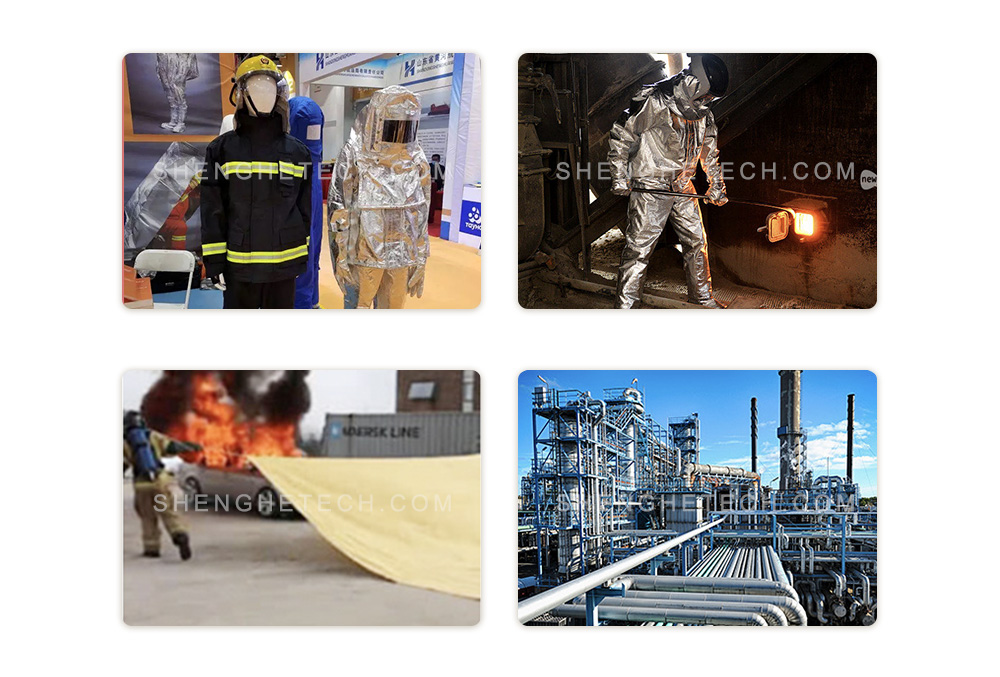
1.Industrial protectionHigh temperature equipment insulation: used to cover high temperature equipment such as furnaces, boilers, etc., to reduce heat loss and provide efficient insulation effect.
Protective clothing: used to manufacture fireproof clothing, heat insulation clothing, etc., to protect the safety of workers in high temperature, fire or arc environment.
2.Buildings and infrastructureFireproof and heat insulation layer: used for fire walls, ceilings, etc. of buildings, providing effective fire protection and reducing the risk of fire spread.
Tunnel protection: used for fire prevention and heat insulation treatment of tunnel inner walls to protect structures from damage by high temperature and fire.
3. TransportationAutomobile insulation pads: used for heat insulation of automobile engine compartments and exhaust systems to prevent high temperatures from affecting the comfort of equipment and personnel in the car.
Fireproof seats: used to manufacture fireproof seats for vehicles such as cars, trains, and airplanes to ensure that passengers have enough time to escape in a fire.
4. AerospaceAircraft thermal protection: used to manufacture thermal insulation barriers and protective covers for aerospace vehicles to ensure the safe operation of equipment under high temperature conditions.
5. High-temperature insulation materials
Used for insulation protection of power generation equipment to ensure the stable operation of equipment under high temperature and high pressure environments.
Technical advantages and development prospects
Versatility: Viscose glass fiber aluminum-coated fabric combines the softness of viscose fiber, the mechanical strength of glass fiber, and the heat reflectivity of aluminum coating to become a multifunctional composite material that can adapt to various extreme environments.
Environmental protection and safety: Viscose fiber is a natural cellulose derivative with good biodegradability, and the fabric will not release harmful gases during use. It is an environmentally friendly and safe material choice.
Innovation and application prospects: With the advancement of technology, the production process of viscose glass fiber aluminum-coated fabrics has been continuously optimized, and the material performance has been continuously improved. Its application prospects in the fields of industry, construction, transportation and national defense are very broad.
This material has become an important part of modern industrial and architectural protective materials due to its excellent performance and wide application fields. With the development of science and technology, viscose glass fiber aluminum-coated fabrics will be used in more high-performance fields.


