Meta-aramid aluminum-coated fabric is a high-performance textile material that combines the excellent properties of meta-aramid fiber with the versatility of aluminum coating. This fabric performs well in fire resistance, heat insulation, chemical corrosion resistance and mechanical strength, and is widely used in high-demand protection and industrial fields.
Meta-aramid fiber: It is a high-performance synthetic fiber known for its excellent heat resistance, chemical resistance and mechanical properties. Major brands include DuPont's Nomex and Teijin's Conex. It is an inherently heat-resistant and flame-retardant fiber that will not melt, drip or support combustion. It has the advantages of high temperature resistance, flame retardancy, insulation, wear resistance and good dimensional stability. It has been widely used in environmental protection, filtration, high-performance protective products and electrical insulation, honeycomb materials for aircraft and high-speed train applications, etc.
Meta-aramid chemical name is polyisophthalamide, which belongs to the aromatic polyamide fiber series. It is resistant to high temperature. The chemical structure of meta-aramid fiber is very stable. It has very good resistance to weak acids, weak bases and most organic substances, such as ketones and alcohols, and is therefore widely used.
Aluminum coating: Aluminum coating adds a thin layer of aluminum to the surface of textile materials, which enhances the reflective properties, heat resistance and protective properties of the material. This coating can be applied to the fiber through processes such as evaporation and sputtering.
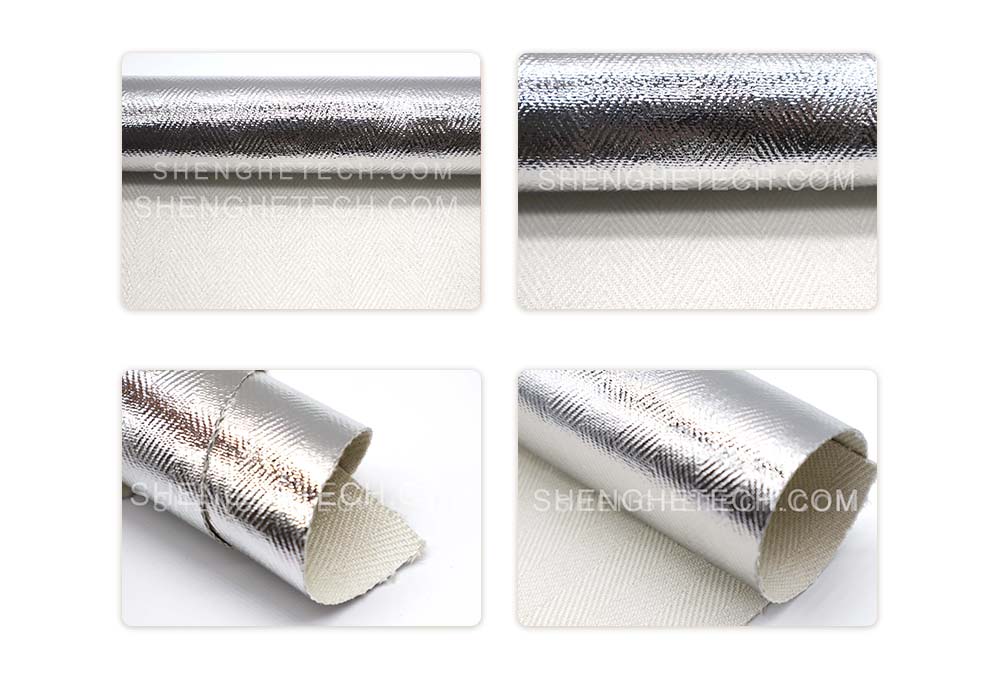
Manufacturing process of meta-aramid aluminum-coated fabrics
1. Prepare high-strength meta-aramid fibers through polymerization and spinning processes. The fibers are made into fabrics through weaving processes.
2. Place the fabric in a vacuum aluminum plating device to form a uniform aluminum coating on the fabric surface through evaporation or sputtering processes.
3. Post-processing is performed according to application requirements, such as coating a protective layer, calendering, etc., to enhance the adhesion and durability of the coating.
Performance of Meta-aramid Aluminum Coated Fabrics
- High temperature resistance: Meta-aramid fiber can withstand high temperatures above 300°C, while the aluminum coating can reflect heat radiation, further improving the heat resistance of the material.
- Fire retardant: Meta-aramid fiber has inherent flame retardancy and does not melt or drip when exposed to fire. The aluminum coating enhances the fire resistance of the material, making it suitable for high-risk fire protection environments.
- Chemical corrosion resistance: Meta-aramid fiber has good tolerance to a variety of chemicals (such as acids, alkalis, and solvents). The aluminum coating further enhances the chemical corrosion resistance of the material.
- Mechanical strength: Meta-aramid fiber has excellent tensile strength and toughness. The aluminum coating increases the surface hardness of the material and improves its wear resistance and tear resistance.
- Lightweight: The combination of meta-aramid fiber and aluminum coating has a lower weight while maintaining high strength and durability, which is suitable for applications that require lightweight materials.
- Conductivity and antistatic properties: The aluminum coating provides certain conductivity and antistatic properties, which is suitable for environments that require antistatic, such as the electronics industry, etc.
- Waterproof and oil-proof performance: The aluminum coating provides good water-proof and oil-proof performance, so that the material can still maintain its performance in a humid or oily environment, extending its service life.
- The protection against convection heat reaches B2 level, the protection against radiant heat reaches C3 level, the protection against aluminum liquid splash reaches D2 level, the protection against molten iron splash reaches E3 level, and the protection against contact heat reaches F2 level, meeting the standard of EN11612.
Application of meta-aramid aluminum-coated fabrics
- Protective clothing Fire protection clothing: Due to its excellent fire retardant and high temperature resistance, meta-aramid aluminum-coated fabrics are widely used in firefighters' protective clothing. Industrial protective clothing: Used in high-temperature workplaces such as steelmaking and welding, providing multiple protections against fire, heat insulation and chemical corrosion.
- Aerospace Insulation blankets: Insulation blankets used inside aircraft and spacecraft, providing excellent heat insulation and fire resistance. Protective covers: Used to protect aerospace equipment from high temperatures and chemicals.
- Building materials Fireproof curtains: Used for fireproof partitions and curtains in buildings to prevent the spread of fire. Insulation materials: used for insulation layers of building walls and roofs, providing heat insulation and fire protection.
- Electronics industry Antistatic clothing: used in electronic component production and assembly workshops to prevent static electricity accumulation and discharge. Thermal management materials: used for heat dissipation and protection of electronic equipment.
- Automobile industry Insulation pads: used for insulation pads of automobile engines and exhaust systems, providing heat insulation and fire protection. Interior materials: used for insulation and fireproof interiors of automobiles to improve vehicle safety and comfort.
- Military applications Protective equipment: used to make military fireproof clothing, bulletproof vests, etc., providing high temperature, fire and chemical protection. Vehicle and equipment insulation: used for thermal insulation protection of military vehicles and equipment to ensure their normal operation in high temperature environments.
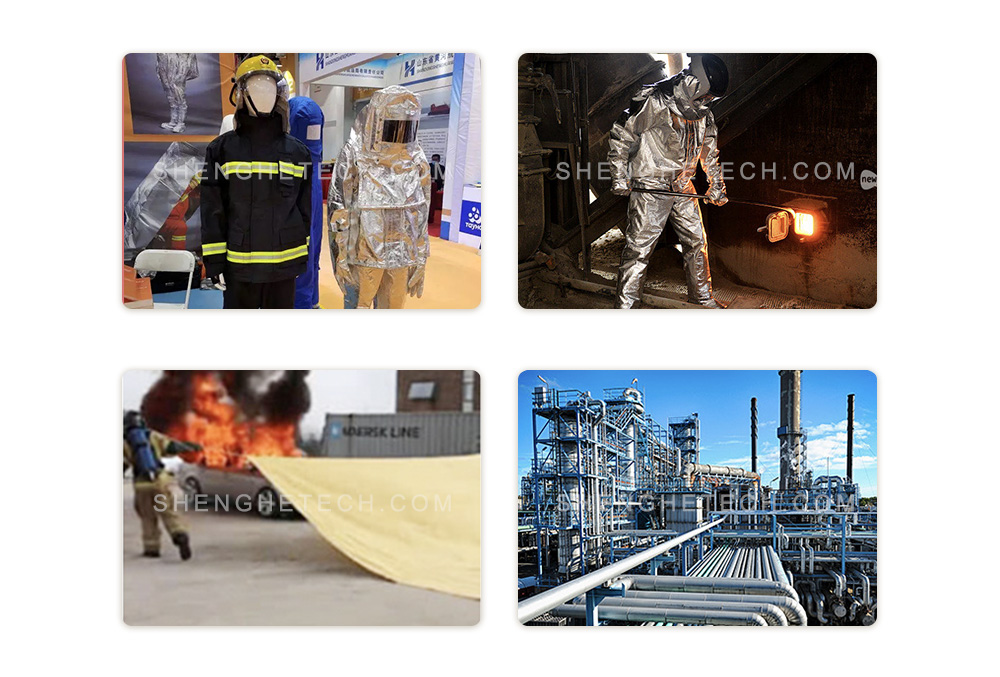
Meta-aramid aluminum-coated fabrics combine the high strength, high temperature resistance and fire resistance of meta-aramid fibers with the reflective, heat-insulating and protective properties of aluminum coatings to become a versatile, high-performance textile material. It is widely used in protective clothing, aerospace, building materials, electronics industry, automotive industry and military, providing excellent protection and performance, meeting the needs of various high-demand application scenarios.


