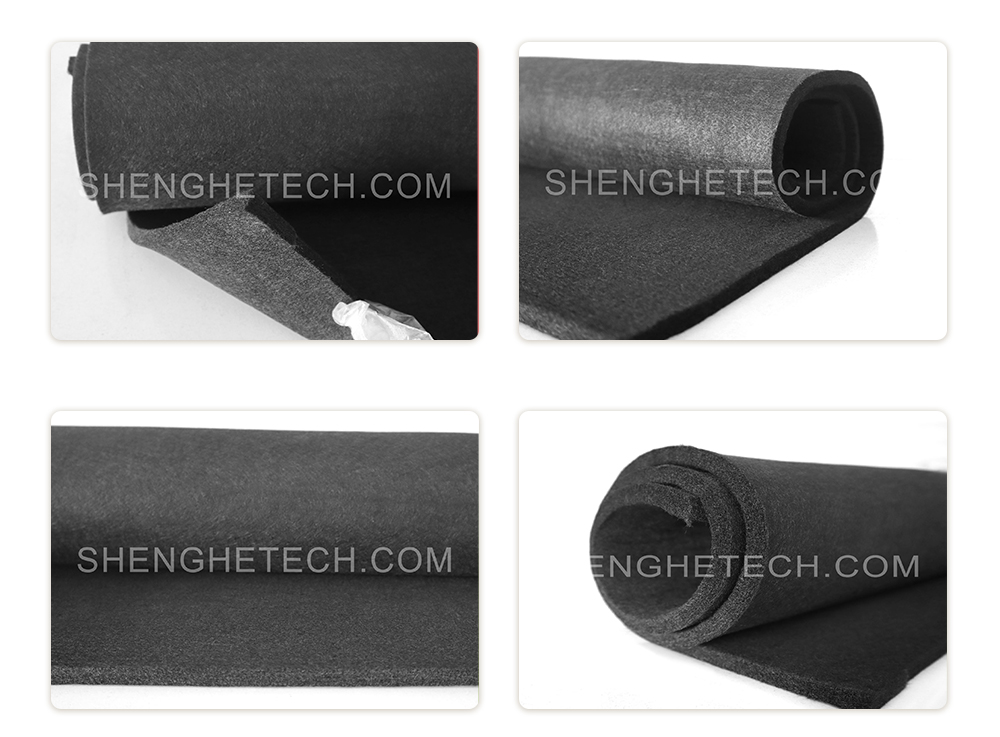
Graphite felt is divided into three types: asphalt-based graphite felt, polyacrylonitrile-based (PAN-based) graphite felt and viscose-based graphite felt due to the different raw felts used. Its main use is as a heat preservation and insulation material for single crystal silicon smelting furnaces. In the chemical industry, it can be used as a filter material for high-purity corrosive chemical reagents.
Carbon felt is treated at a high temperature of more than 2000°C under vacuum or inert atmosphere to become graphite felt. Its carbon content is higher than that of carbon felt, reaching more than 99%. In the late 1960s, graphite felt products were available in the world. Graphite felt is divided into three types: asphalt-based, polyacrylonitrile-based graphite felt and viscose-based graphite felt due to the different raw felts used.
Among them, asphalt represented by Japan's Kureha Chemical is the mainstream in the insulation industry. European and American insulation felts are basically based on viscose, while most of the domestic ones are based on polyacrylonitrile. Process: Cut polyacrylonitrile-based carbon felt or viscose-based carbon felt into the required size, roll it into a cylinder and put it into a container made of graphite material, place the graphite container in a high-temperature furnace (the high-temperature furnace is a graphite tube furnace, medium-frequency, high-frequency induction furnace or other high-temperature furnace with heating form), and use vacuum or high-purity inert gas protection to heat it to 2200-2500℃ at a heating rate of 100-300℃/h, and then cool it naturally to 100℃.
Polyacrylonitrile-based graphite felt is stronger and has stronger antioxidant ability than viscose-based graphite felt, but has poor flexibility, high volume density and good thermal insulation performance. In addition to the high purity, high temperature resistance, corrosion resistance and non-melting characteristics of block graphite, they also have the advantages of elasticity, arbitrary folding, cutting and stitching with graphite yarn. The main use of graphite felt is as a thermal insulation material for single crystal silicon smelting furnaces. In the chemical industry, it can be used as a filter material for high-purity corrosive chemical reagents. Graphite felt can be used at a temperature of about 3000°C under non-oxidizing atmosphere conditions.
Main properties of graphite felt
1. Conductivity
The conductivity of graphite felt comes from its microstructure composed of graphite fibers, and graphite itself is an excellent conductive material. Graphite felt can conduct current under low resistance conditions, so it is very popular in electrochemical applications.
2. High temperature resistance
Graphite felt has excellent high temperature resistance and is usually stable in high temperature environments above 2000°C. In vacuum or inert gas environments, its oxidation resistance temperature is even higher. Therefore, the application of graphite felt in high temperature fields is particularly important, such as high temperature insulation materials or heat treatment furnace linings.
3. Chemical stability
Graphite felt has excellent chemical corrosion resistance and can remain stable in acidic, alkaline or other chemically corrosive environments. Especially in strong acid environments such as sulfuric acid and hydrofluoric acid, its corrosion resistance enables it to be used in various chemical reactors and storage tanks.
4. Low density and high porosity Graphite felt usually has low density and high porosity, which makes it very lightweight, and also has good gas permeability and adsorption properties. The high porosity structure provides graphite felt with a large specific surface area, which helps electron transport and material exchange in electrochemical reactions.
5. Good thermal insulation performance The porous structure of graphite felt gives it excellent thermal insulation effect, especially in high temperature environments, its low thermal conductivity can effectively reduce heat conduction. Graphite felt is often used as insulation material to ensure that the heat in the equipment or system is controlled.
6. Mechanical flexibility Although graphite is a brittle material, the felt structure of graphite felt provides relative mechanical flexibility. It can be processed into various shapes and sizes to adapt to different application scenarios. At the same time, its flexibility also makes it suitable for composite use with other materials.
| Carbon content |
% |
99 |
| Ash |
% |
0.1 |
| Body density |
g/cm³ |
0.1 |
| Specific surface area |
m²/g |
2.648 |
| Felt shedding rate |
mg/ felt per gram |
1.95 |
| Oxidation rate |
Weight loss/hour@600C in air |
0.6 |
| Porosity |
% |
95 |
| Sheet resistance |
Ω∙cm² |
0.1 |
| Thickness tolerance |
mm |
±7.5% |
| Energy efficiency |
Mainly based on single cell performance test, 80mA/cm² |
87% |
| Voltage efficiency |
80mA/cm² |
85% |
Main applications of graphite felt
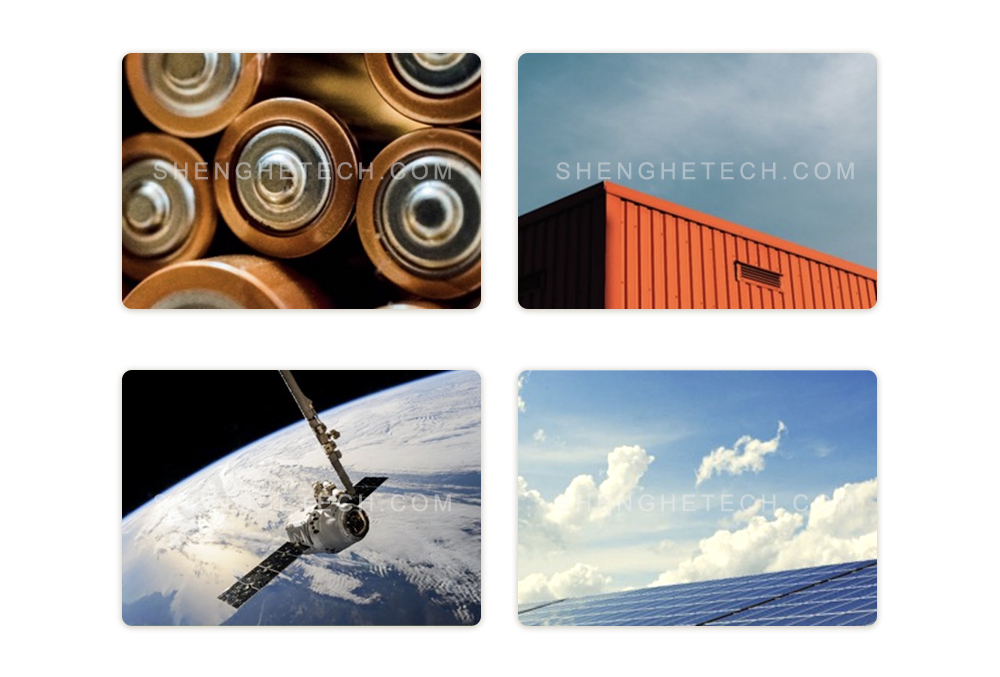
1. Electrochemical applications Graphite felt is widely used in the field of electrochemistry, especially in fuel cells, electrolytic cells, supercapacitors and other devices: Fuel cell electrodes: In proton exchange membrane fuel cells, graphite felt can be used as electrode materials. Due to its high conductivity and gas diffusion capacity, it can effectively promote the transmission and electrochemical reaction of hydrogen or oxygen. Electrolytic cells: Graphite felt is used as cathode or anode materials in some electrolytic applications. Its conductivity and chemical stability ensure the high efficiency and durability of the electrolytic process. Supercapacitors: Due to its large specific surface area and conductive properties, graphite felt is also used as electrode materials for supercapacitors to help achieve efficient energy storage.
2. High-temperature heat treatment field Graphite felt is often used as thermal insulation material in high-temperature furnaces due to its excellent high-temperature resistance and thermal insulation properties: High-temperature furnace lining: Graphite felt is used as thermal insulation material in vacuum furnaces or high-temperature treatment furnaces, which can provide effective thermal shielding at high temperatures to prevent heat loss. Crystal growth furnace: In the production process of high-purity materials such as single crystal silicon, graphite felt is often used as an insulation layer to ensure temperature control during crystal growth.
 3. Anti-corrosion and filtration
 Graphite felt's corrosion resistance and good adsorption make it widely used in the chemical and environmental fields: Corrosive gas filtration: Due to its chemical resistance and high porosity, graphite felt can filter and purify corrosive gases or liquids, such as for the adsorption and filtration of sulfuric acid gas. Chemical reactor lining: Graphite felt can be used as a lining material for containers or reactors in some highly corrosive environments to play an anti-corrosion and protective role.
4. Aerospace Graphite felt is widely used in the aerospace field because of its light weight, high strength, high temperature resistance and thermal insulation. It is mainly used as a thermal insulation layer and high temperature protection material in rocket engines, satellites and spacecraft.
5. Solar energy and energy storage Graphite felt's thermal conductivity and electrical conductivity make it widely used in solar thermal utilization and energy storage systems. For example, graphite felt can be used as a heat-absorbing material in solar collectors and can also be used as a conductive layer in energy storage devices.
6. Nuclear energy field Graphite felt is also used in nuclear reactors as a thermal neutron reflector and high-temperature insulation material to ensure the stability and safety of reactor operation.


