12K PAN-Based Oxidized Fiber Filament
PAN-based pre-oxidized fiber, also known as oxidized PAN fiber, is a high-performance fiber material produced from polyacrylonitrile (PAN) precursor through a controlled oxidation process. During manufacturing, the PAN precursor is thermally stabilized within a temperature range of 200–300°C in an oxidizing environment. This process reorganizes and densifies the molecular chains of the fiber, forming a gradually stabilized ladder-like ordered structure.
PAN-based pre-oxidized fiber offers high strength, high specific modulus, abrasion resistance, heat resistance, chemical resistance, and electrical insulation. One of its most notable characteristics is its excellent thermal stability—when exposed to heat or flame, the fiber does not melt or ignite.
In addition, the fiber demonstrates excellent textile processability and can be used in spinning, weaving, knitting, and sewing processes.
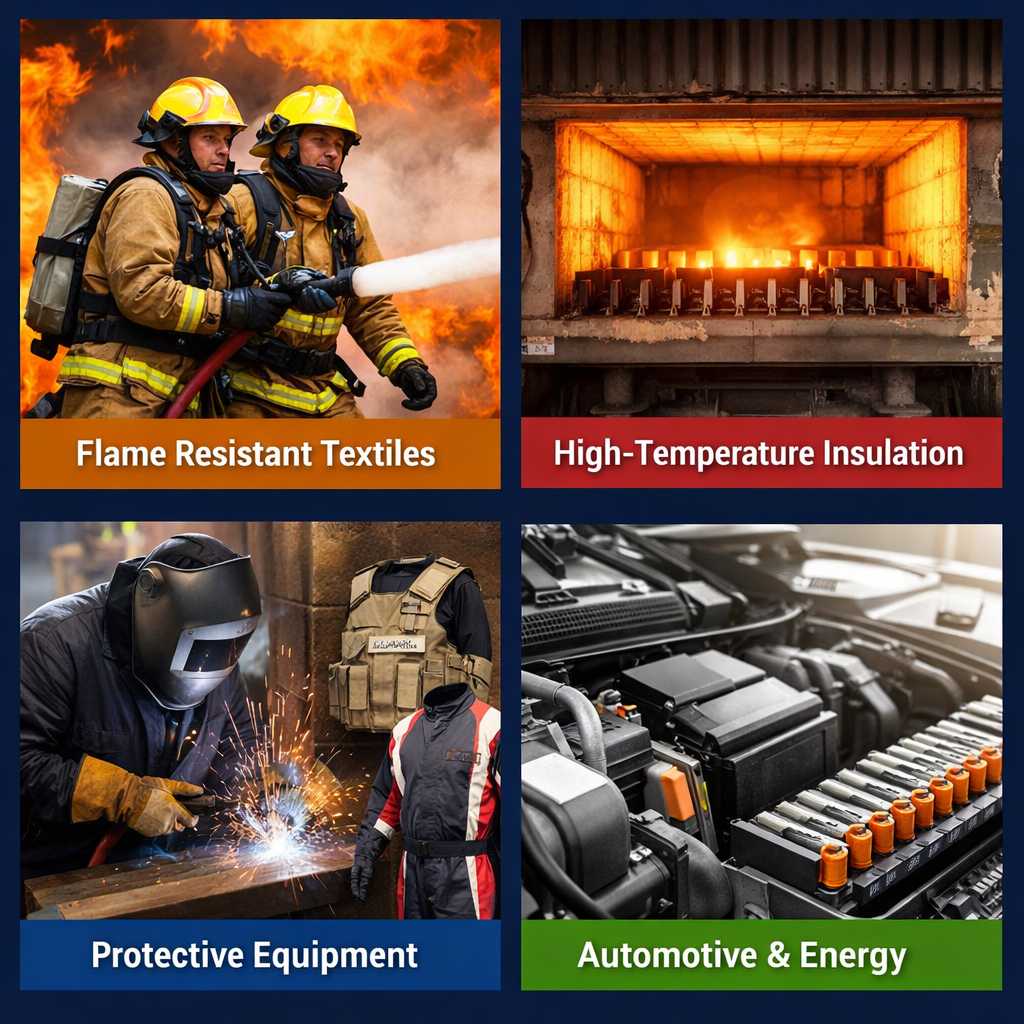
It is widely used as a heat-resistant and flame-retardant material, including building insulation materials, fireproof insulation materials, and high-temperature furnace insulation. It is also used in protective textiles such as thermal protective clothing, firefighting suits, and fire blankets. Furthermore, it can be applied in automotive engine compartments and energy storage batteries as flame-retardant thermal insulation materials.
Manufacturing Process
The production of 12K oxidized PAN fiber is a critical step in the carbon fiber manufacturing process, with the core process being thermal stabilization.
1. PAN Precursor Preparation
The raw material used is PAN-based precursor fiber.
2. Oxidative Stabilization
The PAN precursor fiber is heat-treated in air within a temperature range of approximately 200–300°C. During this stage, the linear molecular chains of PAN undergo cyclization and oxidation reactions, forming a dense and thermally stable ladder structure.
3. Winding and Packaging
After stabilization, the 12K filament tow is wound into spools or bobbins, forming the final product for convenient transportation and downstream processing.
12K PAN-Based Oxidized Fiber Filament Technical Specifications
| Parameter |
Typical Value / Range |
Notes |
| Fiber Tow Size |
12K |
Each tow contains 12,000 individual filaments |
| Single Filament Fineness |
~1.32 dtex |
Indicates the fineness of each filament |
| Limiting Oxygen Index (LOI) |
>45% (typical)
35–55% (application range) |
Higher LOI means better flame resistance. >45% indicates extremely high flame retardancy |
| Density |
~1.4 g/cm³ |
Slightly higher than common textile fibers |
| Color |
Black |
Characteristic color after oxidation |
| Thermal Stability |
Excellent |
Non-melting and non-flammable, forms stable carbonized layer |
| Chemical Resistance |
Good |
Resistant to acids, alkalis and organic solvents |
| Electrical Conductivity |
Nearly non-conductive |
Excellent electrical insulation |
| Processability |
Good |
Suitable for spinning, weaving, needling and sewing |
Key Characteristics of 12K PAN-Based Oxidized Fiber Filament
- Excellent Mechanical Properties
High strength and high modulus provide structural stability and durability in demanding applications.
- Outstanding Thermal Stability
The fiber does not melt or burn when exposed to heat or flame and can achieve a limiting oxygen index above 45%.
- Excellent Thermal Insulation
Low thermal conductivity effectively reduces heat transfer, making it suitable for insulation materials.
- Strong Chemical Resistance
Resistant to most acids, alkalis and chemicals, enabling use in harsh chemical environments.
- Good Textile Processability
Suitable for spinning, weaving, needling and sewing to manufacture protective textiles.
- Low Electrical Conductivity
Almost non-conductive, making it ideal for electrical insulation and cable protection.
12K PAN-Based Oxidized Fiber Filament Application Areas
Heat-Resistant and Flame-Retardant Protection
- Firefighting: firefighter turnout gear, fire-resistant underwear, fire blankets
- Industrial Protection: steelmaking protective clothing, welding protective garments
- Specialized Industries: military training uniforms, racing driver protective suits, petrochemical workwear
Industrial and Thermal Insulation Materials
- High-Temperature Insulation: industrial furnace linings, kiln sealing materials, pipeline insulation layers
- Building Fire Protection: exterior wall fire barriers, fireproof door seals, tunnel fire boards
- Filtration Materials: filter felts for high-temperature corrosive gases, acid and alkali resistant filters
Transportation and New Energy
- Transportation: aircraft interior materials, high-speed train seating and interior components
- New Energy: automotive engine compartment insulation, flame-retardant battery housing materials
Composite Materials and Carbon Fiber Production
- Reinforcement Material
Used with phenolic resin and other matrices to produce ablative composite materials.
- Intermediate for Carbon Fiber Production
A key intermediate in the carbon fiber manufacturing process. After carbonization and graphitization, it can be converted into high-performance carbon fiber.