Antistatic filament is a textile material with antistatic properties, which is usually used in electronic fabrics, smart clothing and products that require electromagnetic shielding or static control. It is made by blending or coating conductive fibers with other conventional fibers (such as cotton, polyester, etc.) to make the yarn conductive.
What is conductive fiber
Properties: Usually refers to fibers with a resistivity of less than 107Ω·cm under standard conditions (20℃, 65% relative humidity).
Classification:
(1) Metal compound conductive fiber, with a resistivity of 102~104Ω·cm, is mainly produced by composite spinning method to locally mix high concentration of conductive particles into the fiber. Black conductive particles use carbon black, and white ones use metal oxides such as antimony oxide containing a small amount of tin oxide coated with titanium dioxide. The fiber is relatively light, flexible, washable and easy to process. it can also be processed by chemically fixing copper compounds or electroplating metals.
(2) Metal conductive fiber. This type of fiber is made by utilizing the conductive properties of metals. The main methods include direct wire drawing, which is to repeatedly draw the metal wire through a die to make fibers with a diameter of 4 to 16 μm.
(3) Carbon black conductive fibers
It is an old and common method to make conductive fibers using the conductive properties of carbon black. This method can be divided into the following three categories:
① Doping method: Carbon black is mixed with fiber-forming materials and then spun. Carbon black forms a continuous phase structure in the fiber, giving the fiber conductive properties. This method generally uses a skin-core composite spinning method, which does not affect the original physical properties of the fiber and makes the fiber conductive.
② Coating method: The coating method is to coat carbon black on the surface of ordinary fibers. The coating method can use an adhesive to bond carbon black to the fiber surface, or directly soften the fiber surface quickly and bond it with carbon black. The disadvantages of this method are that carbon black is easy to fall off, the feel is not good, and carbon black is not easy to be evenly distributed on the fiber surface.
③ Fiber carbonization treatment: Some fibers, such as polyacrylonitrile fibers, cellulose fibers, asphalt-based fibers, etc., after carbonization treatment, the main chain of the fiber is mainly carbon atoms, which makes the fiber conductive. The most commonly used method is the low-temperature carbonization treatment of acrylonitrile fibers.
(4) Conductive polymer fibersPolymer materials are generally considered to be insulators, but the successful development of polyacetylene conductive materials in the 1970s broke this traditional concept. After that, polymer conductive materials such as polyaniline, polypyrrole, and polythiophene were born one after another, and people's research on the conductive properties of polymer materials has become more and more extensive. There are two main methods for preparing conductive fibers using conductive polymers: in-situ polymerization method This method is to generate conductive polymers by in-situ polymerization of monomers in fiber materials to form conductive fibers. Common conductive polymers include polypyrrole (PPy) and polyaniline (PANI). The advantage of this method is that it can evenly deposit conductive polymers on the surface or inside of the fiber, but it is also necessary to pay attention to controlling the polymerization conditions to ensure the mechanical properties of the fiber.
Solution spinning method
This is to dissolve the conductive polymer in a suitable solvent and then prepare conductive fibers through spinning technology. Solution spinning methods include wet spinning, dry spinning, etc. After the fiber is finally obtained, the conductivity is improved by doping or heat treatment. The advantage of this method is that it is easy to control the shape and structure of the fiber.
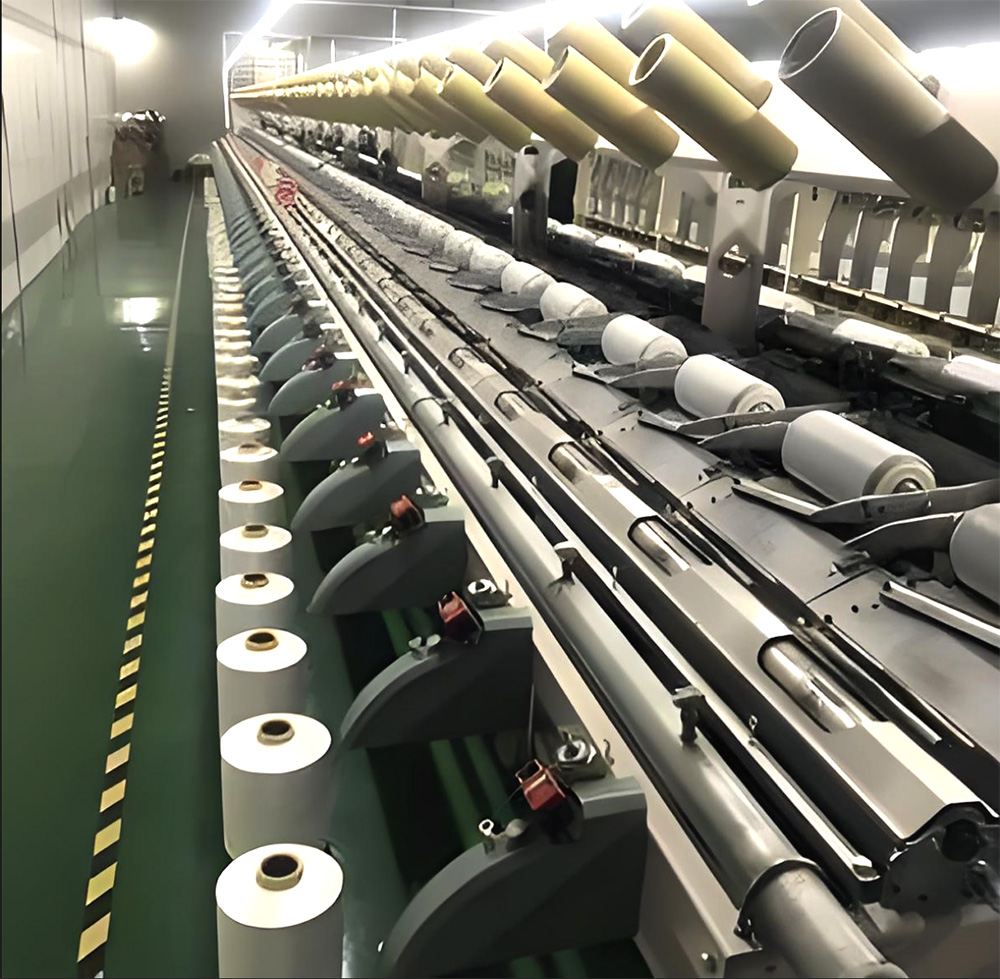
The production method of conductive fiber filament mainly includes the following steps
- Adding conductive material: Mixing conductive fiber or conductive agent with conventional fiber material (such as polyester, nylon).
- Blending process: Blending conductive fiber with ordinary fiber in proportion to form yarn with antistatic properties.
- Co-extrusion process: Through bicomponent spinning or coating technology, the conductive material is evenly distributed on the surface or inside of the fiber.
- Spinning and weaving: The antistatic yarn is further processed into fabric to ensure its antistatic performance.
- Post-treatment: Conductive coating can be performed, and the durability and aesthetics of the finished product can be increased through shaping and dyeing.
Main features of conductive fiber filaments
Antistatic: Yarns with conductive fibers or antistatic agents added can effectively guide or disperse static electricity and avoid static electricity accumulation and discharge.
Softness: Compared with pure metal conductors, conductive fiber staple yarns retain the softness and elasticity of traditional textile fibers, so they are suitable for clothing and fabric products.
Wear resistance: Conductive fibers have high strength and wear resistance, especially in occasions where frequent bending or friction is required, they can still maintain conductive properties.
Application areas of conductive fiber filaments
Smart clothing: It can be used to make sensors, heating elements or conductive lines in smart clothing.
Electromagnetic shielding: It is used to make electromagnetic shielding materials to prevent electromagnetic interference between electronic devices.
Static control: It is widely used in factories, explosion-proof places and other places where antistatic is required.
Medical field: It can be used for health monitoring equipment, such as wearable heart rate monitors.


