Learn how twisted PBO fiber raw yarn improves processing, abrasion resistance, strength, and durability for protective textiles, composites, and industrial applications.
Advantages of Twisting PBO Fiber Raw Yarn
Twisted yarn, as the name suggests, refers to multifilament composed of countless extremely fine monofilaments, with the fiber bundle rotating around its axis. Although these monofilaments themselves have excellent properties, as a bundle of raw yarn, their bonding strength is relatively weak. Currently, the processing technology for twisting
PBO fibers is very mature. Based on our production and processing technology summary, twisted PBO fiber raw yarn has the following key advantages:
1. Significantly Improved Processing Performance and Abrasion Resistance: This is the most direct and important advantage of twisting. Untwisted
PBO raw yarn has poor bundle cohesion, a very smooth surface, and the monofilaments are prone to slippage. During subsequent weaving, braiding, and winding processes, the raw yarn frequently rubs against mechanical parts such as yarn guides, heddles, and reeds, easily producing fuzz or even breakage, leading to production disruptions. Through twisting, the monofilaments are tightly twisted together, forming a more stable and compact "strand." This greatly reduces the relative slippage between monofilaments and damage from external friction.
2. Improved fiber cohesion and bundle properties: Twisting tightly binds the monofilaments together, allowing them to withstand external forces and undergo processing as a whole. This makes the yarn less prone to unraveling during transport, unwinding, and subsequent processing, facilitating handling and control.
3. Increased yarn strength and toughness: At low to medium twist, twisting allows all monofilaments to distribute the load more evenly under stress. If a monofilament has a minor weakness, its adjacent monofilaments can provide support through the frictional force generated by the twist, thereby improving the overall strength utilization and fatigue resistance of the yarn to some extent. In applications requiring the withstand of complex stresses (such as repeated bending and impact), moderately twisted PBO yarns exhibit better overall toughness and energy absorption capacity.
4. Achieved specific fabric styles and feel: Twisting affects the texture of the final fabric. High-twist
PBO yarns result in a stiffer feel and clearer texture; while low-twist yarns tend to be softer. This provides designers with the flexibility to adjust product performance and style.
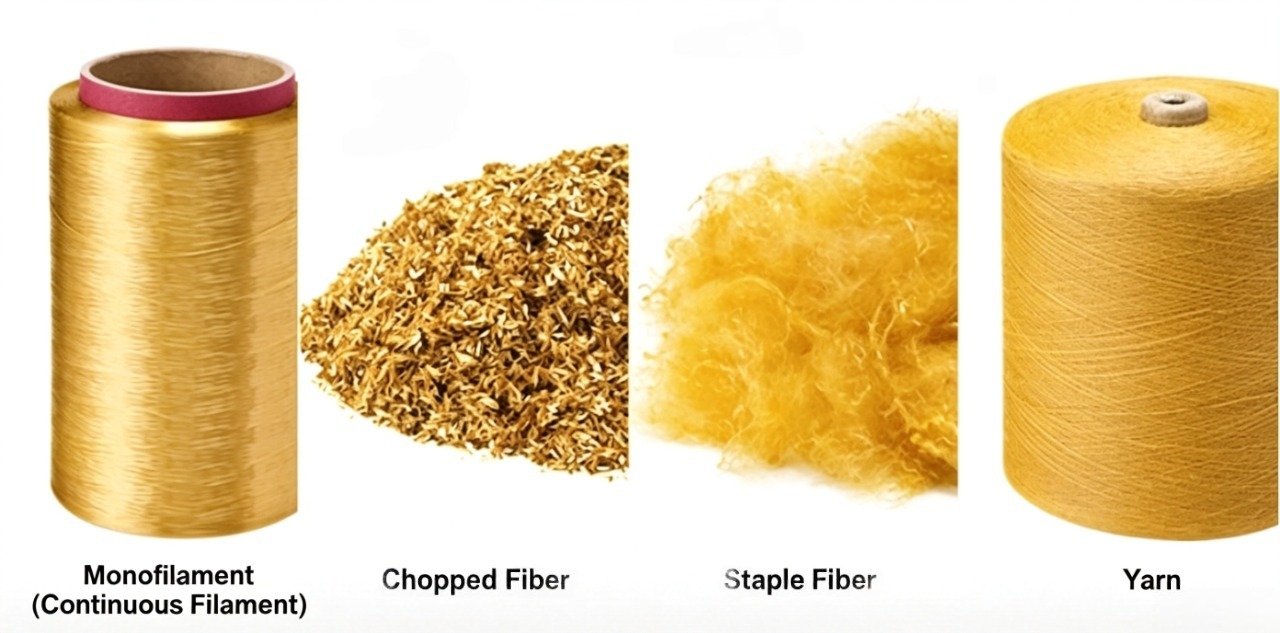
The essence of twisting is to strike a balance between "absolute mechanical properties" and "processability/overall durability." Twisting is almost essential when weaving or braiding is required (such as making soft bulletproof fabric for bulletproof vests or protective gloves); otherwise, production is impossible. When products need to withstand multi-directional friction and repeated bending (such as high-performance cables or conveyor belts), the advantages of abrasion resistance and fatigue resistance brought by twisting far outweigh the loss of strength. After twisting, PBO precursor yarns exhibit significantly improved processability, abrasion resistance, fatigue resistance, and overall toughness, enabling them to be manufactured into a variety of complex textile and composite products. However, this comes at the cost of sacrificing some absolute tensile strength and modulus. Our technicians carefully select and control the twist based on the specific requirements of the final product to achieve optimal overall performance.


