Explore the latest advances in fiber-reinforced composite ballistic helmets, including UHMWPE, aramid fibers, ballistic fabrics, and advanced manufacturing technologies.
Recent Research Progress on Fiber-Reinforced Composite Material Bulletproof Helmets
Introduction
With the escalation of international conflicts and the increasingly complex development of global terrorism and extremism, the threat of war is becoming more severe, placing higher demands on the comprehensive performance of military supplies such as bulletproof helmets. Although the head and neck account for only 12% of a soldier's body, head injuries account for half of combat deaths on the battlefield. Traumatic brain injury (TBI) is a common cause of soldier death and disability, and has become a hallmark injury in modern military conflicts. Data shows that high-speed projectiles or fragments on the battlefield can cause approximately 80% of fatal injuries, with 45% occurring in the head. Faced with high-speed projectiles or fragments that may come from any direction on the battlefield, bulletproof helmets can effectively absorb or reduce the impact kinetic energy of projectiles and fragments, reducing the effective damage to the brain's neural networks and blood vessels caused by the energy waves generated by the projectile within the brain, thereby reducing the mortality rate of combat personnel. Studies have shown that combat personnel wearing bulletproof helmets can reduce the mortality rate by approximately 20%. Therefore, there is a current need to develop bulletproof helmets with better protective performance, lighter weight, and greater wearing comfort to cope with increasingly complex battlefield environments and protect soldiers' lives.
The world's first modern bulletproof helmet was the M1915 steel helmet from World War I. Based on this, the US military produced the M1917 helmet, and during World War II, it developed the US military's exclusive steel helmet—the M1 steel helmet, which is also the longest-serving modern steel helmet. Later, with the development of high-performance fibers and their composite materials, steel helmets gradually faded from the mainstream. For example, the PASGT helmet, due to its high comfort and high protection, began to be widely used in the US military. my country also successfully developed a new composite material bulletproof helmet—the QGF02 aramid helmet—in 1993. Since the beginning of the 21st century, various countries have successively developed lightweight, high-protection, and highly integrated ballistic helmets, such as the US military's IHPS combat helmet, China's W-15 helmet, and the UK's VIRTUS helmet. Figure 1 shows historical photographs of Chinese and American military ballistic helmets; the first row shows Chinese helmets, and the second row shows American helmets.
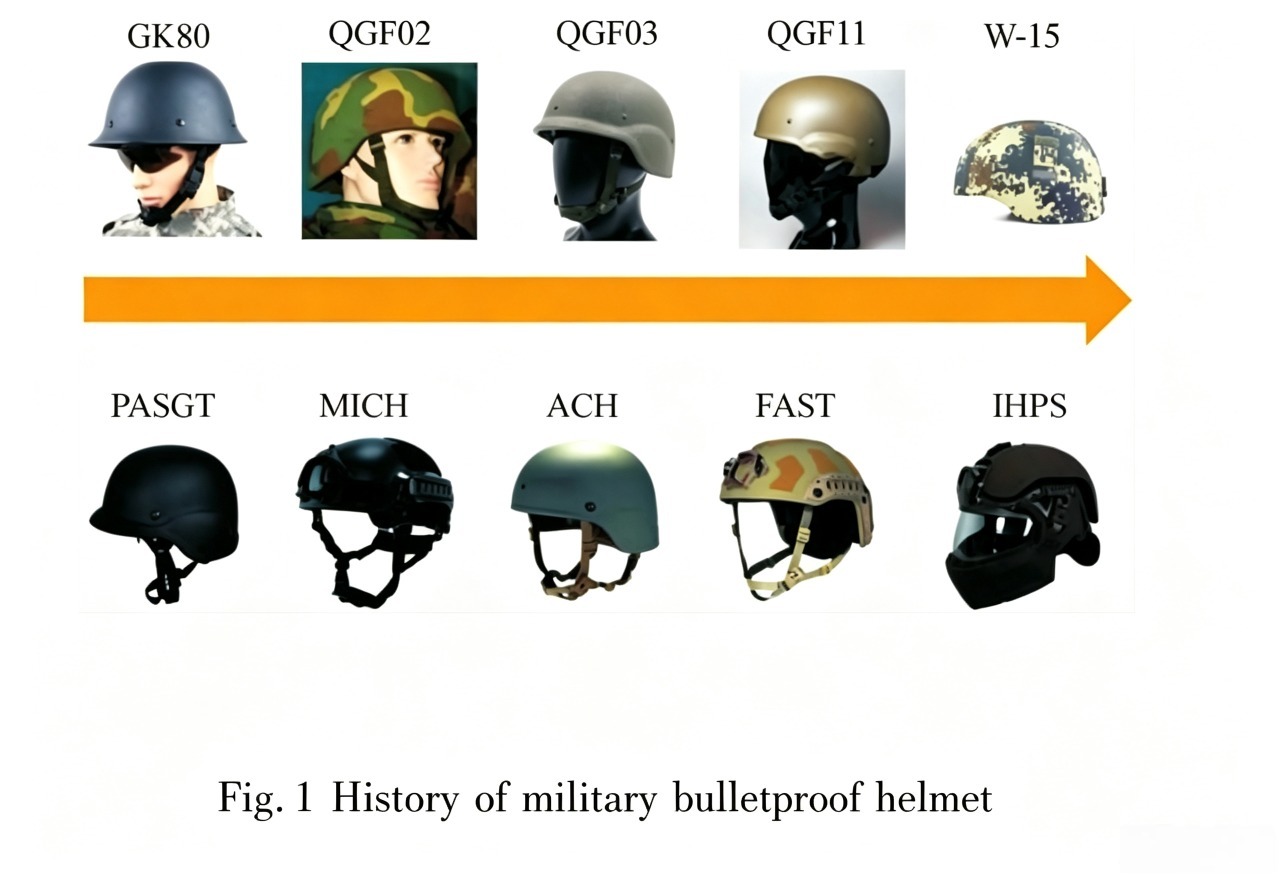
With the ongoing military conflicts worldwide and increasingly complex urban and field combat environments, developing ballistic helmets that meet the demands of future warfare—offering high-performance protection, intelligent functions, comfort and adaptability, rapid production, and customization—is crucial for ensuring soldier safety, enhancing military combat effectiveness, and adapting to diverse combat needs. With the continuous development of materials science, ballistic helmets are now primarily made of fiber-reinforced composite materials, which simultaneously achieve lightweight, high protection, and comfort. The resulting functionally integrated ballistic helmets can significantly improve the individual soldier's information-based combat capabilities. This paper introduces the high-performance fiber-reinforced composite materials used in bulletproof helmets and the ballistic fabric structures employed, and systematically summarizes the molding technology of bulletproof helmets, providing reference materials for the future design and fabrication of fiber-reinforced composite bulletproof helmets.
1. Fiber-Reinforced Composite Materials for Bulletproof Helmets
1.1 Carbon Fiber
In the last century, composite bulletproof helmets were mainly made of aramid fiber composites. In this century, UHMWPE fiber has gradually replaced aramid fiber as the mainstream material in the field of bulletproof protection.
Carbon fiber, due to its extremely high stiffness and strength, is often hybridized with aramid fiber and UHMWPE fiber, showing great potential in the field of bulletproof protection. In recent years, new high-performance fibers such as PBO fiber and PIPD fiber
have also attracted widespread attention in the field of ballistic protection. The basic mechanical properties of high-performance fiber-reinforced composite materials are shown in Table 1.
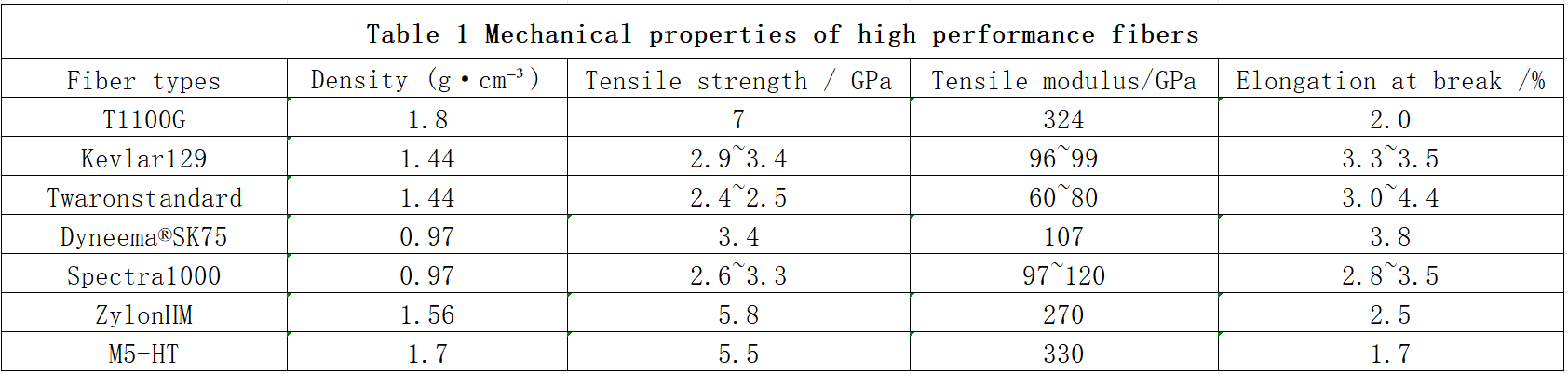
Carbon fiber was developed in the 1950s and 1960s. Due to its high modulus, high tensile strength, high-temperature stability, and high corrosion resistance, it has long been a focus of attention and is widely used in aerospace and military fields. Carbon fiber refers to high-performance fibers with a carbon content of approximately 95%, produced by solid-phase carbonization of organic fibers. Currently, commercially available carbon fibers worldwide are primarily made from polyacrylonitrile (PAC) fibers. Due to its extremely high stiffness and strength, carbon fiber is often hybridized with other high-performance fibers to create ballistic composite materials. For example, Nanyang Technological University and DSM Corporation interlaminated UHMWPE fibers with carbon fibers, significantly improving ballistic protection capabilities by changing the stacking order to reduce the ballistic composite plate's bottom-free speed (BFS). Although carbon fiber composites possess high tensile modulus and tensile strength, their low elongation at break limits energy absorption efficiency, restricting their application in ballistic protection.
1.2 Aramid Fibers
Aramid fibers are artificially synthesized polyamide fibers, including poly(p-phenylene terephthalamide) (PPTA), poly(m-phenylene isophthalamide) (PMIA), heterocyclic aromatic polyamide fibers containing heteroatoms, and ortho-aramid fully aromatic polyamide fibers. Currently, the world's main produced aramid fibers are
para-aramid (PPTA) and
meta-aramid (PMIA). Among them, Kevlar fiber from DuPont and Twaron fiber from Teijin are widely used in ballistic protection. The PASGT ballistic helmet, developed in the 1980s, is made of Kevlar 29 fiber composite material, and the later famous ACH combat helmet is made of Kevlar 129 fiber composite material. Aramid fibers have high specific strength, high modulus, and high energy absorption rate, and are widely used in ballistic protection. While aramid fibers have a wide range of applications, their susceptibility to decomposition under ultraviolet light and hydrolysis due to moisture absorption have limited their development. Their lifespan is significantly shortened and protective performance reduced in strong ultraviolet light or humid environments.
1.3 UHMWPE Fiber
UHMWPE fiber, due to its special properties such as low density, excellent impact resistance, outstanding strength-to-weight ratio, high damping performance, and corrosion resistance, is widely used in various fields. Currently, the most well-known UHMWPE fibers internationally are Dyneema produced by DSM and Spectra produced by Honeywell. Because most shock waves propagate parallel to the fiber direction when fiber-reinforced composites face high-intensity impacts, the high-stiffness UHMWPE fiber can act as a high-energy channel to dissipate impact energy throughout the structure. This property can effectively intercept conventional pistol bullets and low-velocity fragments, and it has been widely used in applications such as soft body armor. In addition, compared to carbon fiber and aramid fiber, UHMWPE fiber has a significantly lower density, which is beneficial for the lightweighting of bulletproof helmets. Furthermore, the high toughness, UV resistance, and corrosion resistance of UHMWPE fiber make it the best-performing ballistic protection fiber material in industrialized systems. However, the intermolecular forces of UHMWPE fiber are relatively weak, and creep occurs when the processing temperature exceeds 130°C. At the melting temperature (approximately 150°C), the creep rate increases sharply, leading to a significant reduction in service life. Furthermore, the chemically inert surface of UHMWPE fibers results in low interfacial bonding strength with resins, hindering the production and application of UHMWPE fiber composites.
1.4 Other High-Performance Fibers
Poly(p-phenylenebenzobisoxazole) fiber was initially developed by the U.S. Air Force Materials Laboratory as a high-temperature resistant material, and later commercialized by Toyobo Co., Ltd. of Japan, named Zylon.
PBO fiber possesses high strength, high modulus, high-temperature resistance, and flame retardancy, making its overall performance the best among all "organic fibers." In 2003, the U.S. manufactured helmet samples using PBO fibers, but the weight was only 0.8 kg, about 0.55 kg lighter than aramid helmets of the same protection level. The tensile modulus of PBO fiber is approximately 270 GPa, about three times that of para-aramid fiber. However, PBO fiber has extremely poor lightfastness and a dense, smooth surface, resulting in weak interfacial adhesion with the composite matrix. Its performance deteriorates significantly in humid and hot environments, limiting its application in bulletproof helmets.
PIPD fiber is a novel liquid crystal aromatic heterocyclic polymer fiber developed based on the PBO molecular chain, also known as M5 fiber. PIPD fiber was initially developed by Akzo Nobel in the Netherlands, and the mainstream manufacturing method is currently dry-jet wet spinning. The main raw materials include TAP and DHTA. PIPD fiber has an elastic modulus of 150 GPa and a tensile strength of 2.5 GPa. PIPD is a high-performance fiber with a rigid rod-like structure and strong intermolecular hydrogen bonds, exhibiting significantly higher compressive strength compared to PBO fiber. However, the surface inertness of PIPD fiber reduces the interaction between the fiber and resin, thus lowering the overall performance of the composite material. Furthermore, its brittleness under impact loads also affects its ballistic protection performance.
2. Ballistic Fabric Structure
Ballistic protective fabrics typically refer to high-performance fibers that absorb impact kinetic energy through fiber tensile breakage, fabric deformation, and friction between the fiber and the impacting projectile, effectively reducing or preventing injury to the wearer from high-speed impacts. The ballistic protection performance of ballistic impact-resistant fabrics mainly depends on the fabric's structure and yarn properties. Based on the manufacturing process, nonwoven fabrics can generally be divided into unidirectional (UD) nonwoven fabrics, two-dimensional woven fabrics, and three-dimensional woven fabrics.
2.1 Unidirectional Nonwoven Fabrics
UD fabrics were first introduced by Allied Signal in 1988. They are formed by arranging fibers in parallel, laminating them with a 0/90 or 0/90/±45° orientation, and then bonding them with thermoplastic resin. Single-layer UD fabrics have greater ballistic protection limits and energy absorption than 2D and 3D woven fabrics, and offer higher flexibility and quality. The advantage of UD fabrics is the absence of crossovers or curls, allowing reflected waves to propagate over a large area upon impact, resulting in faster transmission speeds and more fibers participating in projectile penetration. UHMWPE fiber composites often employ UD fabric structures to achieve better protective performance and energy absorption efficiency, and the damage modes of UD fabrics with different thicknesses also differ. For example, the failure mechanism of perforation in unidirectional UHMWPE composite laminates is shear failure and hole friction (between the projectile and the sample). In the case of perforation in thick UHMWPE composite laminates, the main failure mechanisms are composite delamination, fiber tension, and expansion.
As shown in the comparison of ballistic fabric structures, unidirectional nonwoven fabrics arrange fibers in parallel, with an orientation of 0/90 or 0/90/±45°, and are laminated with thermoplastic resin. Its performance advantages include good flexibility, light weight, no cross-points or curling, and fast wave propagation. More fibers participate in projectile penetration. This structure is commonly used in UHMWPE fiber composites to improve protection and energy absorption efficiency. The problem is that the failure modes differ depending on the thickness: perforation in unidirectional UHMWPE composite laminates is mostly due to shear failure and hole friction; perforation in thick UHMWPE composite laminates is mostly due to composite delamination, fiber tension, and expansion.
2.2 Two-Dimensional Woven Fabrics
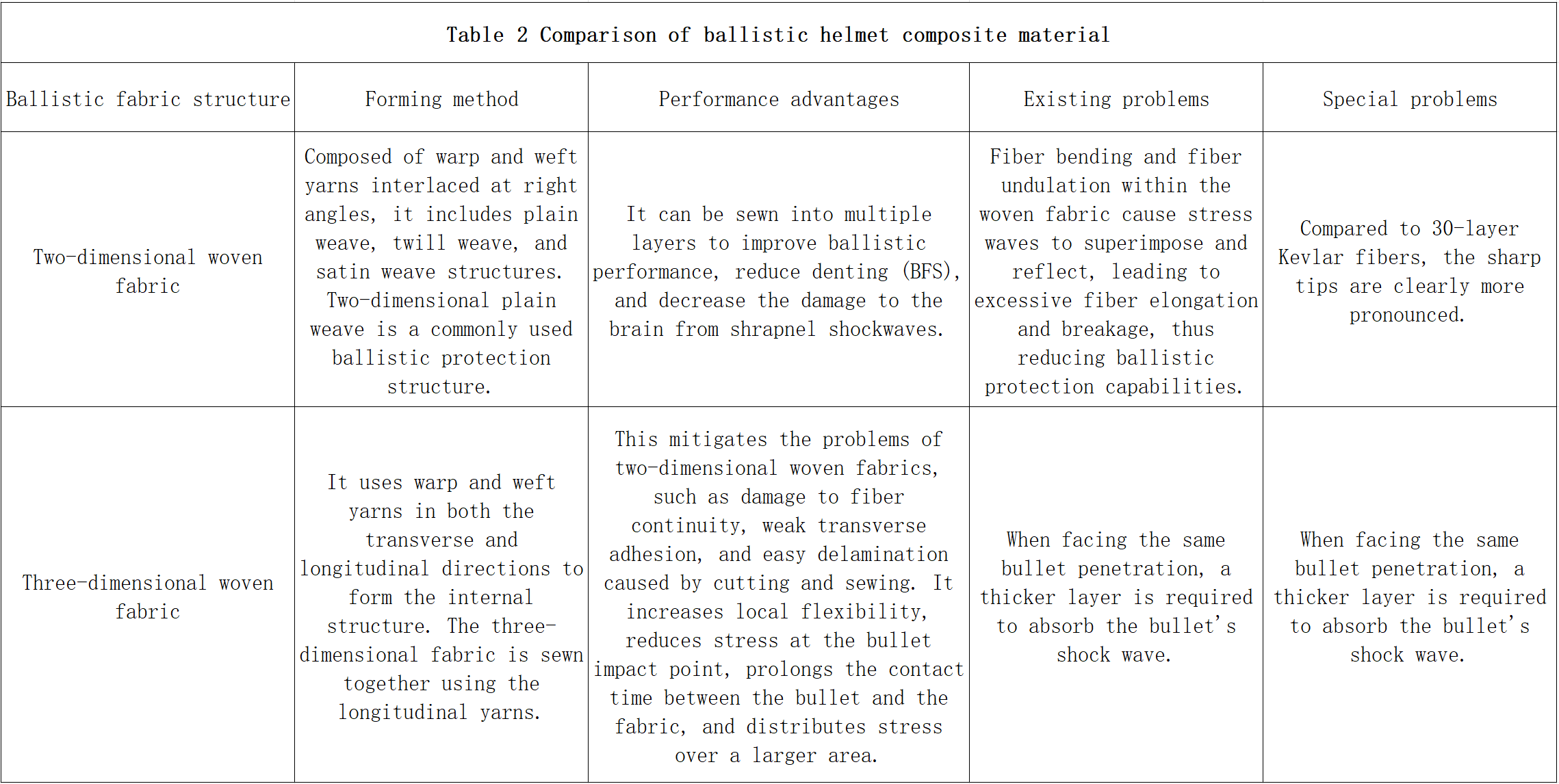
Two-dimensional woven fabrics are composed of warp and weft yarns interlaced at right angles. They mainly include plain weave, twill weave, and satin weave structures, as shown in the figure. The most commonly used ballistic protection structure is the two-dimensional plain weave fabric. Two-dimensional woven fabrics can be sewn into multiple layers to improve ballistic protection performance, reduce the degree of indentation (BFS), and reduce the damage of projectile shock waves to the human brain. However, due to fiber bending and in-fabric fiber fluctuations in two-dimensional woven fabrics, stress waves may be superimposed and reflected, leading to excessive fiber elongation and breakage, thus reducing the fiber's ballistic protection capability.
As shown in Figure 2, the geometric models of two-dimensional fabrics differ depending on the weave. As shown in Table 2, two-dimensional woven fabrics consist of warp and weft yarns interlaced at right angles, including plain weave, twill weave, and satin weave structures. Two-dimensional plain weave is a commonly used ballistic protection structure. Its performance advantages include the ability to be sewn into multiple layers, improving ballistic protection performance, reducing bullet dent (BFS), and minimizing the damage to the brain from projectile shock waves. Problems include fiber bending and fiber undulation within the woven fabric surface, causing stress waves to superimpose and reflect, leading to excessive fiber elongation and breakage, thus reducing ballistic protection capabilities. A specific issue is the obvious sharp tips compared to 30 layers of Kevlar fibers.
2.3 Three-Dimensional Woven Fabrics
For bulletproof helmets made from two-dimensional woven fabrics, cutting and sewing often disrupts fiber continuity, reducing the helmet's ballistic performance. Furthermore, two-dimensional woven fabrics often have weak lateral adhesion, making them prone to delamination. Three-dimensional woven fabrics, using both lateral and longitudinal warp and weft yarns to create a three-dimensional, integrated fabric, significantly alleviate the problems associated with two-dimensional woven fabrics. Figure 3 shows a schematic diagram of the model structure of a three-dimensional orthogonal woven fabric. The three-dimensional woven fabric is connected to each other by longitudinal yarn sewing, effectively increasing local flexibility, reducing stress at the bullet impact point, prolonging the contact time between the bullet and the fabric, and distributing stress over a larger area around the bullet impact point. Justyna Pinkos et al. compared the bullet penetration resistance of two-dimensional and three-dimensional woven fabrics made of 30 layers of Kevlar fiber. They found that, when faced with the same bullet penetration, the three-dimensional woven fabric required a thicker number of layers to absorb the shock wave. However, the three-dimensional woven fabric did not have a distinct sharp point, while the two-dimensional woven fabric had a significantly more defined sharp point.
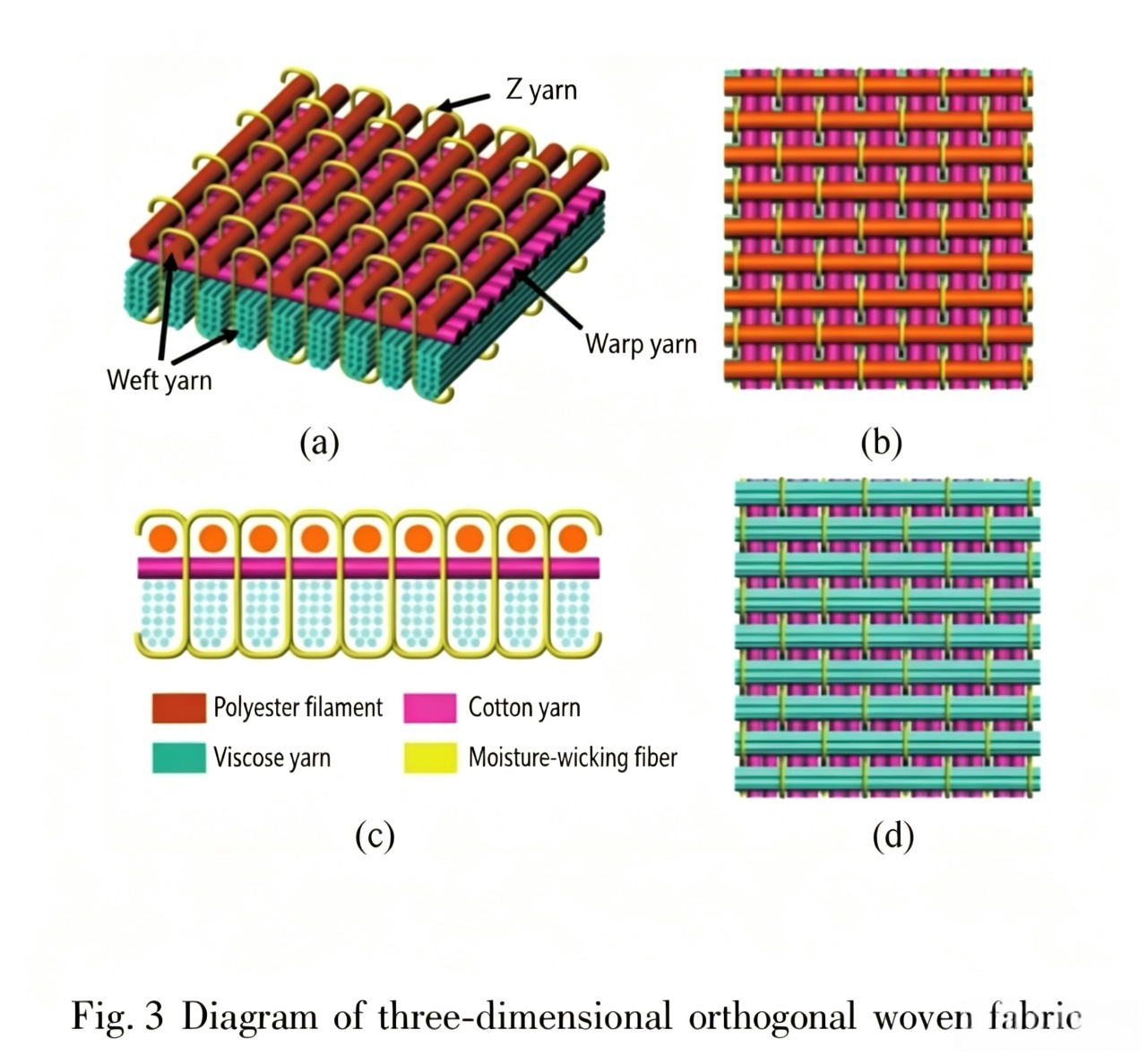
As shown in Figure 2 above, the three-dimensional woven fabric uses transverse and longitudinal warp and weft yarns to form an integral space, with the three-dimensional fabric sewn together using longitudinal yarns. Its performance advantages include mitigating the problems of fiber continuity disruption, weak transverse adhesion, and easy delamination associated with cutting and sewing in two-dimensional woven fabrics; increasing local flexibility, reducing stress at the bullet impact point, prolonging the contact time between the bullet and the fabric, and distributing stress over a larger area. The problem is that, when faced with the same bullet penetration, a thicker number of layers is required to absorb the bullet shock wave. A specific issue is that, compared to 30 layers of Kevlar fiber, there is no distinct sharp point.
3. Composite Material Molding Technology for Bulletproof Helmets
Bulletproof helmets mainly consist of an outer shell, lining, and suspension system. They primarily absorb the impact energy of projectiles or high-speed shrapnel through the deformation and breakage of the outer shell. Therefore, the manufacturing process of the helmet shell plays a crucial role in its protective performance. Traditional preforming methods involve first arranging high-performance fibers neatly and then preparing a fiber prepreg with thermoplastic or thermosetting resin. The cut and laid fiber composite material is then subjected to high-pressure compression molding in a heated metal press. During helmet manufacturing, it is essential to ensure uniform material distribution and a smooth shell surface, minimizing gaps between different layers and reducing stress concentration during projectile penetration. Current bulletproof helmet shell manufacturing utilizes composite material molding technologies, such as hand lay-up molding, resin transfer molding (RTM), thermoforming, and net-size molding.
3.1 Hand Lay-up Molding Process
Hand lay-up molding, also known as contact molding, is the earliest and most widely used molding technology in the production of composite material bulletproof helmets. Hand lay-up molding is primarily manual, with limited use of machinery. It demands a high level of technical skill from operators, requiring familiarity with the product's structural properties and expertise in fiber reinforcement cutting and placement, as well as mold surface treatment. While hand lay-up molding offers low-cost, easy-to-maintain molds that are not limited by product size or shape, allowing for flexible modifications to different parts according to design requirements, and convenient room temperature molding, it is typically only suitable for producing small-scale products. The finished products often exhibit uneven mechanical properties, poor stability, and inconsistent protective performance.
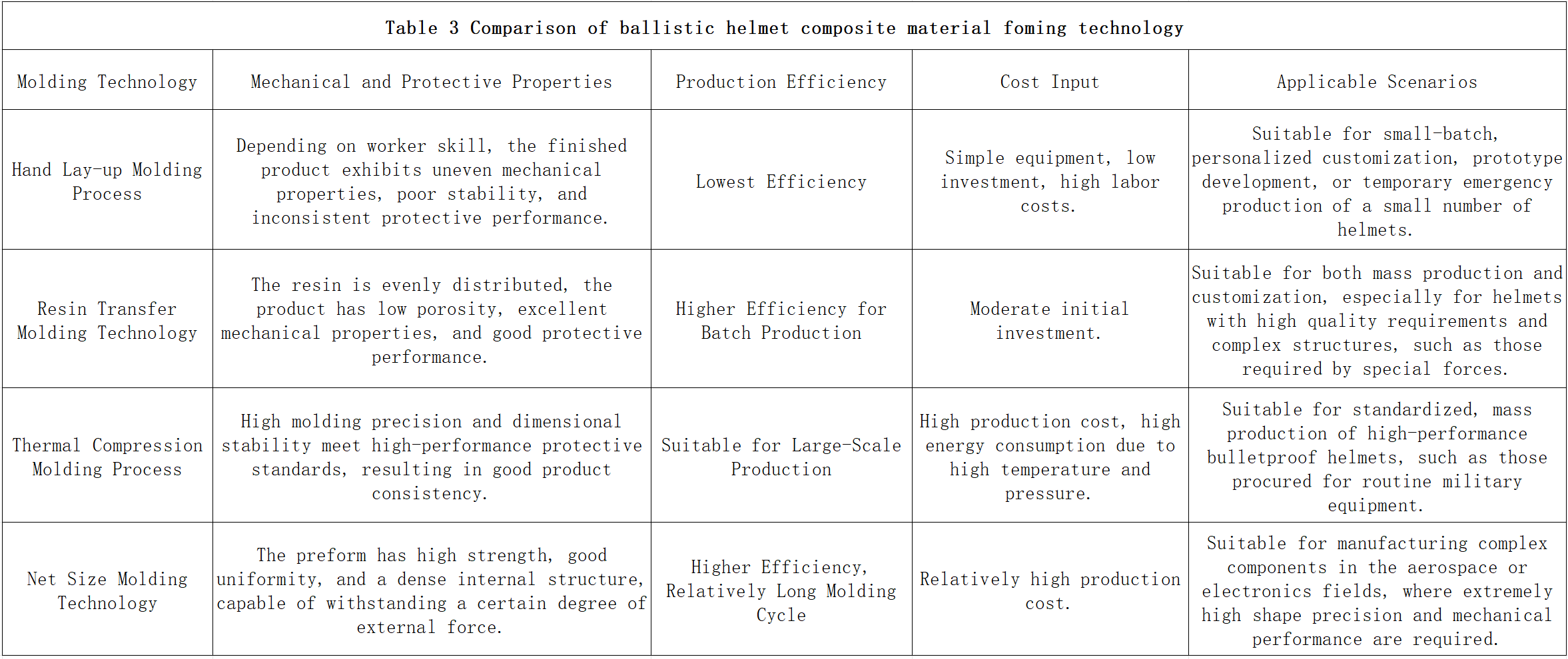
Table 3 shows a comparison of composite material molding technologies for bulletproof helmets, hand lay-up molding relies heavily on worker skills, resulting in uneven mechanical properties, poor stability, and unstable protective performance in the finished product. It has the lowest efficiency, requires simple equipment and low investment, but has high labor costs, making it suitable for small-batch, customized production, prototype development, or temporary emergency production of small quantities of helmets.
3.2 Resin Transfer Molding (RTM)
RTM (Resin Transfer Molding) is a composite material molding technology that involves injecting low-viscosity resins such as polyester or epoxy resins into a closed mold, completely and uniformly impregnating high-performance fibers or other reinforcing materials, and then curing. Compared to traditional hand lay-up molding, RTM technology produces materials with stronger impact resistance, more uniform overall material mechanical properties, lower cost, easier repeat production, higher dimensional accuracy, and a smoother, flatter surface. However, when producing composite materials with complex structures and large volumes, RTM molding often encounters problems such as uneven resin flow, insufficient fiber impregnation, and excessively long molding times, leading to discrepancies between the expected mechanical properties, strength, and precision of the composite product. The process flow diagram is shown in Figure 4.
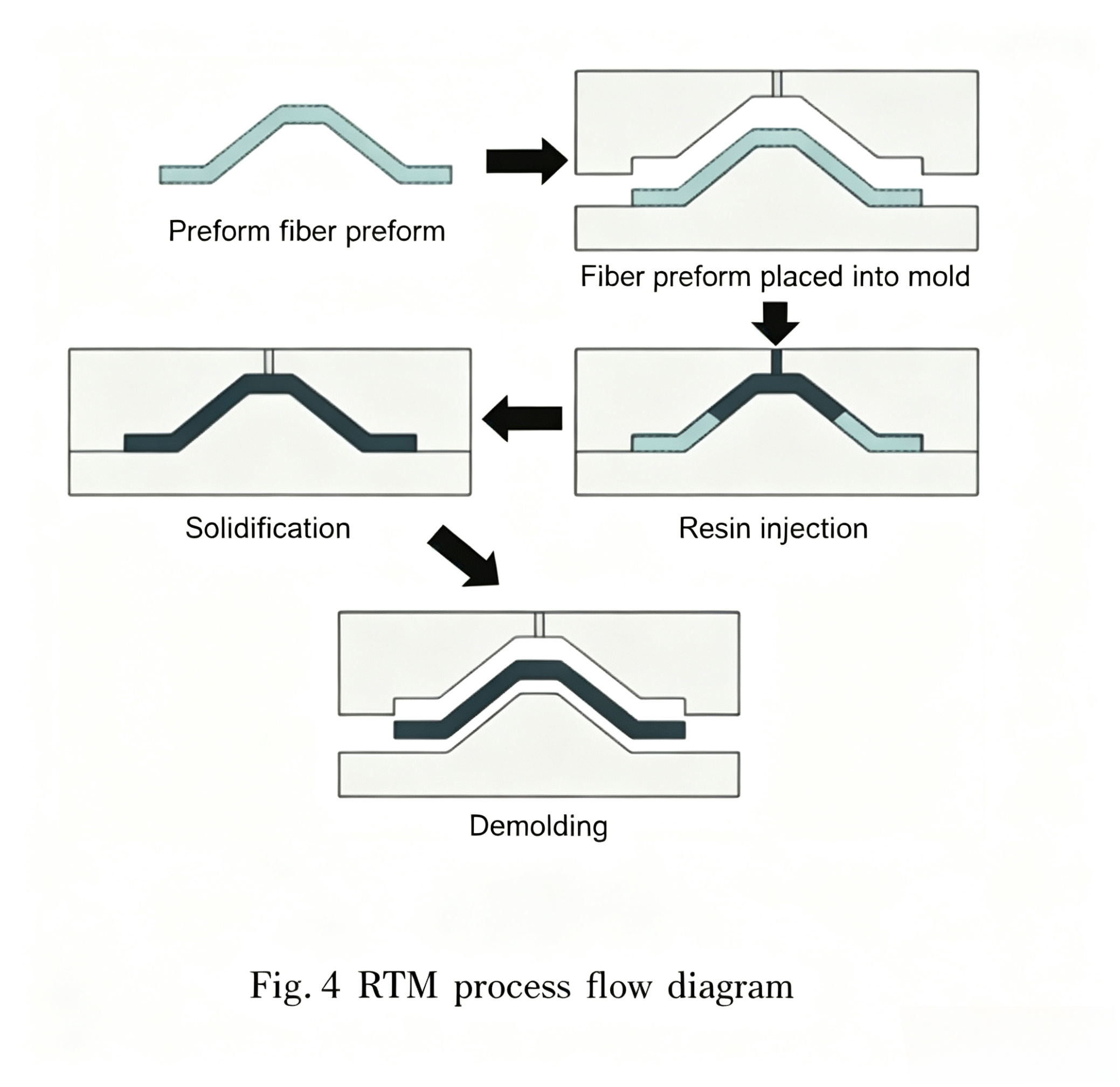
As shown in Figure 3 above, products manufactured using resin transfer molding technology exhibit uniform resin distribution, low porosity, excellent mechanical properties, and good protective performance. They can be mass-produced with high efficiency and moderate initial investment, balancing mass production with customization for helmets with high quality requirements and complex structures, such as those for special forces.
3.3 Hot Molding Process
Hot molding is a commonly used composite material molding process. The main factors affecting the molding quality of bulletproof helmets are molding temperature, molding time, and molding pressure. First, high-performance fibers are mixed with thermosetting or thermoplastic resins to prepare a prepreg. Then, the mold is preheated and kept at a constant temperature. The prepreg is then placed into the mold, and the edges are pressed and the mold is closed. The mold temperature is raised to the molding temperature, pressure is applied, and after heat preservation, the mold is cooled and separated. Finally, the finished product is removed for repair. During hot molding, molding conditions must be carefully monitored. For example, the curing temperature of UHMWPE composite helmets typically does not exceed 130℃. A flowchart of the hot molding process for bulletproof helmets is shown in Figure 5.
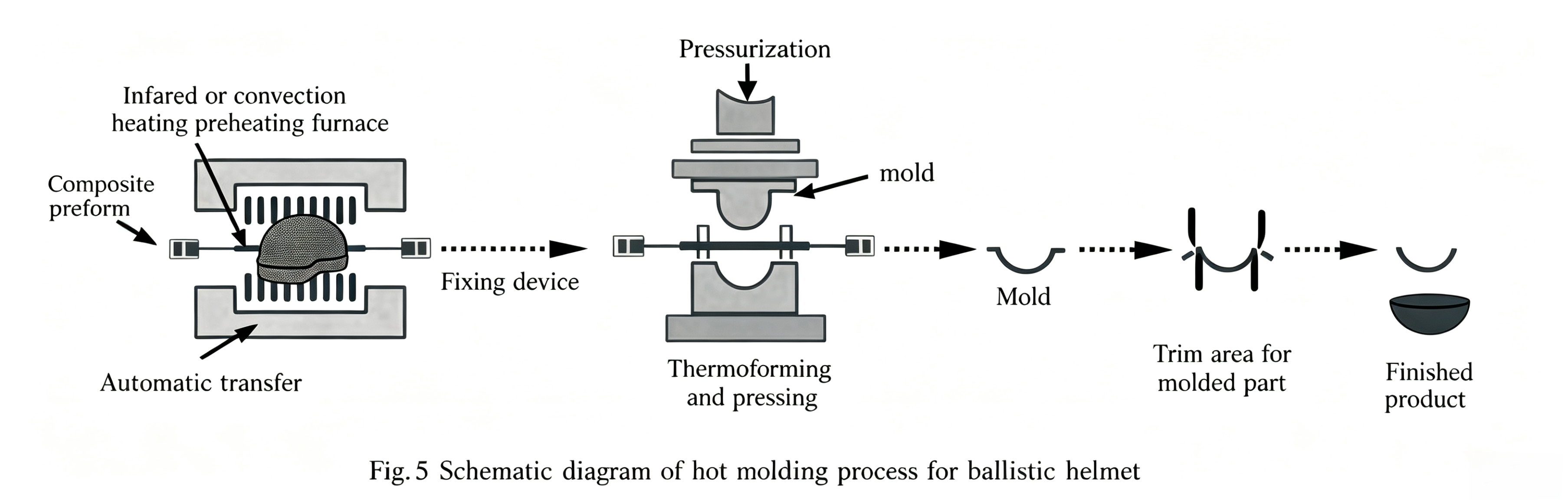
As shown in Table 3 above, products manufactured using the hot molding process exhibit high molding precision and dimensional stability, meeting high-performance protection standards. They also demonstrate good product consistency and are suitable for large-scale production. However, the manufacturing cost is high, and the high temperature and pressure consume significant energy. This makes it suitable for standardized, mass production, such as high-performance bulletproof helmets, for example, in the procurement of conventional military equipment.
3.4 Net-Dimension Molding Technology
Net-dimensional molding technology, also known as gel injection molding technology, is an advanced molding method widely used in ceramics, metal matrix composites, and other fields. Its principle involves uniformly mixing organic monomers, crosslinking agents, and other additives with ceramic or metal powder to form a slurry. After being injected into a mold, an initiator triggers the monomer polymerization reaction, causing the slurry to gel in situ and solidify. This technology offers significant advantages, enabling the production of blanks with complex shapes and high dimensional accuracy. The blanks exhibit good uniformity and high strength, effectively reducing subsequent processing. For example, in the manufacture of high-temperature ceramic components for aero-engines, it can precisely shape complex internal structures. However, it has extremely strict requirements for raw material purity and process parameter control, and some organic additives are costly, which limits its large-scale application to some extent. However, with continuous technological optimization and improvement, gel injection molding technology has enormous application potential in high-end manufacturing. A schematic diagram of net-size molding technology is shown in Figure 6.
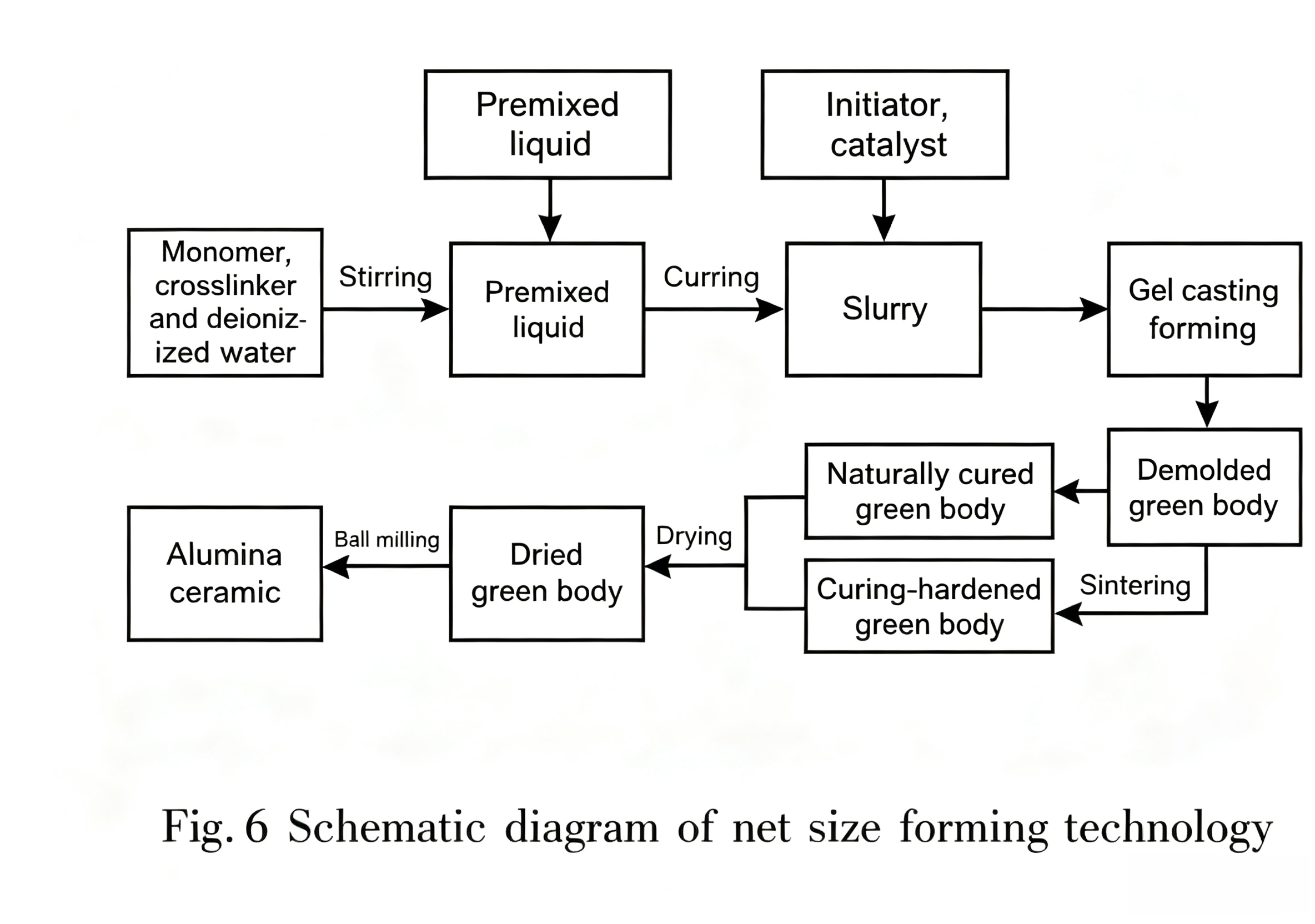
As shown in Table 3 above, products manufactured using net-size molding technology exhibit high strength, good uniformity, and a dense internal structure, capable of withstanding a certain degree of external force. It boasts high efficiency, a relatively long molding cycle, and high manufacturing costs, making it suitable for manufacturing complex components in aerospace or electronics fields where extremely high shape accuracy and mechanical performance are required.
4. Conclusion
Bulletproof helmets, as individual soldier protective equipment, can effectively protect soldiers and reduce or prevent injuries from bullets. Therefore, a thorough understanding of the fiber-reinforced composite material system, fabric structure type, and composite material molding technology of bulletproof helmets is crucial for researching new types of bulletproof helmets. This article first introduces composite materials, which possess extremely high stiffness, strength, and energy absorption rate, offering superior ballistic protection compared to ordinary materials. Secondly, it discusses ballistic fabric structures, which achieve even better protective performance and energy absorption efficiency. Since the manufacturing process of the helmet shell plays a crucial role in its protective performance, four composite material molding technologies for bulletproof helmets are summarized:
1) Hand lay-up molding produces products with uneven mechanical properties, lower efficiency, and lower cost, suitable for small-batch or customized production.
2) Resin transfer molding (RTM) produces products with excellent mechanical properties, higher efficiency, and moderate investment costs, accommodating both mass production and customization needs.
3) Thermoforming produces products with good mechanical properties but higher manufacturing costs, suitable for standardized mass production.
4) Net-size molding produces products with high preform strength and higher efficiency but higher manufacturing costs, suitable for manufacturing complex components with extremely high requirements for shape accuracy and mechanical properties.
Although the molding processes for composite material bulletproof helmets are relatively mature, many problems still need to be solved. In the face of an increasingly complex international environment and the development of information technology, the design of the next generation of bulletproof helmets will be more inclined to lightweight, multifunctional and intelligent, and low-cost requirements with sustainable manufacturing capabilities. This will meet the needs of future warfare for helmet protection, intelligence, comfort and adaptability, rapid production and customization, and significantly improve soldiers' combat effectiveness on the battlefield.


