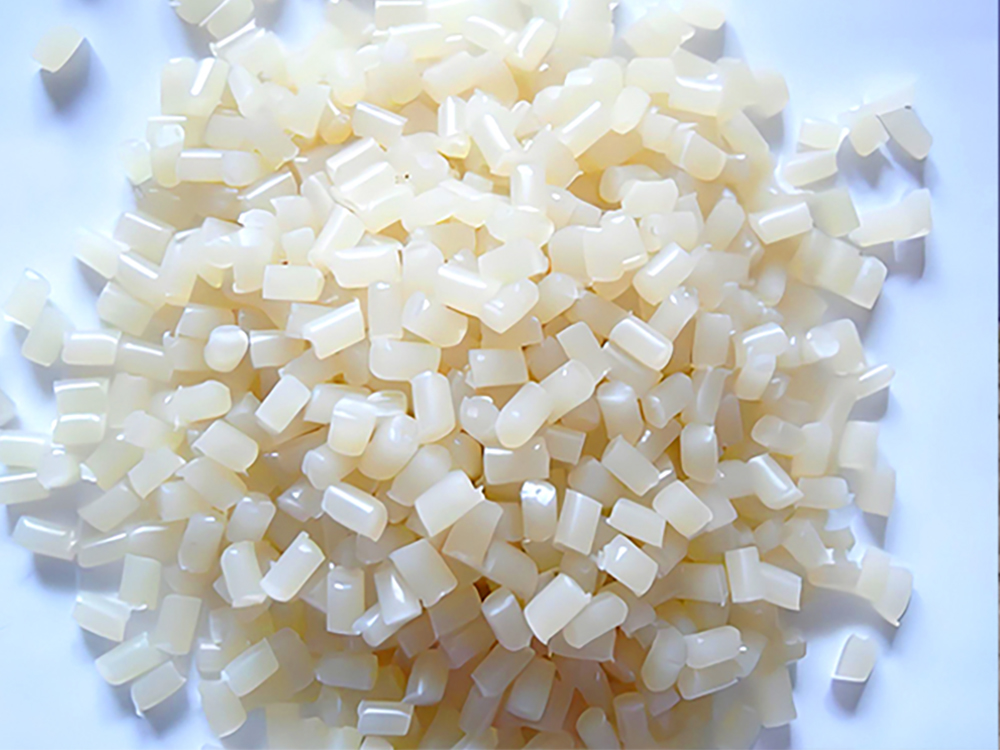
Polyarylate (PAR), also known as aromatic polyester, is a thermoplastic special engineering plastic with aromatic rings and ester bonds on the main chain of the molecule.
Properties of polyarylate PAR
Polyarylate (PAR), also known as aromatic polyester, is a thermoplastic special engineering plastic with aromatic rings and ester bonds on the main chain of the molecule. It was industrialized by Unitika Company of Japan in 1973, and its trade name is U polymer. It is a high-temperature resistant plastic with excellent comprehensive performance.
Polyarylate is made by polycondensation of dihydric phenol and dicarboxylic acid. Using different dihydric phenols and dicarboxylic acids as raw materials, many different varieties of polyarylate can be obtained. The polyarylates usually referred to are polycondensed from a mixture of bisphenol A and terephthalic acid and isophthalic acid as raw materials.
PAR has a linear amorphous structure, and the main chain of the molecule is composed of phenyl, ether, carbonyl, and isopropyl. Different groups have different effects on the properties of the polymer, but the combined effect of each group makes the main chain of PAR present greater rigidity, certain polarity, non-crystalline, and certain flexibility.
1. Performance data of several polyarylates
| Performance |
U-100
(Heat-resistant grade) |
U-1060
(General grade) |
U-4015
(High flow grade) |
U-8000
(Blow molding grade) |
| Density/(g/cm³) |
1.21 |
1.21 |
1.24 |
1.26 |
| Rockwell hardness (R) |
125 |
125 |
124 |
125 |
Water absorption
(20℃, 24h,%) |
0.26 |
0.25 |
0.20 |
0.15 |
| Moisture absorption rate (65%RH, 24h,%) |
0.07 |
0.07 |
0.05 |
0.03 |
| Tensile strength/MPa |
71.5 |
75.0 |
83.0 |
72.5 |
| Elongation(%) |
50 |
62 |
62 |
95 |
| Bending strength/MPa |
97.0 |
95.0 |
115.0 |
113.0 |
| Flexural modulus/GPa |
1.9 |
1.9 |
2.0 |
1.9 |
| Compression strength/MPa |
96.0 |
96.0 |
98.0 |
98.0 |
| Izod notched impact strength/(J/m) |
150~250 |
250~350 |
250~350 |
80~150 |
| Volume resistivity/Ω·cm |
2*10^16 |
2*10^16 |
2*10^16 |
2*10^16 |
| Arc resistance/s |
129 |
129 |
120 |
123 |
| Dielectric constant (10⁶Hz) |
3.0 |
3.0 |
3.0 |
3.0 |
| Dielectric loss tangent (10⁶Hz) |
0.015 |
0.015 |
0.015 |
0.015 |
2. Mechanical properties
Polyarylates have excellent creep resistance, impact resistance, strain recovery, wear resistance, as well as high mechanical strength and rigidity. Polyarylates show high tensile strength in a wide temperature range. Compared with polycarbonate, the absolute value of the impact strength of polyarylate is slightly lower, but its dependence on the sample thickness is smaller than that of polycarbonate. When the thickness is above 6.4mm, its impact strength is higher than that of polycarbonate. Therefore, polyarylates can show greater superiority in the preparation of large-size thick products.
Polyarylates have good tensile creep characteristics, and their creep amount is very small even under such a high load of 21MPa.
For polymer materials, except for completely elastic bodies, permanent strain will be generated under the action of external forces. However, polyarylates show excellent strain recovery and small hysteresis loss of polyarylates. Even under the condition of large strain rate, the hysteresis loss of polyarylates is much smaller than that of polycarbonate and polyoxymethylene. Even at higher temperatures, polyarylate can still maintain this excellent performance without generating excessive residual strain.
3. Thermal properties
Polyarylate has denser benzene rings in its molecular main chain, so it has excellent heat resistance. Under a load of 1.82MPa, the heat deformation temperature of polyarylate (U-100) reaches 175℃. Using differential thermal method, the temperature at which it starts to lose weight is 400℃, the decomposition temperature is 443℃, and the glass transition temperature of polyarylate (DSC method) is 193℃, which is about 50℃ higher than polycarbonate and 3-4℃ higher than polysulfone. Therefore, the various properties of polyarylate are less affected by temperature than polycarbonate and polysulfone, and the linear expansion coefficient is small and the dimensional stability is better.
Compared with some other engineering plastics, polyarylate also has excellent solder resistance and very low thermal shrinkage.
4. Flame retardancy
Polyarylate is a self-extinguishing plastic and is non-flammable. Without flame retardant, the sample with thickness of 1.6mm can reach UL94V-0 level. The oxygen index of polyarylate is 36.8. It is higher than the oxygen index of other plastics (including those containing flame retardant) except that it is lower than that of halogen-containing polyvinyl chloride, polyvinylidene chloride, polytetrafluoroethylene, polyphenylene sulfide, etc.
5. Electrical properties
The electrical properties of polyarylate are similar to those of polyoxymethylene, polycarbonate and polyamide, and its voltage resistance is particularly good. Since polyarylate has low hygroscopicity, its electrical properties are also very stable in humid environment. In addition, the electrical properties of polyarylate are less affected by temperature. The volume resistivity of polyarylate can still maintain a level above 1014Ω·cm even at a high temperature of 160℃.
6. Chemical properties
Polyarylate has good acid and oil resistance, but its alkali resistance, stress cracking resistance, aromatic hydrocarbon and ketone resistance are not ideal. The chemical resistance of polyarylate is not ideal. The AX series polyarylate modified with carbon fiber has significantly improved chemical resistance and organic solvent resistance, and its processing performance has been greatly improved. Table 1-2 lists the properties of the AX series polyarylate.
7. Other properties
Polyarylate has excellent transparency, with a refractive index of 1.61, which is higher than that of polycarbonate and polymethacrylate, and its light transmittance is 87% at a thickness of 2mm, which is roughly the same as that of polycarbonate. Polyarylate has excellent resistance to ultraviolet radiation. Polyarylate with a thickness of 0.1mm can completely block light with a wavelength below 350nm. Polyarylate is one of the engineering plastics with excellent weather resistance, and its weather resistance is significantly better than that of polycarbonate.
Molding and processing of polyarylate PAR
The melting point of polyarylate is quite different from the thermal decomposition temperature, and it can be molded and processed by heating and melting methods such as injection, extrusion and blow molding. The melt viscosity of polyarylate is relatively high, about 10 times that of polycarbonate at the same temperature, which requires a higher molding temperature to obtain better fluidity. The fluidity of polyarylate is also related to the thickness of its products. Usually, when the thickness is less than 2mm, the fluidity decreases rapidly. Therefore, when polyarylate is used to mold thin-walled products, a higher temperature and pressure should be applied. Trace amounts of water will cause decomposition of polyarylate during molding, so it is very important to pre-dry polyarylate before molding. The water content should usually be controlled below 0.02% (mass fraction). The drying conditions are generally 110-140℃, 6h.
1. Injection molding
Polyarylate can be injection molded with a general injection molding machine, but its melt viscosity is relatively high and the required molding temperature is relatively high. In order to prevent the material from sintering and carbonization, the injection molding machine equipped with a needle valve should generally be avoided. The molding shrinkage of polyarylate is similar to that of polycarbonate, both of which are about 0.05%. Usually, the mold for injection molding of polycarbonate can also be used for injection molding of polyarylate. However, for products with more complex shapes, in order to compensate for the poor fluidity of polyarylate, the mold gate, runner, etc. should be processed slightly larger.
The mold temperature of polyarylate during injection molding is generally high. If the mold temperature is too low, the residual strain of the product after injection molding is large, and some even crack without any external force. For products with uneven thickness and more bends, the residual strain is even greater.
2. Extrusion molding
Compared with injection molding, the temperature of polyarylate extrusion molding is generally 10 to 20°C lower. The melt viscosity of polyarylate is relatively high. In order to improve the plasticizing effect, an extruder with a larger aspect ratio, torque and power should generally be used. In addition, in order to avoid sintering and carbonization caused by shear heating, the screw speed should not be too high, and the screw and die structure should minimize the parts that are prone to material retention.
Modification and application of polyarylate PAR
PAR can be reinforced with glass fiber, carbon fiber, polyarylamide fiber, ceramic fiber, etc., and can also be reinforced with mixed fiber and polymer super fiber (such as ultra-high molecular weight polyethylene fiber). Glass fiber is the most commonly used reinforcing fiber. When reinforcing PAR with glass fiber, it is necessary to use coupling agent KH-550 for treatment and add an appropriate amount of stabilizer. Its production process is basically the same as that of glass fiber reinforced PC.
Polyarylate mainly forms a blended alloy with PET, PBT, PC, PA, fluoroplastics, etc., among which it is a compatible system with PET, PBT, PC, etc., and an incompatible system with PA, fluoroplastics, etc.
PAR improves the performance of the product through alloying. PAR/PET series plastic alloys have the characteristics of high rigidity, high dimensional accuracy, low anisotropy, and smooth surface. They are mainly used for automotive parts and some precision parts; PAR/PTFE can be used for oil-free lubricated wear-resistant materials such as bearings; PAR/PA alloys are used for heat-resistant and impact-resistant parts in automobiles, such as internal and external parts such as automobile engine hoods and automobile outer panels, as well as sliding parts, breaker parts, bushings, etc.
Highly transparent PAR has new uses in the field of optoelectronic technology. PAR film has a birefringence value of less than 10M and can be used to make delay films to eliminate color distortion of liquid crystal displays. This film is used in the manufacture of liquid crystal displays (LCDs) and can replace the glass required for LCDs. As a high-temperature resistant and extremely transparent material, PAR can meet the requirements of LCD manufacturing technology.


