Compare Kevlar fiber and pre-oxidized fiber by strength, temperature resistance, and applications to choose the right material for protective and industrial use.
Kevlar Fiber vs Pre-Oxidized Fiber: Properties, Temperature Resistance and Material Selection
Introduction
When customers ask us to recommend a fiber for high-performance protective or thermal applications, the comparison between Kevlar fiber and pre-oxidized fiber comes up very often.
Both materials are widely used in protective clothing and industrial environments, but they are designed for different performance priorities. Choosing the wrong one usually leads to overdesign, unnecessary cost, or premature material failure.
In this article, we compare Kevlar fiber and pre-oxidized fiber based on real material properties and application experience, and explain how to select the right fiber for your specific use case.
What Is Kevlar Fiber?
Kevlar is a para-aramid fiber developed for applications that require exceptional tensile strength and low weight.
From our experience, Kevlar is most often selected when mechanical performance is the primary concern.
Key characteristics of Kevlar fiber
- Extremely high tensile strength (approximately 5–6 times stronger than steel at equal weight)
- Low density, lightweight structure
- Excellent resistance to tearing and cutting
- Good thermal stability without melting
- Moderate chemical resistance to acids and alkalis
Kevlar does not melt or drip when exposed to flame, which makes it suitable for many protective applications. However, it is not designed for continuous exposure to extreme temperatures.
What Is Pre-Oxidized Fiber?
Pre-oxidized fiber is produced by controlled oxidation of PAN fiber, creating a thermally stable, non-melting structure.
In our projects, pre-oxidized fiber is typically chosen when heat resistance and thermal insulation are more important than mechanical strength.
Key characteristics of pre-oxidized fiber
- Excellent thermal stability (continuous use temperature up to 300°C)
- Non-flammable and non-melting
- Good resistance to acids, alkalis, and solvents
- Better UV resistance compared to para-aramid fibers
- Moderate strength, heavier than Kevlar
Pre-oxidized fiber is often used as a thermal barrier layer, rather than a structural reinforcement material.
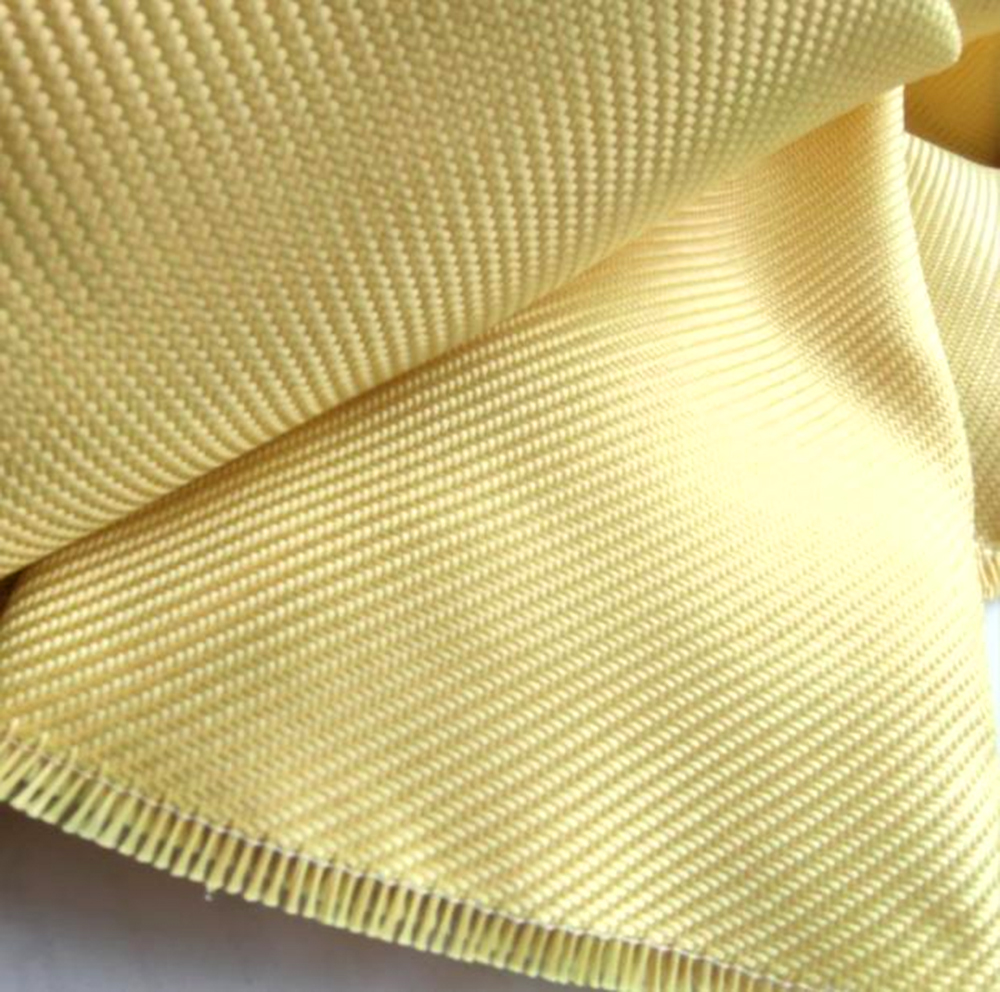
Property Comparison: Kevlar Fiber vs Pre-Oxidized Fiber
| Property |
Kevlar Fiber |
Pre-Oxidized Fiber |
| Fiber type |
Para-aramid |
PAN-based oxidized fiber |
| Tensile strength |
Very high |
Moderate |
| Weight |
Very light |
Relatively heavier |
| Continuous use temperature |
~180°C |
Up to ~300°C |
| Flame behavior |
Does not melt or drip |
Non-flammable |
| Tear resistance |
Excellent |
Moderate |
| Abrasion resistance |
Moderate |
Slightly better |
| Chemical resistance |
Good |
Good |
| UV resistance |
Limited |
Better |
Key takeaway: Kevlar is optimized for strength-to-weight performance, while pre-oxidized fiber is optimized for thermal stability.
Temperature Resistance: Where the Difference Matters
Kevlar fiber maintains mechanical integrity under short-term heat exposure and is suitable for environments with intermittent heat or flame contact. It is not recommended for continuous exposure above 180°C.
Pre-oxidized fiber is designed for long-term exposure to high temperatures and maintains structure and insulation performance in elevated thermal environments.
Mechanical Performance: Strength vs Stability
Kevlar fiber excels in applications requiring cut resistance, impact protection, and lightweight reinforcement.
Pre-oxidized fiber is better suited for thermal insulation, fire barriers, and applications where mechanical load is not critical.
Application-Based Material Selection
Choose Kevlar fiber if:
- Mechanical strength is critical
- Weight reduction is important
- Cut or tear resistance is required
- Operating temperature remains below ~180°C
Choose pre-oxidized fiber if:
- Continuous high-temperature exposure is expected
- Thermal insulation and flame resistance are priorities
- Mechanical load is secondary
Common Selection Mistakes We See
- Using Kevlar in heat-dominated environments
- Overdesigning where pre-oxidized fiber is sufficient
- Ignoring UV exposure in outdoor applications
- Using single-fiber solutions where layered systems perform better
Can Kevlar and Pre-Oxidized Fiber Be Combined?
Yes. In many protective systems, hybrid structures deliver balanced performance.
- Kevlar as an outer mechanical protection layer
- Pre-oxidized fiber as an inner thermal barrier
- Layered or blended fabric constructions
Kevlar fiber and pre-oxidized fiber are both high-performance materials, but they address different engineering challenges. Kevlar provides strength and lightweight performance, while pre-oxidized fiber delivers thermal stability and flame resistance.
The right choice depends on temperature, mechanical stress, service life, and cost control. A clear definition of operating conditions is always the best starting point.


