Aramid is an organic synthetic material with high strength, high modulus, low density, high wear resistance and stable chemical properties.
The full name of aramid is aromatic polyamide fiber, which is an organic synthetic material with high strength, high modulus, low density and high wear resistance, and has stable chemical properties. In 1974, the U.S. Federal Trade Commission (FTC) named them "Aramid fiber", which is defined as: at least 85% of the amide chains (-CONH-) directly connect two benzene rings. In the early 1960s, DuPont developed meta-aramid HF-1 with excellent thermal stability, namely Nomex fiber. In my country, it was called aramid. It passed the identification of aramid 14 in 1981 and aramid 1414 in 1985. Because single aramid fiber has defects when used, and its strength decreases after contact with water, aramid is usually made into composite materials and used as reinforcing fiber in materials to adapt to different use environments, and it can also improve the performance of materials.
Classification and properties of aramid
1.1 Para-aramid Para-aramid, also known as PPTA (Poly-P-pheneleneferephthalamide), was successfully developed in 1971 and put into production the following year. Its main chain structure is highly regular, and the macromolecules exist in a very stretched state. It is resistant to high temperatures, fire, chemical corrosion, high mechanical properties and fatigue resistance, and has low density. Its strength is 3 times that of steel and 4 times that of high-strength polyester industrial yarn. Its initial modulus is 4 to 10 times that of polyester industrial yarn and more than 10 times that of polyamide fiber. It has good stability, with zero shrinkage at 150°C, and can still maintain high strength at high temperatures, such as 65% of the original strength at 260°C. It has good adhesion to rubber and is an ideal cord fiber. Such as Kevlar-49 of DuPont in the United States, Twaron of Enka in the Netherlands, and aramid 1414 in China.
1.2 Meta-aramid Meta-aramid, also known as MPIA (Poly-m-phenyleneisophthalamide), began to be studied in 1956 and was industrialized in 1967. The macromolecular chain of meta-aramid is zigzag, and it has excellent physical and mechanical properties, such as strength and elongation after break. Its outstanding features are excellent fire resistance and oxidation resistance. After continuous use at a temperature of 260°C for 1,000 hours, its strength can still maintain 65% of its original strength; after being used at a high temperature of 300°C for 7 days, it can still maintain its original strength. It can burn and has self-extinguishing properties after leaving the flame; it has good stability in acids, alkalis, bleaching agents, reducing agents and organic solvents. It also has good radiation resistance. Its shortcomings are the same as nylon, poor stability to sunlight and difficult to dye.
1.3 Comparison of the performance of aramid with other fibers Aramid has good mechanical properties. Compared with other fibers, aramid has the characteristics of high temperature resistance, small elongation, high elastic modulus and high strength, especially para-aramid (Kevlar fiber), which is more excellent.
Preparation of aramid composite materials
Aramid fiber, like glass fiber, has product forms such as twisted yarn, untwisted roving, various specifications of cloth, tape, felt and chopped strands. There are two main types of composite material preparation, fiber-to-fiber winding composite, and fiber-to-resin or rubber composite.
2.1 Fiber-to-fiber composite molding
Wet winding and dry winding are the two main methods of composite material winding molding. The main advantage of dry winding is that the glue content is easier to control. Therefore, in the past, the molding of composite high-pressure containers has always used a single dry winding molding. However, wet winding has the advantages of low product cost, less fiber wear, low void ratio and high production efficiency, and is widely adopted abroad. In the past, my country has always adopted dry molding and developed dozens of dry molding adhesive formulas. Some formulas such as 4304 and 4303A have been successfully used in large solid rocket engines. The process flow is as follows: loosening aramid fiber → mixing → molding → heat treatment → grinding → finished product.
Wet winding molding is the same as dry molding. The resin matrix must have certain mechanical properties. At the same time, the viscosity of the matrix system must be controlled within a certain range to ensure that the fiber bundle can be completely impregnated during molding. There are two main ways to reduce the viscosity of the system: (a) Select a reasonable low-viscosity active diluent. Often the system viscosity meets the requirements of the impregnation process, but at the same time the mechanical properties and heat resistance of the system are greatly reduced. After screening, a mixed diluent is used and meets the design requirements to a certain extent. (b) Select a liquid curing agent. The addition of a liquid curing agent can reduce the viscosity of the formula system to a certain extent. There is a lack of further research on the wet formula and wet formula molding technology of aramid fiber, and high-performance wet formula technology is the key technology that needs to be solved first in wet winding molding.
2.2 Fiber and resin composite molding
The molding method is the same as the molding method of fiberglass, including winding, hand lay-up, impregnation, vacuum bag, pressurization and injection, which can be selected according to needs. Resins that are often matched with aramid fibers include epoxy, phenolic, unsaturated polyester, vinyl ester, polyimide, etc. In recent years, they are also used in combination with nylon, PBT, etc. In the study of the tensile properties of unidirectional aramid/polypropylene mixed fiber composites, Zhang Maolin et al. used aramid untwisted filament yarn (reinforcement material) as warp yarn and polypropylene fiber (matrix fiber) as weft yarn to weave a thermoplastic prepolymer with plain weave. Composite materials were made under certain temperature and pressure, and the density of warp and weft yarns was adjusted to control the composition of the material. Cords made of aramid are increasingly widely used in the automobile tire industry. The technology of composite materials of aramid and rubber is developing rapidly. Because aramid fibers have few active functional groups, it is difficult to bond with rubber. In order to solve the bonding problem, the following measures are generally adopted: on the one hand, the formula and process of the impregnation system are adjusted or improved. At present, two-bath impregnation or special impregnation adhesives are added to the one-bath impregnation; on the other hand, adhesives are added to the rubber compound formula design. Due to the synergistic effect of the above two aspects, a more ideal bonding effect is achieved.
Performance and application of aramid composite materials
The application of aramid materials is mainly based on its excellent characteristics such as high strength and high elastic modulus.
3.1 Bulletproof field
The high strength of aramid is favored by all walks of life, especially the military. Modern helmets originated from World War I and were used to reduce the casualty rate of soldiers. After World War II until the 1970s, the military bulletproof helmets were all steel helmets, most of which were high manganese steel or special steel, and the helmet shells were mostly stamped. Nylon helmets are mainly used in the United Kingdom and Israel. There is a high-density polyethylene foam shockproof layer in the helmet to improve comfort. Aramid helmets are multi-layer aramid cloth bonded by special resins and molded at high temperature and high pressure. Aramid helmets were developed by DuPont in the 1970s. Their advantages are high strength, light weight, and good protective performance. They are adopted by more and more countries.
The ballistic impact resistance of aramid fiber should be attributed to its superior thermal stability, high crystallinity, high orientation structure and high tensile performance. The high glass transition temperature and excellent thermal stability enable aramid fibers to ensure the stability of impact-resistant structures at high temperatures generated by ballistic impacts; high crystallinity and high orientation produce high modulus, ensuring rapid response to axial deformation; high elasticity and medium elongation give aramid fibers high toughness, so that they can work effectively when longitudinally broken. my country has carried out research on aramid bulletproof plates and has made progress in the optimal matrix-fiber ratio.
3.2 Tire field
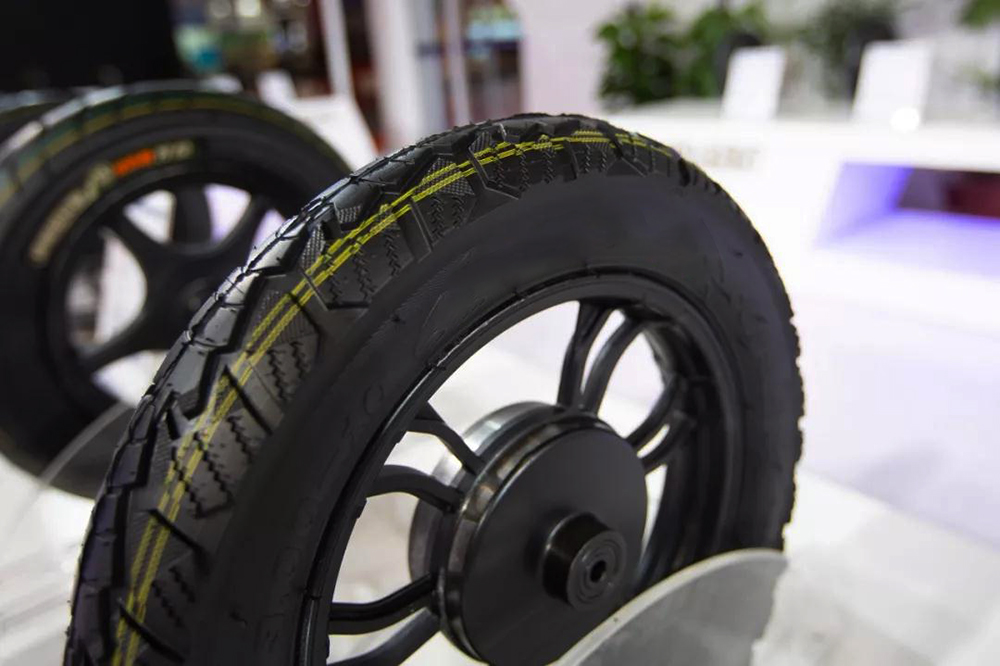
The main component of tires is rubber. In order to improve strength, steel wire was first used as a reinforcing material in industry. However, due to the high density of steel wire, while the strength of the tire increases, it will increase the weight of the vehicle body and increase energy consumption. And due to the presence of steel wire, the tire will become harder, more prone to bumps, and the comfort will decrease. Especially in heavy vehicles, the load-bearing capacity is very large, and the requirements for tires are higher.
Compared with steel wire, aramid cord has the characteristics of high temperature resistance, high strength, high modulus and small deformation, and has the flexibility of low relative density, fatigue resistance and shear resistance. It combines the excellent performance of steel wire, rayon, nylon and polyester cord, and is known as "synthetic steel wire". It is the most ideal skeleton material at present.
The advantages of aramid cord are: ① As a cord, the tire carcass can be reduced from three layers to one layer, the weight of the tire is reduced, the rolling resistance of the tire is reduced, and fuel consumption can be reduced. ② The bonding effect of aramid cord and rubber is better than that of steel wire, and it is not easily affected by moisture and humidity. ③ After using aramid as a cord, the rigidity and wear resistance of the tire are improved, and the service life of the tire is extended. ④ Due to the reduction in the number of carcasses, the driving performance and ride comfort of the car have been greatly improved.
However, the main disadvantages of aramid as a cord are that the cost is too high, the production technology is complex, and special equipment is required for processing.
3.3 Pipeline field
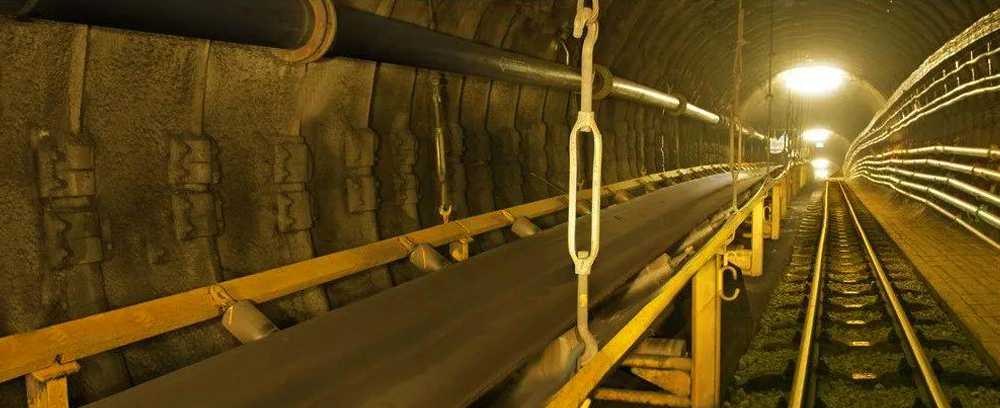
Kevlar fiber is the best choice for hose reinforcement materials. At present, more and more automobile hoses, hoses for chemical industry, hoses for petroleum industry, various hydraulic hoses for aviation industry and marine hoses are using Kevlar fiber as reinforcement material. Chrysler and Gates in the United States use Kelver fiber as reinforcement material for automobile cooling device hoses to make automobile cooling hoses with a temperature of about 150°C. Gates and Goodall in the United States have made aramid fiber into large-diameter hoses for nuclear power plants, chemical plants and oil exploration. The inner diameter is 25.4cm, each is 12m long, the design working pressure is 56kg/cm2, and the bending radius is 1.5m.
3.4 Bridge structure reinforcement field
Aramid fiber cloth has a wide range of applications in the reinforcement of old bridges. When reinforcing components, aramid fiber cloth is mainly used to resist tension. It is generally used for the tensile parts of beams, the shear parts of beams and columns, and the confinement reinforcement of columns or bridge piers. After two layers of aramid fiber AFS-40 were pasted on the cracked parts of the bridge piers, the crack development was controlled and the bearing capacity of the bridge was significantly improved.
3.5 Electrical and Electronic Field Aramid fiber has excellent mechanical properties, electrical insulation properties, wave transmission properties, and dimensional stability. It has been used in the electrical and electronic field in special printed circuit boards for surface mounting technology (SMT) in microelectronics assembly technology, airborne or satellite-borne radar antenna covers, radar antenna feed functional structural components, and moving electrical components. The reflective surfaces of the multiple parabolic antennas developed by RCA for multiple satellites are all made of aramid fiber fabric reinforced composite materials.
3.6 Heat-resistant and protective clothing field
Extravehicular space suit materials are required to be lightweight, flexible, wear-resistant, impact-resistant, and have good mechanical durability; chemical resistance, heat resistance, and light resistance are good, and they can prevent various radiations. At ultra-high and ultra-low temperatures, and under high-energy thermal light radiation, the material's various properties are stable. Aramid fiber fabric is the preferred material.
3.7 Other fields
The high strength and low density of aramid are used in various fields. In the field of sealing plates, aramid fiber-reinforced rubber sealing plates made of aramid fiber instead of asbestos fiber have good sealing performance and are harmless to the human body. In the research of disc brake pads, aramid has the best friction loss performance and internal shear strength, and is expected to be used in the rear brakes of cars and the front brakes of mini cars in recent years. In terms of ships, aramid composite materials can be used to reduce the weight of the hull to increase the speed of the ship; in building materials, aramid is used to replace asbestos to reinforce cement and replace metal materials to provide a light structure and high-strength main load-bearing structure. Aramid can also be used to make space suits, fire suits, etc. Aramid is now used to replace steel wire to make underwater cables, especially deep-sea cables. Aramid fibers are also added to the outside of concrete columns to inhibit the volume expansion of concrete when it is damaged and improve its strength and seismic resistance.
As an important invention in the polymer fiber industry in the 20th century, aramid is used in more and more fields because of its high strength, low density, high temperature resistance and other characteristics. The research on it mainly focuses on using aramid as a reinforcing material to make composite materials. However, due to the complex preparation and processing of aramid and its high cost, it cannot be widely used at present. Since aramid fibers have few functional groups and poor adhesion to the matrix, they must undergo edge treatment or the addition of adhesives. The research and development of this technology can expand the application field of aramid.


