Learn what carbon fiber is, including PAN-based carbon fiber, key properties, classifications, tow sizes, performance grades and major industrial applications.
Carbon Fiber—The King of New Materials
Introduction to Carbon Fiber
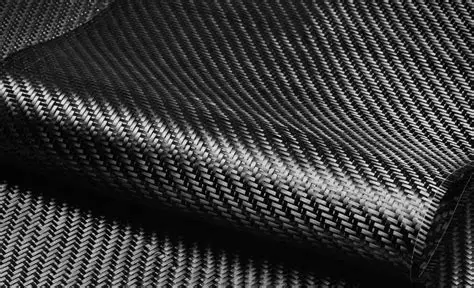
Carbon fiber is a type of high-strength, high-modulus new fiber material with a carbon content exceeding 95%. It is a microcrystalline graphite material obtained by subjecting organic fibers—composed of stacked sheet-like graphite crystallites aligned along the fiber axis—to carbonization and graphitization processes.
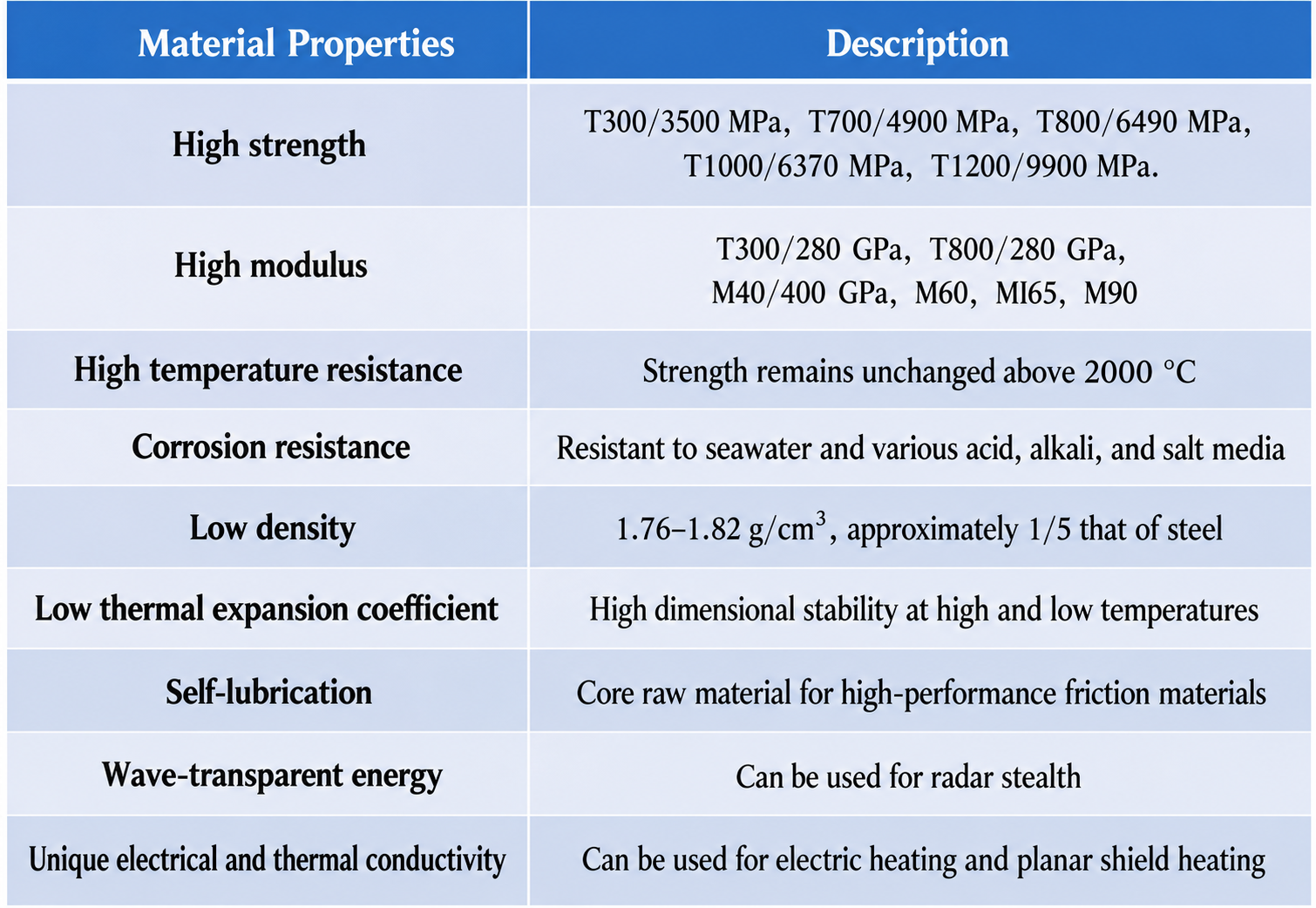
Carbon fiber is lighter than aluminum yet stronger than steel. It possesses characteristics such as corrosion resistance, high modulus, low density, zero creep, excellent electrical and thermal conductivity, resistance to ultra-high temperatures in non-oxidizing environments, and superior fatigue resistance. Combining the intrinsic properties of carbon materials with the softness and processability of textile fibers, it is widely used in sectors including defense and military, aerospace, sports equipment, the automotive industry, energy equipment, medical devices, construction machinery, transportation, and structural reinforcement. It is a crucial strategic material for the development of national defense and the national economy.
Classification of Carbon Fiber
By Raw Material: Carbon fibers are primarily categorized into three types: rayon-based, pitch-based, and polyacrylonitrile (PAN)-based. Among these, PAN-based carbon fiber is the most promising precursor for high-performance carbon fiber production due to its simple manufacturing process, lower costs, high carbonization yield, and excellent mechanical properties. Carbon fibers produced from PAN offer the best overall performance, rely on mature and simple production processes, and boast the widest range of applications, highest production volumes, and greatest variety of types; they dominate the global market, accounting for over 90% of total global production.
By Performance: Carbon fibers can be classified into general-purpose, high-strength (GQ), high-strength/medium-modulus (QZ), high-modulus (GM), and high-strength/high-modulus (QM) types. Due to Toray Industries' dominant position in the field, its product designations have become industry standards. Products are generally categorized into the high-strength "T" series and the high-modulus "M" series (specific models are listed below). Higher numbers indicate higher performance grades, and grades with a suffix letter outperform those without (e.g., T300B outperforms T300).
By tow size: carbon fiber is categorized into small-tow and large-tow varieties. Small-tow carbon fiber initially consisted primarily of 1K, 3K, and 6K grades before evolving to include 12K and 24K; it is mainly used in high-tech sectors—such as national defense and aerospace (aircraft, missiles, rockets, and satellites)—as well as in sports and leisure equipment like fishing gear, golf clubs, and tennis rackets. Carbon fiber with a tow size of 48K or higher—including 48K, 60K, and 80K—is generally classified as large-tow carbon fiber. It is primarily utilized in industrial applications, spanning sectors such as textiles, healthcare, electromechanics, civil engineering and construction, transportation, and energy.
Carbon Fiber Characteristics