Explore polyimide fiber structure, thermal stability, flame resistance and key applications in aerospace, protective clothing and industrial insulation.
Structure, Properties, and Applications of Polyimide Fibers
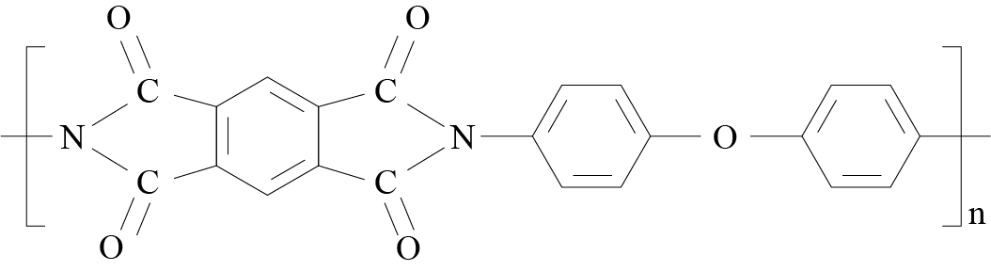
The backbone of polyimide (PI) consists of rigid aromatic structures and nitrogen-containing five-membered heterocyclic rings. This unique configuration imparts exceptional thermal stability to the material. Within the polyimide backbone, the aromatic rings and the carbon-oxygen double bonds present in the nitrogen-containing heterocyclic rings create a conjugated system. This conjugation enhances a range of properties, including resistance to extreme temperatures (both high and low), aging, ultraviolet (UV) radiation, and chemical corrosion, while also providing low dielectric constants and high electrical insulation.
These distinct structural characteristics not only ensure the physical and chemical stability of polyimide but also enable it to perform remarkably well in extreme environments.
Molecular Formula of Polyimide
Polyimide exhibits outstanding thermal stability. Its initial decomposition temperature reaches as high as 560°C—a figure that far exceeds that of similar materials, such as aramid fibers. At 280°C, polyimide experiences a shrinkage of only 1%, demonstrating excellent dimensional stability. Furthermore, it has a glass transition temperature of approximately 376°C, meaning the material retains its solid shape and dimensions below this temperature.
Polyimide can be used for long periods in high-temperature environments (up to 260°C) without undergoing degradation or aging. Additionally, it possesses a limiting oxygen index (LOI) greater than 38%, indicating excellent self-extinguishing properties.
Among various high-performance fibers,
PI fibers (such as the S35 grade) offer impressive mechanical properties: a tensile strength of 3.4–3.9 GPa, an elongation at break of 3%–4%, and a tensile modulus of 120 GPa. These characteristics make them suitable for practical applications across diverse sectors, including aerospace and the electronics industry.
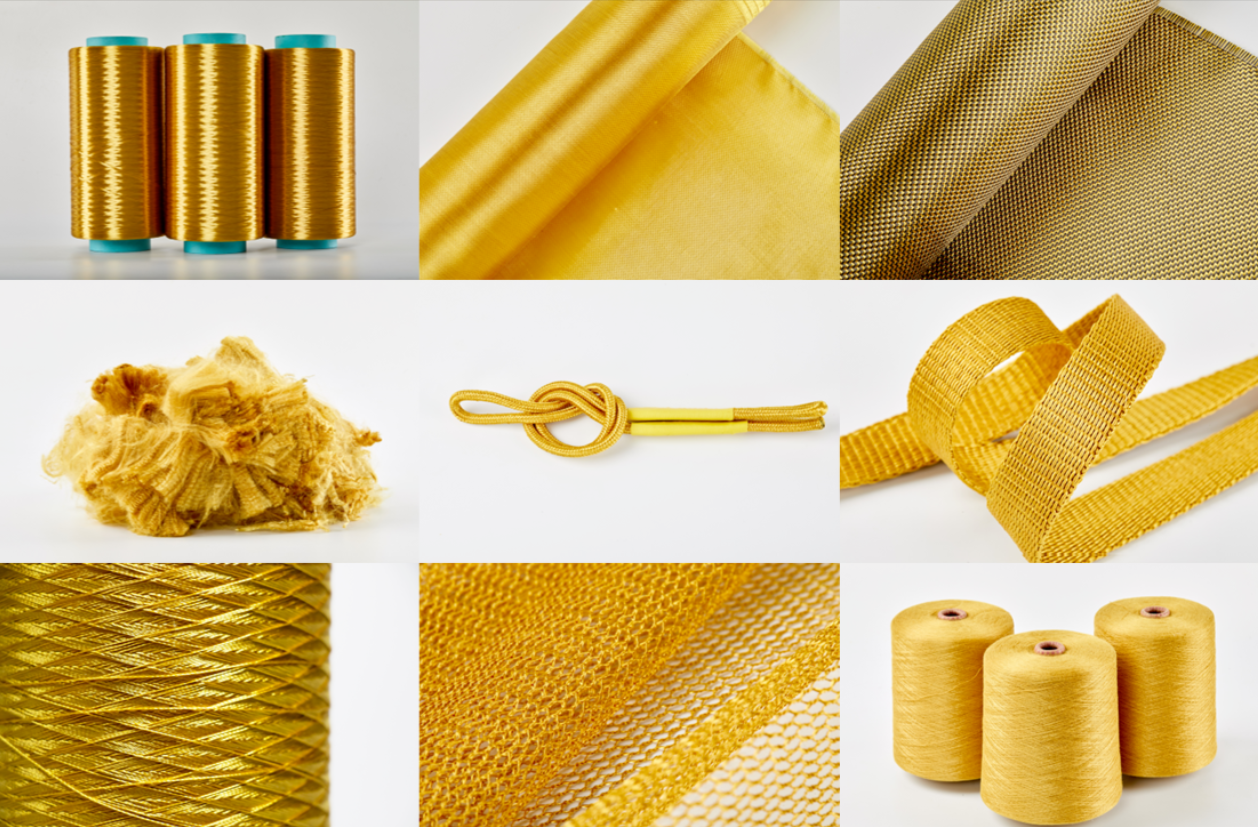
Polyimide fabrics, characterized by their unique molecular structure, exceptional heat resistance, and diverse forms, are widely used across various industrial sectors. They offer a superior combination of properties, including resistance to extreme temperatures (both high and low), aging, ultraviolet (UV) radiation, and chemical corrosion, as well as low dielectric constants and high electrical insulation.
Properties of Polyimide
Thermal Stability: Polyimide is a unique polymer, distinguished primarily by its remarkable thermal stability—a characteristic derived from its specific molecular structure. Within this structure, aromatic benzene rings and imide rings (–CO–NH–CO–) serve as the primary components of the polymer backbone, imparting extreme rigidity to the molecular chains.
It is precisely this rigidity that grants polyimide its excellent thermal stability. The presence of imide rings and aromatic rings, combined with the conjugation effect between double bonds and aromatic rings, enhances the rigidity of the molecular chains and restricts molecular thermal motion, thereby enabling polyimide to withstand both high and low temperatures effectively.
Polyimide fibers typically exhibit a thermal decomposition temperature exceeding 500°C. Specifically, polyimides containing a pyromellitic (benzene-tetracarboxylic) structure can reach decomposition temperatures of 550°C, while those incorporating biphenyl structures can withstand even higher temperatures, reaching up to 600°C. This stability at elevated temperatures makes polyimide an outstanding choice for applications requiring high-temperature resistance. Furthermore, polyimide also demonstrates exceptional performance at low temperatures.
In a liquid nitrogen environment at –269°C, polyimide (PI) fibers retain their structural integrity without becoming brittle. This is because polyimide is an aromatic heterocyclic polymer; the imide rings, aromatic rings, and the conjugation between double bonds and aromatic rings within its molecular chains increase chain rigidity and minimize molecular thermal motion, allowing the material to maintain its favorable properties even at cryogenic temperatures.
Chemical Stability: The unique molecular structure of polyimide also confers upon it excellent chemical stability. The internal molecular structure of polyimide contains a large number of carbon-hydrogen (C-H) bonds, which are essential components of its architecture. Although these C-H bonds are relatively weak and potentially susceptible to degradation by aliphatic hydrocarbons, the imide rings within the polyimide molecule provide a protective effect. By increasing the bond energy, these rings significantly enhance the material's resistance to aliphatic hydrocarbons.
Consequently, the chemical stability of polyimide is evidenced by its insolubility in—and resistance to—the vast majority of organic solvents, which contributes to a longer service life and greater reliability in practical applications. However, while polyimide is relatively stable in acidic environments, it is susceptible to hydrolysis under alkaline conditions. This reduction in stability is a critical factor that must be taken into account during the design and application of polyimide-based products.
Mechanical stability: polyimide exhibits a tensile strength of 3.4–3.9 GPa, an elongation at break of 3%–4%, and a tensile modulus of 120 GPa—all of which underscore its robust mechanical properties. In most cases, unfilled polyimide plastics possess a tensile strength exceeding 100 MPa; for instance, pyromellitic dianhydride-based polyimides (such as Kapton film) can reach tensile strengths of over 170 MPa. Furthermore, thermoplastic polyimide (TPI) demonstrates an impressive impact strength of 261 kJ/m². Biphenyl-based polyimides (such as Upilex S) achieve a tensile strength of 400 MPa, further confirming the exceptional mechanical performance of polyimide materials.
When utilized as an engineering plastic, polyimide typically exhibits an elastic modulus of 3–4 GPa, whereas in fiber form, its elastic modulus can reach as high as 200 GPa. In theoretical calculations, polyimide fibers synthesized from pyromellitic dianhydride and p-phenylenediamine can reach an elastic modulus of up to 500 GPa, making them second only to carbon fiber in terms of mechanical properties. This highlights the potential value of polyimide in composite materials, particularly in applications requiring high strength and high rigidity. Overall, polyimide possesses exceptional mechanical properties—including high tensile strength, good elongation at break, and a high tensile modulus—leading to its widespread use across various industries.
Dimensional Stability: Polyimide-based films exhibit outstanding dimensional stability; The linear expansion coefficient of polyimide films is below 15 × 10⁻⁶ (1/K).This characteristic ensures high dimensional stability, with minimal size variation even in environments subject to temperature fluctuations.
Electrical Properties: Polyimide demonstrates superior electrical insulation and corona resistance. These attributes allow it to maintain excellent electrical performance across a broad temperature range. Furthermore, it exhibits minimal dipole loss. For instance, polyimide has a dielectric constant of approximately 3.4, reflecting its excellent electrical insulating capacity.
Additionally, its dielectric loss is extremely low—It is generally around 10⁻³, which further confirms its stability in terms of electrical performance.The volume resistivity of polyimide is as high as 10¹⁶ Ω·cm, indicating an exceptionally high impedance to electric current; it maintains excellent insulating properties even under high-voltage conditions.
Applications of Polyimide
Fire-Resistant Materials: Due to their high-temperature resistance and self-extinguishing nature,
polyimide fabrics serve as excellent flame-retardant materials. They are frequently used to manufacture fire-resistant clothing, fireproof fabrics, and fire-retardant curtains.
Aerospace Industry: Due to their high strength, resistance to high temperatures and radiation, and excellent chemical stability, polyimide fabrics are widely used in the aerospace sector—for instance, in the production of spacesuits, components for rocket engines, and insulation materials for satellites.
Automotive Industry: Thanks to their wear resistance, high-temperature tolerance, and chemical stability,
polyimide fabrics are frequently employed in the manufacture of various automotive components, including parts for braking systems and combustion chambers.
Medical Field: In certain medical applications—such as biomedical engineering—the biocompatibility and mechanical properties of polyimide fabrics make them an ideal material for producing artificial blood vessels, cardiac pacemakers, and other medical devices.