UHMWPE fiber technologies, market trends, production processes, and key applications in defense, marine engineering, and industrial protection.
1. UHMWPE Market Size and Consumption Areas
UHMWPE fiber has a wide range of downstream applications, but currently it is concentrated in relatively high-barrier industrial applications such as bulletproof vests and helmets, marine ropes and cables, and cut-resistant gloves. The global market demand for UHMWPE fiber is estimated at 70,000-80,000 tons by 2025, with an average annual growth rate of about 12%, maintaining a steady growth trend. The global market consumption structure exhibits a dual-use characteristic, with bulletproof protection (including military and police equipment and public safety protection) accounting for approximately 52% of consumption, remaining the largest demand. Non-protective applications have risen to 48%, with marine engineering and sports and leisure accounting for approximately 18% and 12% respectively, while emerging applications such as medical sutures and wind turbine blade reinforcement account for a combined 18%.
China remains the world's largest consumer of UHMWPE fiber, with demand projected at 40,000-41,000 tons in 2025. The consumption structure is still driven by three core areas: military and police equipment (36%), marine industries (32%), and occupational safety and protection (23%). The marine industry benefits from the "Maritime Power" strategy, with significant year-on-year growth in applications such as deep-sea mooring cables. The combined consumption share of traditional civilian sectors like home textiles, sports equipment, and construction engineering, along with emerging sectors such as lithium battery separator substrates, is expected to rise to 8%-10%. Although UHMWPE fiber is expanding its commercial applications in civilian markets such as home textiles and sports equipment, its high cost has hindered actual market development. In the short to medium term, the downstream market is expected to be primarily driven by growth in the military and police equipment, occupational safety and protection, and marine rope and cable sectors, with total domestic demand reaching 55,000 tons by 2028, representing a compound annual growth rate of 10%.
2. Major UHMWPE Producers
Currently, only four countries in the world—the Netherlands, the United States, Japan, and China—have achieved large-scale production of UHMWPE fibers. In 2023, global UHMWPE fiber production capacity was 67,000 tons/year, of which approximately 22,000 tons/year was overseas, and China accounted for 45,000 tons/year. Three companies—Evante (USA), Honeywell (USA), and Toyobo (Japan)—monopolize the high-end UHMWPE fiber product technology globally, with production capacities of 14,200 tons/year (dry process), 3,200 tons/year (wet process), and 3,000 tons/year (dry process), respectively. In addition, Mitsui Petrochemical (Japan) and Teijin (Japan) also produce small quantities of UHMWPE fiber. DSM (Netherlands) was the world's first company to industrialize UHMWPE fiber production on a large scale. In 2022, its related business was acquired by Evante (USA), which is now the world's largest producer of UHMWPE fiber, offering the best product quality and the most comprehensive brand portfolio.
3. Development Trends and Suggestions for the UHMWPE Fiber Industry
3.1 Developing More Environmentally Friendly Production Processes The existing wet process of UHMWPE fiber gel spinning-super-stretching uses a large amount of solvent and extractant during production. It requires 10-15 tons of solvent to produce 1 ton of product, and subsequently requires 30-45 tons of extractant to displace the solvent. For environmental and cost considerations, a solvent and extractant recycling system needs to be implemented simultaneously to improve material utilization efficiency and reduce pollutant emissions. According to data disclosed in environmental impact assessment reports of several UHMWPE fiber projects, the actual consumption of extractant for producing 1 ton of UHMWPE fiber product is approximately 0.031-0.264 tons, and the consumption of white oil is approximately 0.06-0.232 tons. In contrast, the dry process does not require extractant, and the consumption of the solvent decahydronaphthalene is approximately 0.04-0.075 tons. Dichloromethane and tetrachloroethylene, commonly used extractants in wet process technology, are both toxic, hazardous, and heavily controlled pollutants. Both are listed in the "Priority Controlled Chemicals List (First Batch)," the "List of Toxic and Hazardous Air Pollutants (2018)," and the "List of Toxic and Hazardous Water Pollutants (First Batch)." With increasingly stringent environmental and safety management policies in my country, wet process technology urgently needs to find alternatives to extractants that are less toxic, less harmful, or even non-toxic. In the past two years, researchers have proposed novel extractants based on ionic liquids for removing solvent white oil from the production of ultra-high molecular weight polyethylene fibers.
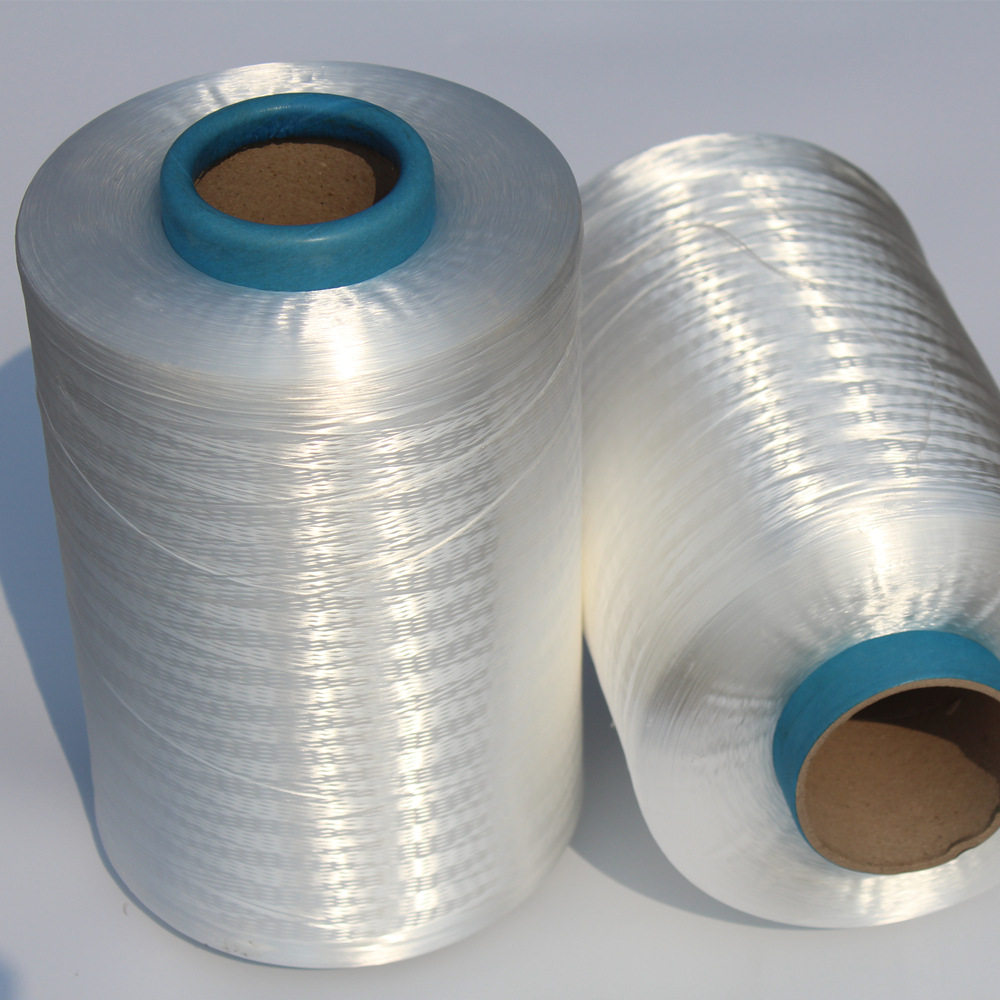
Although UHMWPE fibers exhibit excellent mechanical properties, they suffer from deficiencies in heat resistance, creep resistance, and oxidation resistance. Furthermore, due to low surface energy and a lack of polar groups, UHMWPE fibers have poor surface processing properties, primarily manifested in poor adhesion between the fiber and the resin matrix, insufficient interfacial bonding, and susceptibility to interfacial breakage and debonding under stress, leading to a reduction in the mechanical properties of the composite material. Therefore, specific modification treatments for UHMWPE fibers are of great significance for further expanding their application range and promoting product upgrading, and have become one of the hot topics in industry research. For heat resistance and creep resistance modification, the common method is to blend inorganic particles or coupling agents into the UHMWPE raw material, which improves both heat resistance and creep resistance while also enhancing the fiber's mechanical properties. To address the insufficient surface adhesion of UHMWPE fibers, common modification methods include plasma modification, oxidation treatment, ultraviolet radiation crosslinking, and chemical reagent crosslinking. The aim is to introduce active groups or increase the roughness of the fiber surface.
3.2.1 Solution-Dyed UHMWPE Fibers Due to their excellent properties, UHMWPE fibers are widely used in important fields such as national defense technology, military engineering, aerospace, and medical protection. However, because the macromolecular chains of UHMWPE fibers lack functional groups other than carbon-hydrogen covalent bonds, it is difficult for general dye molecules to bind with them for dyeing. The nonpolarity and regularity of its molecules make it difficult for dye molecules to penetrate, resulting in difficulties in fiber dyeing. Therefore, its products have limited color options, restricting its application areas. To solve the problem of difficult dyeing of high-performance fibers, solutions dyeing technology, carrier dyeing, non-aqueous solvent dyeing, and fiber surface modification dyeing have been proposed. Among these, solutions-dyed fibers refer to colored fibers obtained by adding colorants to the spinning solution or melt and then spinning them; they are also known as undyed fibers or pre-spinning dyed fibers. Compared with traditional dyeing techniques, solution dyeing technology offers advantages such as energy saving and environmental protection, high color fastness, simplified process flow, and low production cost, making it the most widely used dyeing method for UHMWPE fibers. Although some domestic companies have achieved large-scale production of solution-dyed UHMWPE fibers, they still face problems such as reduced mechanical properties, unstable production, and difficulties in color matching. Therefore, solution-dyed UHMWPE fibers still require further in-depth research and development.
3.2.2 Creep Resistance of UHMWPE Fibers UHMWPE fibers have poor creep resistance; that is, under a certain temperature and constant external force, the strain of UHMWPE fibers gradually increases over time. Due to this characteristic, the dimensional and morphological stability of UHMWPE fibers is poor, greatly affecting their application in composite materials, ropes, and other fields. Currently, creep failure is an urgent problem to be solved in the application of UHMWPE fiber ropes.
The creep properties of UHMWPE fibers are closely related to their molecular structure. Generally, the creep properties of fibers are related to the size of the macromolecular chains, the presence of polar groups in the macromolecules, and the presence of polar interactions between molecules. Due to the simple molecular structure of UHMWPE and the absence of hydrogen bonds between molecules, as well as the fact that the van der Waals forces are only dispersion forces, its intermolecular forces are relatively weak, making it prone to intermolecular slippage and creep.
In research on creep-resistant UHMWPE fibers, various methods have been explored to improve their performance, with the introduction of crosslinking groups being the most widely studied. Researchers crosslinked UHMWPE/CNTs composite fibers using ultraviolet radiation on a photochemical reactor. When the ultraviolet radiation time was 8 minutes and the mass fraction of the crosslinking solution was 20%, its creep resistance was better, with a 19.68% reduction in creep compared to uncrosslinked fibers. In addition, researchers have used benzoyl peroxide (BPO) and vinyltrimethoxysilane (VTMS) as initiators and grafting modifiers, respectively, during the extraction process of UHMWPE gel fibers to perform silane crosslinking modification. The modified UHMWPE fibers prepared showed significantly improved creep resistance. This is because the introduction of silane coupling agents can form a crosslinked network structure inside the fiber, thereby restricting the slippage between molecular chains.
Other related studies have introduced one or more monomers from butadiene, styrene, methyl acrylate, and triallyl isocyanurate to induce self-polymerization or crosslinking reactions, forming a semi-interpenetrating polymer network structure with the polyethylene molecular chains. This increases the entanglement density inside the polyethylene fiber, reduces the slippage of the polyethylene molecular chains, and thus improves the creep resistance of UHMWPE fibers.
3.2.3 High-Temperature Resistant UHMWPE FibersCurrently, the main methods to improve the flame retardant properties of UHMWPE fibers include copolymerization, blending, and grafting. For example, some researchers added oleic acid-modified magnesium hydroxide nanoparticles to UHMWPE, resulting in nanocomposite UHMWPE fibers produced by dry gel spinning, which exhibited reduced flammability and increased the initial decomposition temperature by 30°C. Others used magnesium hydroxide-coated carbon microspheres as a flame retardant, with tetrabutyl titanate and triphenyl phosphite as activators, to prepare flame-retardant UHMWPE fibers via a pad-bake method, achieving a limiting oxygen index of 23.8%, 36% higher than pure UHMWPE fibers. Furthermore, a nitrogen-phosphorus flame-retardant slurry system was formulated by compounding melamine cyanurate with aluminum diethylphosphonate, and halogen-free flame-retardant ultra-high molecular weight polyethylene (PE-UHMW) fibers were produced using a blend spinning method, achieving a limiting oxygen index of 27.5% and demonstrating a certain flame-retardant effect. However, with increasing flame retardant content, the mechanical properties of the fibers decreased to some extent. These studies indicate that the heat resistance of UHMWPE fibers can be improved through various methods, but further research is needed to overcome other performance limitations.
3.2.4 High-Strength UHMWPE FibersCurrently, the tensile strength of high-end UHMWPE fiber products reaches over 40 cN/dtex, but this is only about 8% of the theoretical strength. Therefore, researchers are actively exploring various modification methods to improve the mechanical properties of the fibers. Studies have shown that UHMWPE fibers with a mass fraction of 5% multi-walled carbon nanotubes (MWNTs) have a tensile strength of 4.3 GPa, which is 18.8% and 15.4% higher than pure UHMWPE fibers, respectively. This is mainly because at high stretch ratios, the MWNTs align along the stretching direction. This orientation induces strong interfacial load transfer under both small and large strains, thereby improving the stiffness and tensile strength of the composite fiber. Furthermore, during the gel fiber extraction stage, the mechanical modulus of UHMWPE fibers with the addition of 1% nano-silica (SiO2) increased by about 10%, presumably because the nano-SiO2 particles act as cross-linking points within the fiber. Researchers found that UHMWPE fibers prepared using 20% olive oil as a mixed solvent exhibited significantly greater molecular chain detangling and higher molecular weight retention. Compared to UHMWPE fibers prepared using decahydronaphthalene alone, these fibers showed increases in tensile strength (33.85 cN/dtex) and tensile modulus (1673.27 cN/dtex), representing increases of 24.0% and 32.3%, respectively. Furthermore, the melting point, crystallinity, and orientation of the UHMWPE fibers were significantly improved.
3.3 Continuously Reducing Product Energy ConsumptionUHMWPE fiber production requires substantial energy resources such as electricity and steam. Additionally, the machinery and equipment are large-scale, resulting in high depreciation costs. Energy and manufacturing costs can account for approximately 50% of the total cost. Existing manufacturers exhibit significant differences in unit energy and electricity consumption due to variations in specific processes and technological levels. New projects in the past three years have seen electricity consumption ranging from 0.72 to 3.6 million kWh/ton of fiber, steam consumption from 8 to 24.6 tons/ton of fiber, and overall energy consumption from 1.66 to 5.66 tons of standard coal equivalent/ton of fiber.
In recent years, China has actively and steadily promoted its "dual-carbon" strategy, continuously increasing energy conservation and carbon reduction measures. The industry is also continuously improving its processes and technologies. Reducing energy consumption and production costs is a long-term development trend for UHMWPE fiber production technology. Companies mastering advanced processes and equipment will possess a leading cost advantage in future fierce market competition.


