Carbon fiber prepreg has the advantages of easy molding, low cost, easy control of fiber content, excellent tensile strength, stiffness, fatigue resistance, and corrosion resistance.
Why use prepreg?
Carbon fiber prepreg has the advantages of easy molding, low cost, easy control of fiber content, and excellent tensile, stiffness, fatigue, corrosion resistance and other properties. Therefore, carbon fiber prepreg is widely used.
The selection of prepreg mainly depends on two factors: performance and cost
Production: easy processing, lower production cost, low energy consumption, fewer parts, more precise control of fiber content, stable material performance and process characteristics.
Design: weight reduction and optimization of performance, more optimized performance-to-weight ratio.
Finished parts: excellent mechanical properties, fatigue, tensile, stiffness, corrosion, aging performance.
How is prepreg produced?
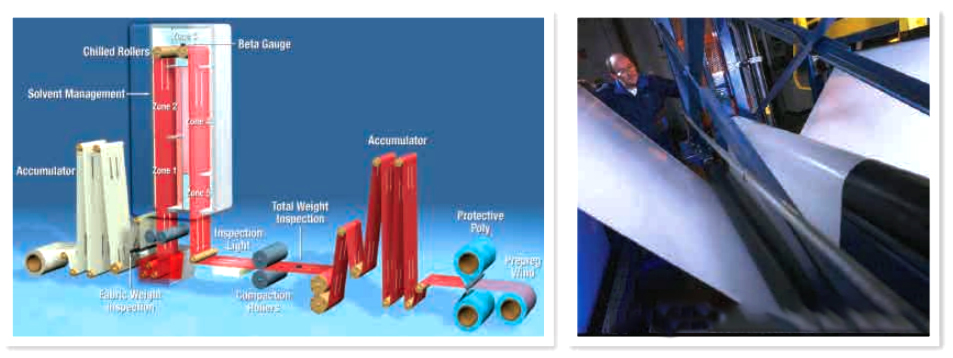
There are two main production methods for carbon fiber prepreg: one is to directly heat the resin to reduce its viscosity so that it can be evenly distributed between the fibers, which is called the hot melt method. The other is to dissolve the resin in a solvent to reduce the viscosity, and then heat the resin to evaporate the solvent after the fiber is impregnated, which is called the solution impregnation method.
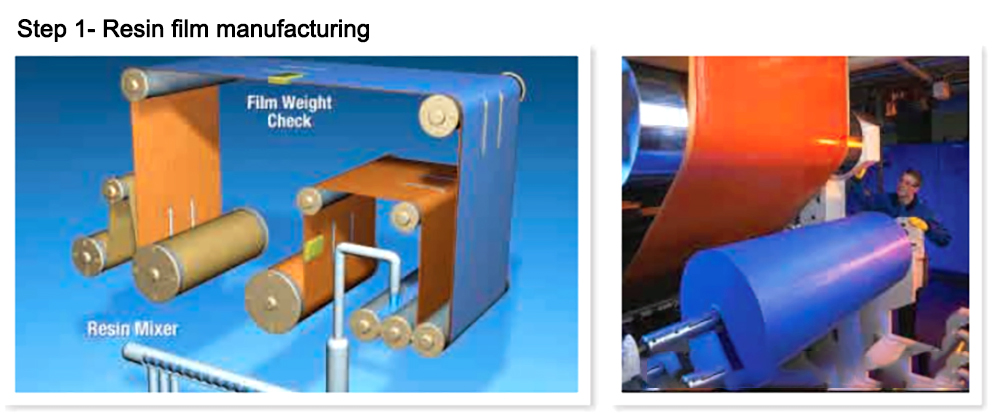
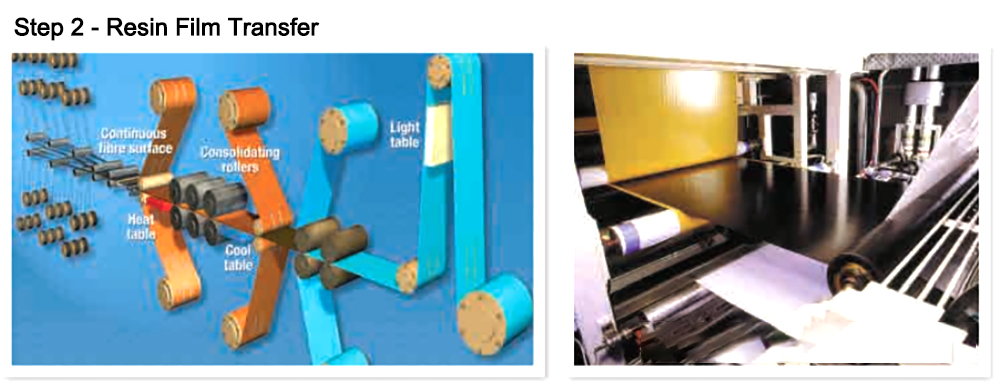
The hot melt method commonly used for carbon fiber prepreg can be divided into a one-step method and a two-step method. In the two-step process, the first step is to prepare the resin film and then prepreg. At present, about 90% of the domestic carbon fiber prepreg processes use the hot melt two-step process.
Hot melt process: also known as the resin film transfer method, both fabric and unidirectional prepreg can be produced using the hot melt process. This process is divided into two stages. The first step involves coating a film of heated resin on a paper substrate. The reinforcement material and resin interact in the prepreg machine. After applying pressure and heat, the resin penetrates into the fiber to form the final prepreg, which is finally wound around the fiber core.
Solvent impregnation process: Only fabric prepreg can be produced using the solvent impregnation method, which involves dissolving the resin in a solvent bath and immersing the reinforcement fabric in the resin solution. The solvent is then evaporated from the prepreg blank using a drying oven.