
Material Characteristics and Applications | Aramid Honeycomb Core, Kevlar Honeycomb
Sandwich-structured composites, known for their high specific strength and high specific stiffness, combine the high strength of face sheets with the low density of the core material to achieve outstanding structural performance. In the aerospace field, such materials, including Kevlar honeycomb and aramid paper honeycomb, are of particular importance due to their excellent mechanical and lightweight properties.
As a key aramid honeycomb core material, Kevlar honeycomb demonstrates superior energy absorption and flame resistance, making it ideal for aerospace lightweight material market applications.
Core Material Selection and Development Trends | Aramid Honeycomb Paper Market, Aramid Paper Honeycomb Core, Kevlar Honeycomb Panels, Kevlar Nomex Honeycomb
The choice of core materials varies, including honeycomb cores and synthetic foam cores. Among them, honeycomb sandwich materials—featuring a structure similar to natural honeycombs—are meticulously produced through advanced bonding and forming techniques, providing innovative solutions for aerospace applications.
Honeycomb cores come in various types, such as fabric honeycomb, paper honeycomb, and metallic honeycomb. Among these, aramid paper honeycomb core and Kevlar honeycomb panels stand out for their high strength, high stiffness, and low density, as well as excellent self-extinguishing capability, insulation, and chemical inertness. These properties make aramid Kevlar honeycomb widely used in aerospace and other specialized fields.
Kevlar Nomex honeycomb structures are also adopted in aircraft flooring, bulkheads, and control surfaces, offering superior fire resistance and weight savings in modern aviation design.
Manufacturing Process and Historical Development | Para-Aramid Honeycomb Core, Aramid Fiber Honeycomb Core
Since the concept was first proposed in the 1940s—to laminate two “skins” with a low-density “core” to enhance bending strength while reducing weight—core materials have evolved from balsa wood and metallic honeycombs to glass fiber and carbon fiber reinforced thermoset honeycombs, and later to para-aramid honeycomb core structures.
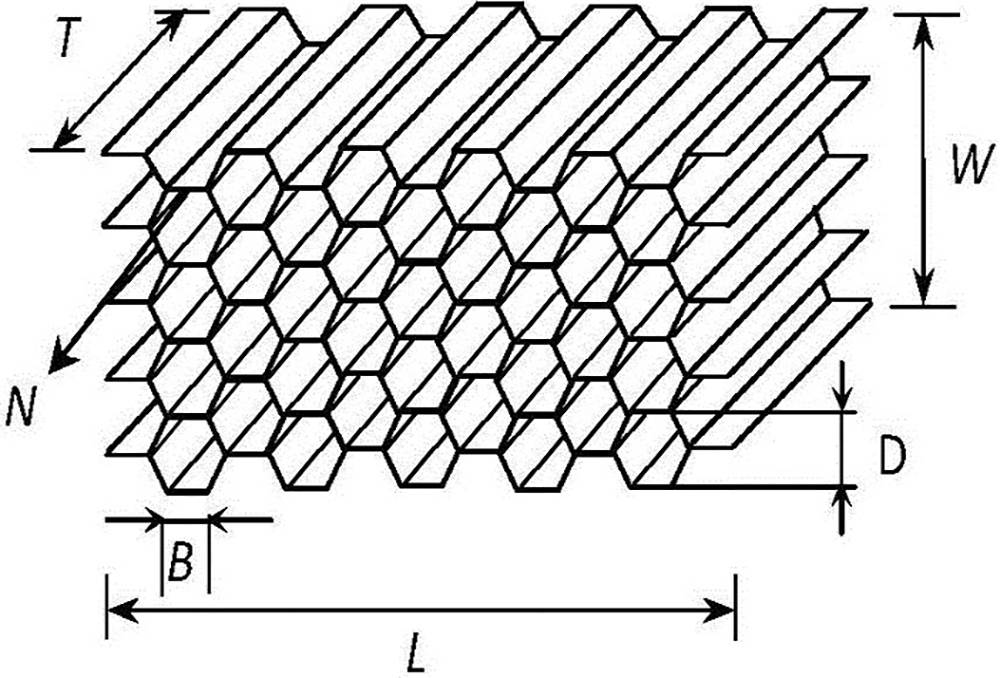
Aramid fiber honeycomb core and DuPont Kevlar honeycomb represent a major advancement in non-metallic composite materials. Aramid paper honeycomb, thanks to its distinctive manufacturing process and exceptional performance, has become one of the most prominent non-metallic composite materials in modern engineering.
Research Progress of Domestic Aramid Paper Honeycomb | Aramid Honeycomb Core Material Market
Aramid paper honeycomb, primarily made from aramid paper, has long been a key research focus in China. Although research in this field has continued for over 20 years, aramid paper itself is still largely dependent on imports. This situation has further driven the need for the development of domestically produced aramid paper and in-depth exploration of its performance.
The aramid honeycomb core material market continues to expand as demand for lightweight structural materials grows across aerospace and defense sectors.
Application Fields and Design Flexibility | Aramid Kevlar Honeycomb, Honeycomb Kevlar
With its outstanding specific strength, structural stability, and multifunctional advantages such as sound insulation, heat insulation, and flame retardancy, aramid Kevlar honeycomb plays an indispensable role in aerospace, construction, and transportation sectors. Its unique properties make it an ideal material for interior structural components such as partition panels, flooring, and roofing. Moreover, its density can be flexibly designed to meet the comprehensive performance requirements of different parts of an aircraft.
Honeycomb Kevlar materials are particularly valued in the aerospace lightweight material market for their excellent stiffness-to-weight ratio and energy absorption efficiency.
Processing Challenges and Solutions | Kevlar Honeycomb Properties
Aramid paper honeycomb exhibits excellent thermal resistance, effectively withstands acoustic and vibration fatigue, and efficiently absorbs vibration energy. It also demonstrates resistance to moisture, mold, and chemical corrosion. In addition, it has good flame-retardant properties, self-extinguishing capability, and is easily molded into complex sandwich structures.
However, the primary challenge faced domestically is the continued reliance on imported aramid paper. The manufacturing process of domestic aramid paper still requires key technological breakthroughs to achieve performance parity with imported materials. Continuous research into Kevlar honeycomb properties and process optimization remains crucial for improving domestic competitiveness and promoting broader use in aerospace engineering.


